
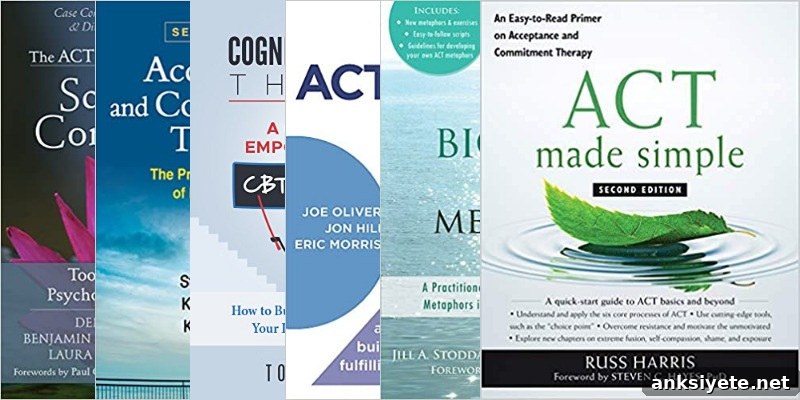
 Acceptance and Commitment Therapy (ACT, pronounced “act”) is an evidence-based psychotherapy that integrates cognitive-behavioral principles, humanistic values, and mindfulness-based practices. ACT focuses on increasing psychological flexibility—helping people accept difficult inner experiences while committing to actions that move them toward a meaningful life.
Although formal training and supervised practice are the best ways to learn ACT, many excellent books provide clear, practical introductions and deeper clinical manuals. Below we present a curated list of recommended ACT and ACT-related books organized by self-help, textbooks, and ACT-adjacent titles, plus a short set of resources and client recommendations to support your learning and practice.
This Article Contains:
- Top 11 Books on ACT
- Self-Help Books
- Textbooks
- Not ACT, but Close
- 3 Recommended Books for Your Clients
- Resources and Tools
- A Take-Home Message
- References
Top 11 Books on ACT
We selected accessible self-help books, practical and academic textbooks, and several titles that are not strictly ACT but are highly relevant for the ACT mindset—mindfulness, acceptance, compassion, and values-driven living.
Self-Help Books
1. Get Out of Your Mind and Into Your Life — Steven C. Hayes
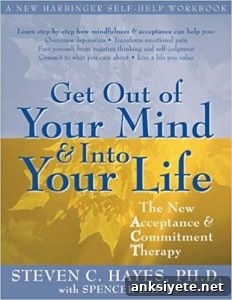
Written by ACT founder Steven C. Hayes, this book presents core ACT concepts in plain language and offers practical exercises that help readers move from struggling with thoughts and feelings toward living consistently with their values. The workbook-style approach makes it useful for both clients and therapists seeking straightforward experiential practices.
2. ACTivate Your Life: Using Acceptance and Mindfulness to Build a Life That Is Rich, Fulfilling and Fun — Joe Oliver, Jon Hill, and Eric Morris
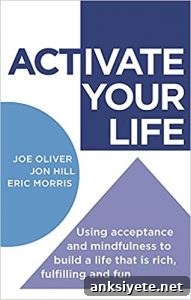
This accessible guide applies ACT principles to everyday life, emphasizing engagement, openness, and connection. It integrates acceptance and mindfulness exercises designed to help readers develop richer, more fulfilling daily routines and relationships.
3. Cognitive Behavioral Therapy: A Guide to Self-Empowerment With CBT, DBT, and ACT — Tom Shepherd
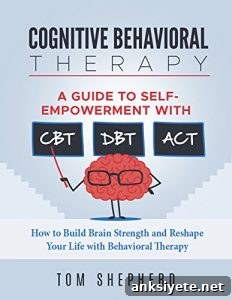
This integrative self-help book combines elements of CBT, DBT, and ACT to teach readers practical skills for emotional regulation, distress tolerance, and values-based action. It is useful for people who want a blended approach and self-directed learning that complements therapy.
Textbooks
For clinicians, students, and practitioners seeking depth and clinical guidance, the textbooks below provide theory, empirical background, and treatment strategies.
1. Acceptance and Commitment Therapy, Second Edition: The Process and Practice of Mindful Change — Steven C. Hayes, Kirk D. Strosahl, and Kelly G. Wilson
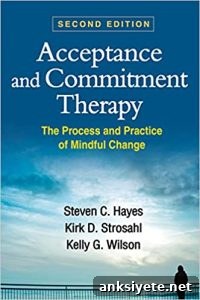
This classic ACT textbook covers the theoretical foundations—such as relational frame theory—and the clinical processes that make ACT distinct. It offers detailed case examples and therapeutic strategies for assessing and increasing psychological flexibility. Best suited for readers seeking an academic, comprehensive treatment manual.
2. ACT Made Simple, Second Edition: An Easy-to-Read Primer on Acceptance and Commitment Therapy — Russ Harris
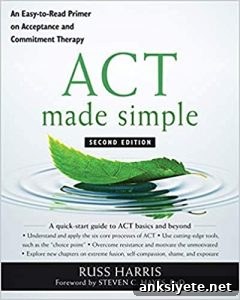
Written in a direct and often humorous style, Russ Harris presents ACT principles and techniques in a highly practical format. This book is an excellent bridge between academic theory and clinic-ready interventions, offering scripts, exercises, and clear step-by-step guidance for clinicians and students.
3. The ACT Practitioner’s Guide to the Science of Compassion: Tools for Fostering Psychological Flexibility — Dennis Tirch, Benjamin Schoendorff, and Laura Silberstein
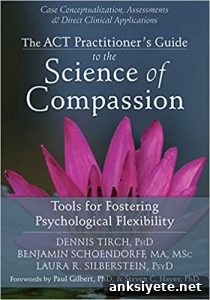
This text focuses on how compassion practices enhance ACT work. It offers exercises and clinical strategies to cultivate self-compassion and compassion for others—key processes that support psychological flexibility and reduce self-criticism in therapy.
4. The Big Book of ACT Metaphors: A Practitioner’s Guide to Experiential Exercises & Metaphors in Acceptance & Commitment Therapy — Jill Stoddard and Niloofar Afari
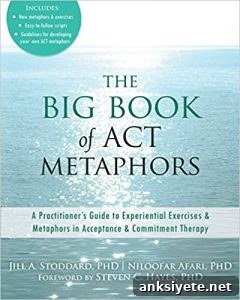
Metaphors and experiential exercises are central to ACT because they bypass literal thinking and allow clients to experience change more viscerally. This collection gathers practitioner-tested metaphors and experiential ideas that are ready for clinical use.
Download 3 Free Positive Psychology Exercises (PDF)
Practical exercises rooted in positive psychology and mindfulness—useful as complementary tools for ACT practice and client homework.
Not ACT, but Close
The following books are not ACT manuals, but their themes—mindfulness, acceptance, nonstriving, and compassion—align well with ACT’s underlying philosophy and can enrich clinical perspective and personal practice.
1. When Things Fall Apart: Heart Advice for Difficult Times — Pema Chodron

Pema Chodron offers compassionate, accessible teachings drawn from Buddhist practice that support working with uncertainty, fear, and grief. Her guidance can deepen clinicians’ and clients’ mindfulness and acceptance practices.
2. Siddhartha — Hermann Hesse

Hesse’s novel follows a spiritual journey in which the protagonist learns that peace often arrives when striving stops and acceptance begins—an idea that resonates with ACT’s encouragement to stop struggling against inner experience and to live by chosen values.
3. Ishmael: A Novel — Daniel Quinn

A thought-provoking parable told from an unexpected perspective, Ishmael invites readers to reconsider human beliefs and values. Its emphasis on perspective-taking and humility can be helpful for practitioners interested in broadening clients’ worldviews.
4. Illusions: The Adventures of a Reluctant Messiah — Richard Bach

This short novel explores themes of personal responsibility, choice, and the power of belief. Its imaginative tone and focus on inner transformation make it a complementary read for therapists and clients exploring values and meaning.
3 Recommended Books for Your Clients
These three titles are particularly well suited for clients looking for practical, compassionate, and readable guidance aligned with ACT principles.
1. The Happiness Trap: How to Stop Struggling and Start Living — Russ Harris
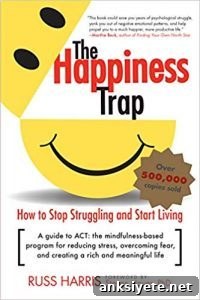
Targeted at a general audience, this book explains why the relentless pursuit of happiness can be counterproductive and provides practical ACT-based tools for reducing struggle and living a values-guided life.
2. How to Be Nice to Yourself: The Everyday Guide to Self-Compassion — Laura Silberstein-Tirch
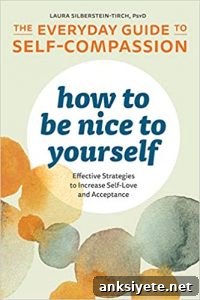
This practical guide offers concrete steps to reduce self-criticism and cultivate self-compassion—an important complementary process in ACT work for clients who struggle with harsh inner voices.
3. How To Live: Boxed Set of Mindfulness Essentials Series — Thich Nhat Hanh

Thich Nhat Hanh’s short books break mindfulness down into everyday practices—sitting, eating, loving, relaxing—that are easily integrated into daily life. These bite-sized teachings make mindfulness approachable for busy clients.
For a broader catalog of ACT self-help titles, professional organizations that focus on contextual behavioral science maintain curated lists of recommended books and resources.
Resources and Tools
Alongside books, courses, tools, and worksheets can accelerate learning and clinical application. Many training programs offer ACT-focused courses and supervision. Additionally, structured toolkits that include worksheets, metaphors, and mindfulness exercises are useful for clinicians who wish to integrate ACT into their practice.
Relevant training and templates
Training programs that combine theoretical foundations with experiential practice, and templates for running mindfulness sessions or values-focused interventions, are especially helpful for practitioners building ACT skills.
Toolkit features aligned with ACT
- Cognitive defusion exercises: Activities that help clients gain distance from thoughts and reduce fusion with unhelpful cognitive patterns.
- Leaves on a Stream: A visual defusion meditation that highlights the transient nature of thoughts.
- Sailboat metaphor: A values-and-obstacles metaphor useful for clarifying life direction and committed action.
- Mindfulness and meditation exercises: Short, evidence-informed practices for clients to build moment-to-moment awareness and presence.
Practical blog-style resources
Introductory articles and practical collections of worksheets and exercises—such as concise explanations of how ACT works, the theory behind it, and ready-to-use worksheets—offer immediate support for clinicians and clients alike.
A Take-Home Message
Acceptance and Commitment Therapy is a flexible, empirically supported approach that blends mindfulness, acceptance, and committed action to help people live more meaningful lives. The best route to competent ACT practice is formal training plus supervised clinical experience; however, the books and resources listed here are excellent starting points for clinicians, students, and interested lay readers.
Begin with readable introductions—novels or shorter mindfulness guides can build familiarity—then progress to practical primers and clinical textbooks for deeper skill development. Complement reading with experiential practice, client worksheets, and values-based exercises to translate theory into effective therapy.
Whether you are learning ACT for personal growth or professional practice, focus on cultivating psychological flexibility: accept what you cannot change, clarify who and what matters most, and take consistent actions that reflect those values.
References
- Bach, R. (1989). Illusions: The adventures of a reluctant messiah. Dell.
- Chodron, P. (2016). When Things Fall Apart: Heart Advice for Difficult Times. Shambhala.
- Hanh, T. N. (2016). How to Live: Boxed Set of the Mindfulness Essentials Series. Parallax Press.
- Harris, R. (2008). The Happiness Trap: How to Stop Struggling and Start Living. Trumpeter.
- Harris, R. (2019). ACT Made Simple: An Easy-to-Read Primer on Acceptance and Commitment Therapy. New Harbinger.
- Hayes, S. C. (2005). Get Out of Your Mind and Into Your Life: The New Acceptance and Commitment Therapy. New Harbinger.
- Hayes, S. C., Strosahl, K. D., & Wilson, K. G. (2016). Acceptance and Commitment Therapy: The Process and Practice of Mindful Change (2nd ed.). Guilford Press.
- Hesse, H. (Trans. Rosner, H.). (1982). Siddhartha: A Novel. Bantam.
- Oliver, J., Hill, J., & Morris, E. (2016). ACTivate Your Life: Using Acceptance and Mindfulness to Build a Life That Is Rich, Fulfilling and Fun. Constable & Robinson.
- Quinn, D. (1995). Ishmael: A Novel. Bantam.
- Shepherd, T. (2018). Cognitive Behavioral Therapy: A Guide to Self-Empowerment With CBT, DBT, and ACT. Author.
- Silberstein-Tirch, L. (2019). How to Be Nice to Yourself: The Everyday Guide to Self-Compassion. Althea Press.
- Stoddard, J. A., & Afari, N. (2014). The Big Book of ACT Metaphors. New Harbinger.
- Tirch, D., Schoendorff, B., & Silberstein, L. R. (2014). The ACT Practitioner’s Guide to the Science of Compassion. New Harbinger.