
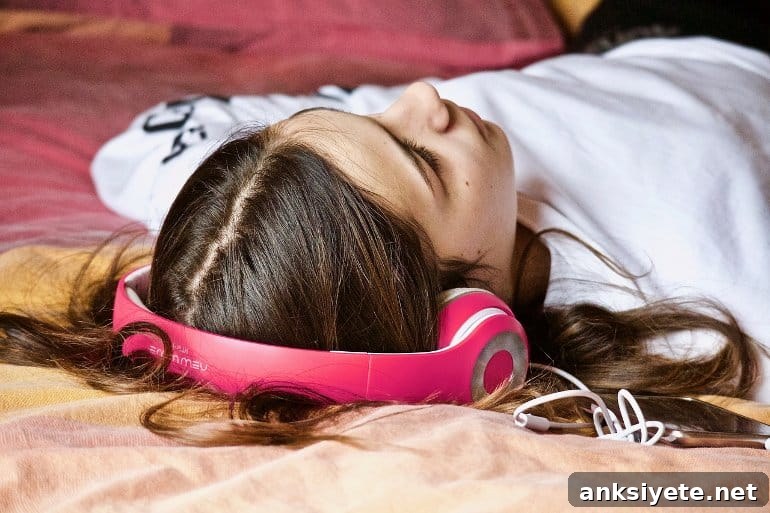
Summary: Researchers are combining neuroscience, artificial intelligence, sleep medicine and musicology to identify the musical ingredients of effective sleep music and to design new “super lullaby” soundscapes that support falling asleep and sleep quality.
Source: TUD
Traditional lullabies such as “Hush Little Baby” or “Brahms’ Lullaby” are familiar across cultures and generations for their ability to soothe and help listeners fall asleep. These calming effects are not limited to infants; adults also use music to relax and prepare for sleep.
Music produces strong responses in the human brain, shaping both emotional experience and measurable neurophysiological activity. Yet relatively little systematic research has explored how musical structure influences the brain’s transition from wakefulness to sleep, or which musical features most reliably promote better sleep.
The MSCA Doctoral Network “Lullabyte” was launched to address this gap. Beginning in November 2022, a group of leading researchers from musicology, somnology, neuroscience and computer science formed a consortium across ten European universities and companies to investigate how music interacts with sleep processes. The network is coordinated by Dr. Miriam Akkermann, Junior Professor of Empirical Musicology at TU Dresden.
“Musicology often studies musical form, cultural context and history, while empirical neuroscience tends to focus on brain mechanisms rather than musical structure,” explains Dr. Akkermann. “With Lullabyte we aim to bridge these perspectives and foster true interdisciplinary collaboration.”
In Dresden and partner sites, researchers are analysing whether traditional lullabies and contemporary relaxation or sleep playlists share common musical characteristics, and whether those shared features can predict effects on sleep. The project combines music-analytic methods with experimental sleep research to explore how specific musical elements affect falling asleep and sleep architecture.
The research programme examines large collections of so-called “sleep music” to map recurring structures and patterns in melody, harmony, rhythm, timbre and dynamics. These data-driven analyses are paired with controlled studies that monitor participants’ sleep using laboratory equipment and wearable sensors to measure physiological responses and subjective sleep quality after exposure to selected musical pieces.
A central aim is to identify musical features that reliably facilitate the transition from wakefulness to sleep and to determine which elements are most effective for different listeners. “We want to know how different types of music change the falling-asleep process and overall sleep structure, and whether we can isolate musical parameters that are particularly helpful,” says Dr. Akkermann.
To accomplish this, the project integrates advanced neuroscience tools, wearable technology and machine learning. Large multimodal datasets—combining audio features, brain recordings, sleep metrics and self-reports—are analysed with computational methods to reveal links between sound design and sleep physiology. Based on those findings, researchers and sound designers collaborate to develop new types of music and soundscapes specifically engineered to have soporific effects.
“In practical terms, we are searching for ‘super lullabies’—sound designs that combine the best evidence-based musical features to support sleep onset and quality,” Akkermann adds. The ultimate goal is to create music that can be personalized and adapted using data-driven methods while grounded in rigorous neuroscience and musicological understanding.
Lullabyte also trains a cohort of ten doctoral researchers in this interdisciplinary field. Each PhD candidate is based at a partner institution and rotates through placements at other network sites, gaining hands-on experience with experimental protocols, data science, sound design and industry collaboration. The programme includes summer schools and workshops where industrial partners and artists provide training in technology transfer, entrepreneurship, medical device regulation and science communication.
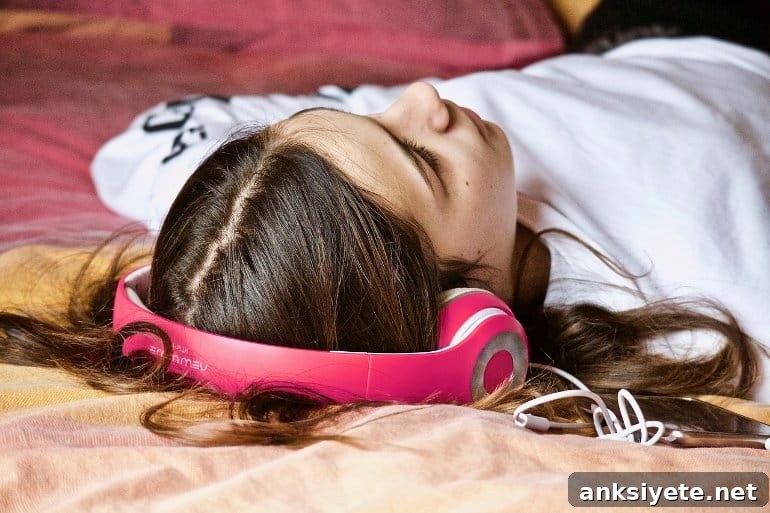
The network brings together TU Dresden, Radboud University Medical Center (Netherlands), the University of Stuttgart, Aarhus University (Denmark), the FEMTO-ST Institute and the Paris Brain Institute (France), Universitat Pompeu Fabra (Spain), the Royal Institute of Technology (Sweden), Université de Fribourg (Switzerland) and the Berlin-based start-up Endel, plus collaborations with several European industry partners.
The MSCA Doctoral Network is funded by Horizon Europe and will run for four years under the Marie Skłodowska-Curie Actions programme, which supports doctoral and postdoctoral training across Europe.
NOTE: Recruitment for the ten PhD positions began on Nov. 1, 2022. For details about available positions and application procedures, please contact the partner institutions directly.
About this music and sleep research news
Author: Anne-Stephanie Vetter
Source: TUD
Contact: Anne-Stephanie Vetter – TUD
Image: The image is in the public domain