
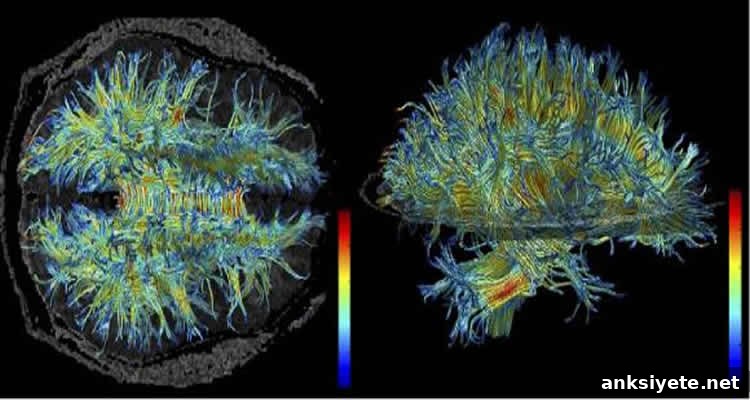
Brain scientists have long assumed that aging reduces the brain’s ability to adapt and learn. A new study from Brown University challenges that view, showing that older adults can learn a visual task as well as younger people, but the neural changes supporting that learning occur in different brain tissue: white matter rather than cortex.
It is widely believed that neural plasticity—the brain’s capacity to change with experience—declines with age, making new learning more difficult. This Brown-led study shows a more nuanced picture: older adults who learned a visual discrimination task well exhibited measurable plasticity, but it appeared in white matter beneath the visual cortex rather than in the cortex itself.
White matter consists of myelinated axons that form the brain’s wiring, improving the speed and reliability of signal transmission. In contrast, gray matter (including the cortex) contains the cell bodies and synapses often associated with perceptual learning. The researchers found that younger participants showed expected cortical changes after training, whereas many older participants showed significant changes in white matter where younger participants did not.
“We think the degree of cortical plasticity decreases with age,” said Takeo Watanabe, Fred M. Seed Professor at Brown University and co-author of the study published in Nature Communications. “Yet older adults can still learn visually, apparently by altering white matter structure.”
Spotting the differences
The study enrolled 18 volunteers aged 65 to 80 and 21 volunteers aged 19 to 32. Over about a week, participants practiced an abstract visual perception task in the lab. Each trial displayed a background texture of oriented lines, and intermittently a small patch would briefly appear containing lines oriented slightly differently. Participants simply indicated which orientation they saw.
Performance varied across individuals, but on average older adults made as much progress as younger adults in distinguishing the patch’s texture. To identify where learning-related changes occurred, the team scanned participants’ brains at the start and end of the week using magnetic resonance imaging (MRI) to assess cortical changes and diffusion tensor imaging (DTI) to detect white matter alterations.
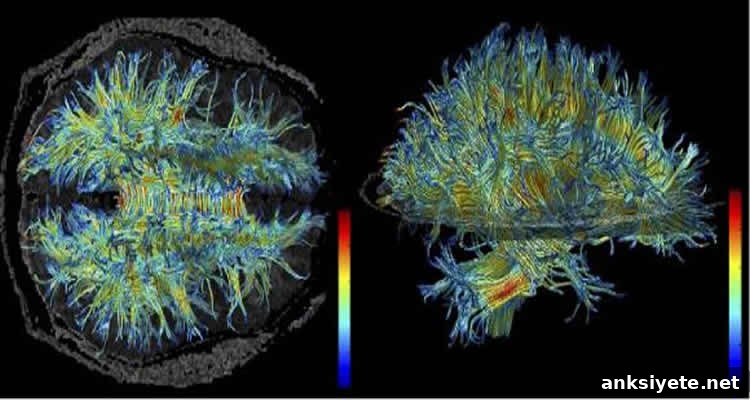
Importantly, the training targeted a specific region of each participant’s visual field so that a corresponding, localized part of the early visual cortex and the white matter beneath it would receive focused experience-dependent input. This spatial precision allowed the researchers to link learning outcomes to neural changes in the exact brain areas processing the trained visual location.
Combining behavioral and imaging data produced several clear patterns:
- Younger learners showed significantly greater changes in cortex (gray matter) than older learners.
- Older learners showed significantly greater changes in white matter than younger learners.
- In both age groups, anatomical changes were localized to the brain areas corresponding to the specific part of the visual field used during training.
The imaging also revealed a surprising split among the older participants. They fell into two distinct subgroups: “good learners” whose discrimination accuracy improved by more than 20 percent, and “poor learners” whose improvement was below that threshold. In the good-learner subgroup, white matter changes correlated positively with performance gains—greater white matter plasticity accompanied better learning. Conversely, in the poor-learner subgroup, greater white matter change tended to associate with smaller performance gains.
The study does not resolve why some older adults became good learners while others did not, nor does it fully explain the mechanisms by which white matter changes support improved perceptual ability. One plausible hypothesis is that enhanced myelination or other white matter reorganization improves the reliability or speed of signal transmission, helping compensate for reduced cortical plasticity. Further research will be needed to test this and to identify factors that predict which older adults are likely to show beneficial white matter plasticity.
For many older people, these findings offer encouraging news: neural plasticity does not vanish with age, but its locus can shift from cortex to white matter. The brain may preserve the capacity to learn by recruiting different tissue types as we grow older.
The study’s lead authors are Yuko Yotsumoto (University of Tokyo) and Li-Hung Chang (Brown University and National Yang Ming University, Taiwan). The corresponding author is Yuka Sasaki, associate professor (research) of cognitive, linguistic, and psychological sciences at Brown University. Other contributors include Rui Ni (Wichita State University), Russell Pierce, and George Andersen (University of California–Riverside). The research was supported by the National Institutes of Health.
Contact: David Orenstein – Brown University
Source: Brown press release
Image source: 3D Slicer/Wikimedia Commons (image adapted from the Brown press release)
Original research: “White matter in the older brain is more plastic than in the younger brain” by Yuko Yotsumoto, Li-Hung Chang, Rui Ni, Russell Pierce, George J. Andersen, Takeo Watanabe, and Yuka Sasaki. Published online November 19, 2014. DOI: 10.1038/ncomms6504