
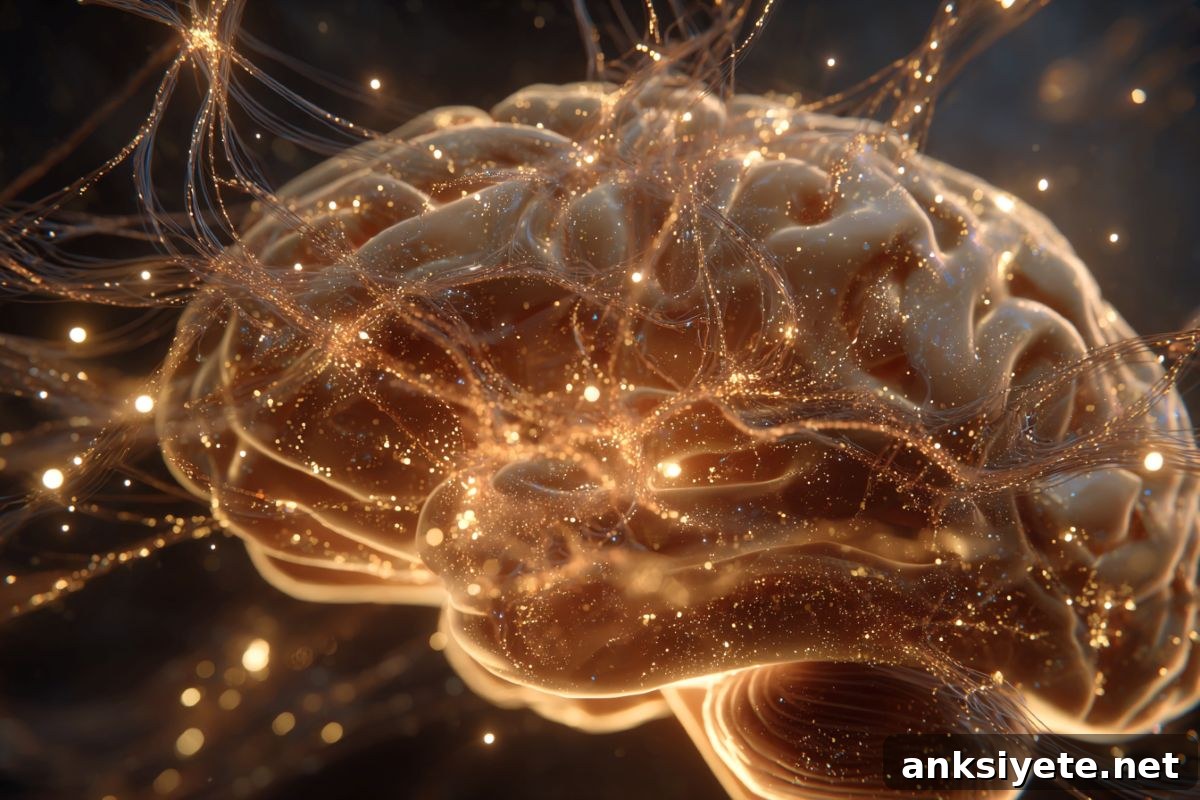
Summary: The sensation of a “full head” or intense information overload—especially when you can’t recall a moment your partner remembers clearly—is common. Neuroscience shows the brain is not a container that fills up; it is an active filtering, encoding, and reconstruction system.
Unlike a hard drive that stores fixed files, the brain relies on attention to encode experiences and on reinforcement to preserve them. Most memories we think were “lost” weren’t erased; they were either never fully formed because attention was elsewhere, or the path to retrieve them has simply weakened over time.
Key facts about memory, storage, and attention
- Filtering system: The brain does not record every detail. Attention decides what is noticed, emotion tags what matters, and the hippocampus helps decide what moves into longer-term memory.
- Encoding versus storage: If you’re distracted—checking times on a holiday, planning the next step, or juggling work—an experience may never be effectively encoded. In those cases the memory was never fully created rather than being erased.
- Reconstruction: Memories are not exact playbacks. Each recall rebuilds the event from fragments of sensory detail, prior expectations, and current context, which reshapes the memory over time.
- Capacity in theory: Some researchers estimate the brain’s theoretical capacity around one petabyte—roughly equivalent to 13 years of HD video—but this figure is only a rough analogy. The brain constantly reorganizes and integrates information, so it does not “fill up” like a disk.
- Working memory versus long-term memory: Working memory (like computer RAM) is very limited and holds only a few items at once. Long-term memory is a distributed, dynamic network. The “full” sensation usually reflects processing limits—too many things demanding attention—rather than a true storage shortage.
Source: The Conversation
Personal example: My husband recently described a small, pleasant moment from a past holiday that he remembered vividly. I had no memory of it. He was surprised and asked whether I had simply “run out of space” in my head.
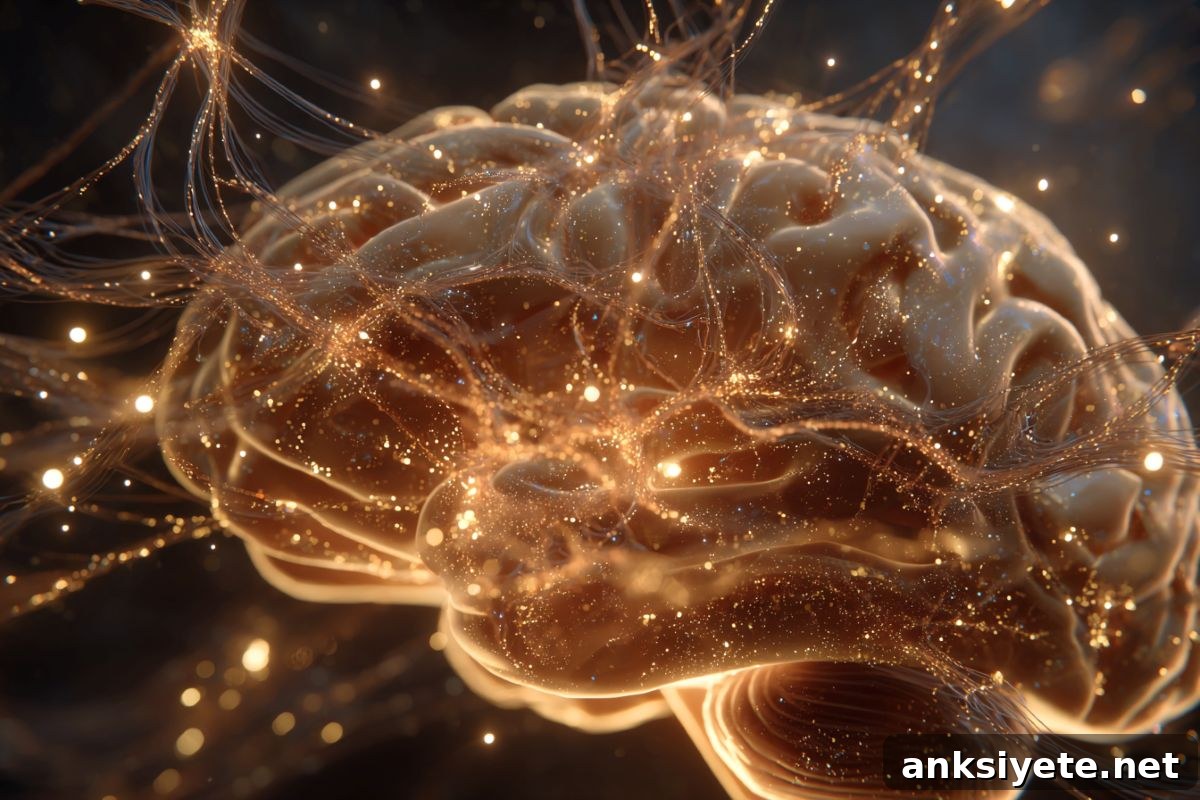
It’s tempting to explain such differences by imagining the brain as a container that fills up. In reality, the brain acts as a selective system. At any moment, far more sensory information is available than could possibly be stored. To cope, the brain selects: attention determines what is noticed, emotion signals importance, and brain structures decide what should be consolidated for later retrieval.
If your attention is focused elsewhere—planning logistics, dealing with stress, or multitasking—the event may never be properly encoded. My husband might have paused to enjoy a view while I was thinking about directions or the next activity. We both experienced the same holiday, but our brains recorded different slices of it.
Even memories that are encoded successfully are not fixed snapshots. Each time we recall an event we reconstruct it, combining sensory fragments with what we already know and expect. Rehearsal—through retelling or reflection—strengthens those reconstructions, making them feel more vivid and consistent over time. That explains why two people who shared a moment can later have strikingly different recollections.
Where the computer analogy breaks down
Comparing memory to computer storage is useful to a degree. Working memory resembles RAM—fast, temporary, and limited—while long-term memory is often likened to a hard drive. But the brain does not store isolated files in fixed locations. Memories are distributed across overlapping neural networks. New experiences interact with existing ones, altering both. Capacity is flexible, information is integrated, and unused traces may fade rather than being actively erased.
So what happens to memories we want to keep? Many fade not because the brain is full, but because they aren’t reinforced. Memory is preserved when it is revisited, retold, or connected to other experiences. Without that reinforcement, even meaningful moments become harder to access.
Often what is missing is not the memory itself but the retrieval path. A familiar smell, song, or sudden detail can unlock a memory that felt lost for years—revealing that a trace remained in the neural network, but the route to it had weakened.
Common questions answered
Q: If my brain isn’t full, why does it feel like I can’t take in more information?
A: You’ve reached a processing limit, not a storage limit. Working memory is small and easily overloaded by stress or multitasking. When “mental RAM” is maxed out, new information struggles to be encoded into longer-term memory.
Q: Why does my partner remember an event differently?
A: Different attention and focus produce different memory traces. If one person concentrated on a sunset and the other on logistics, they effectively recorded different aspects of the same moment. Repetition and retelling then strengthen each person’s version.
Q: Can a memory that seems gone come back?
A: Often yes. The memory’s trace can persist even when retrieval is difficult. A specific cue—a smell, sound, or image—can reconnect you to a memory that seemed entirely lost.
Editorial notes
- This article was edited by a Neuroscience News editor.
- The referenced journal paper was reviewed in full.
- Additional context was added by editorial staff.
About this memory research news
Author: Michelle Spear
Source: The Conversation
Image: The image is credited to Neuroscience News