
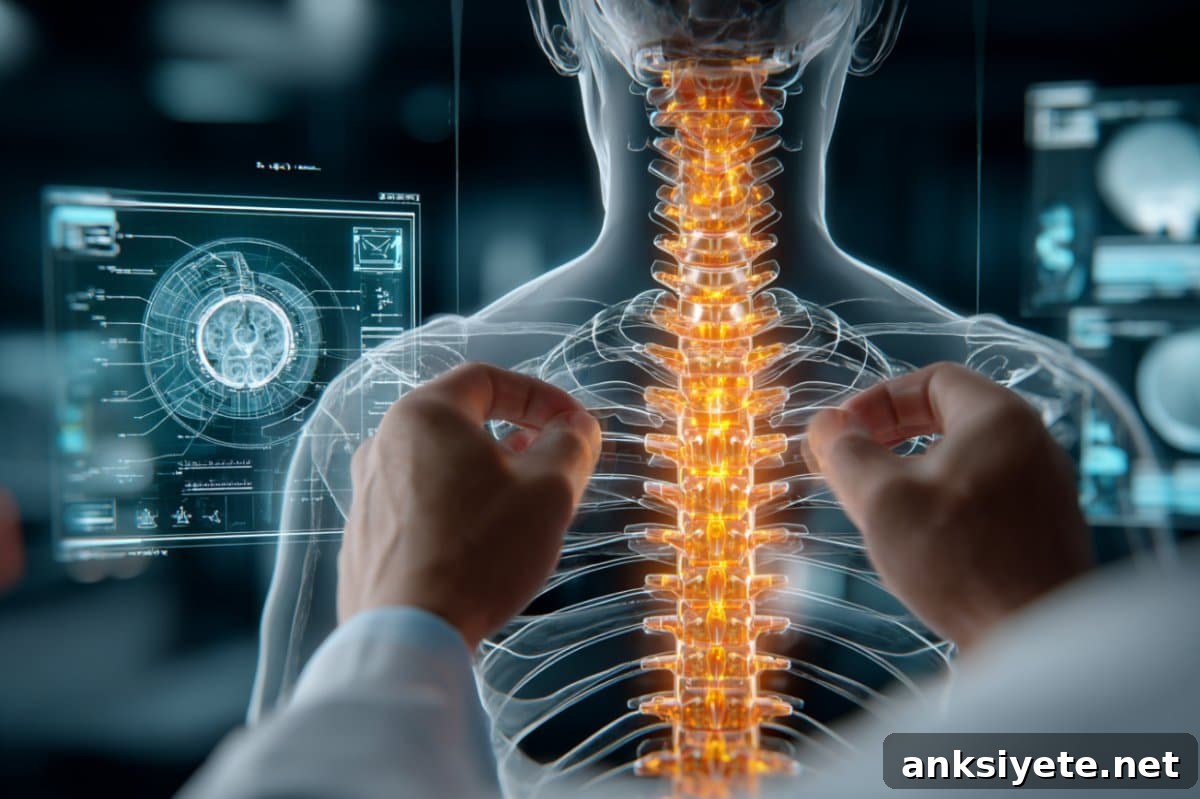
Summary: Surgeons at UC San Diego Health have completed the world’s first anterior cervical spine surgery using a fully personalized implant created to match a single patient’s anatomy. Moving beyond standard, mass-produced devices, this customized implant was planned with AI-assisted imaging and then produced with medical-grade 3D printing for precise fit, alignment, and structural support.
This innovation has the potential to lower complication rates, enhance post-operative mobility, and shorten recovery periods for people with cervical spine conditions. Experts describe the achievement as a pivotal move toward a future in which orthopedic implants are tailored to individual patients rather than manufactured to generic specifications.
Key Facts
- Personalized implant: AI-assisted planning and 3D printing were used to design and manufacture an implant tailored to one patient’s cervical anatomy.
- Clinical benefits: A custom fit can improve spinal alignment, reduce mechanical stress, and may decrease pain and complication risks.
- Broader implications: This approach points toward wider adoption of patient-specific implants for spine, hip, and knee procedures in the future.
Source: UCSD
UC San Diego Health reports the first anterior cervical spinal fusion using a fully personalized implant designed for an individual patient’s anatomy.
The pioneering operation, performed in July 2025, was an anterior cervical procedure. In this approach, surgeons make an incision at the front of the neck to access and remove a damaged intervertebral disc and then fuse the adjacent vertebrae to stabilize that segment of the spine. Traditionally, surgeons have used standardized implants that aim to fit a wide range of patients; when those devices do not match a patient’s anatomy precisely, alignment, healing, and range of motion can be affected.
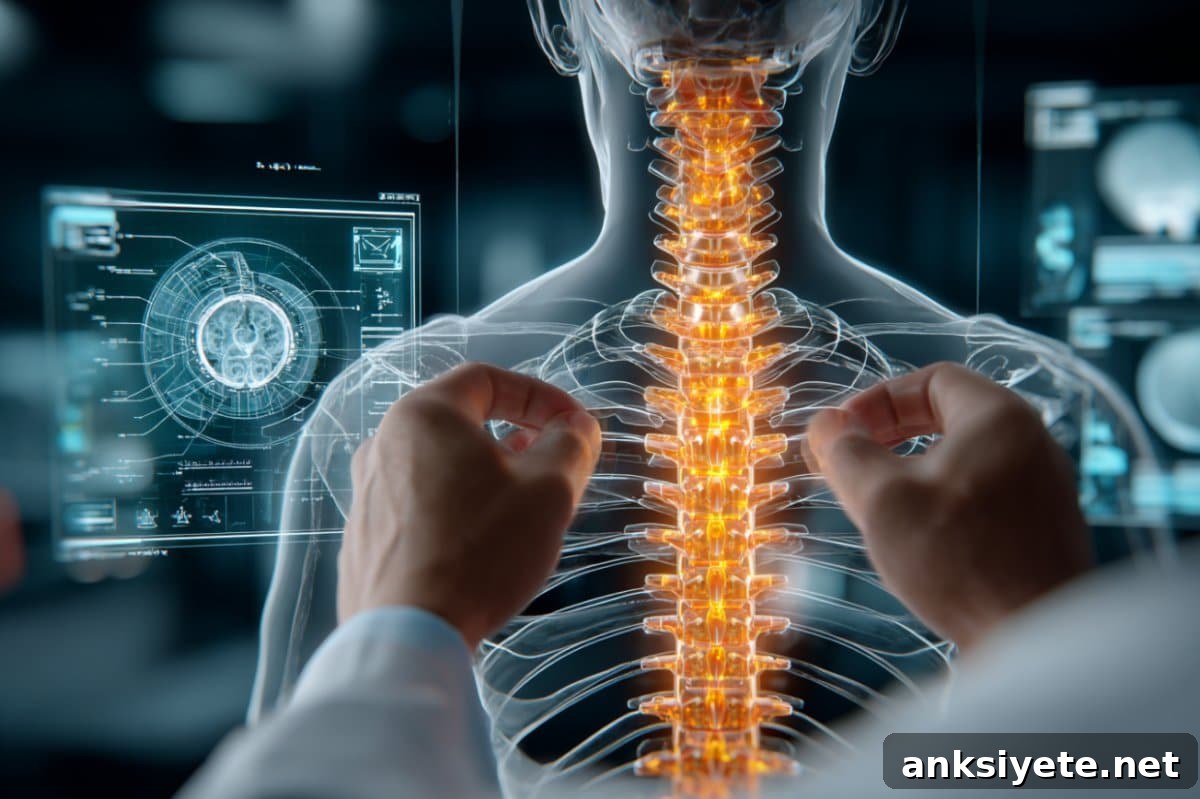
For this case, the surgical team acquired high-resolution imaging of the patient’s cervical spine to capture the exact dimensions and relationships of the vertebral bodies, disc spaces, and surrounding structures. Those images were used in an AI-assisted planning workflow to generate a design that matched the patient’s unique anatomy. The finalized design was then produced using medical-grade titanium and precision 3D printing, yielding an implant meant to integrate with the patient’s own bony structure while providing optimal support and alignment.
“Every spine is unique, just like a fingerprint,” said Joseph Osorio, MD, PhD, associate professor of neurological surgery at the University of California San Diego School of Medicine and neurosurgeon at UC San Diego Health. “With this technology, we can create an implant specifically for each patient, instead of asking their body to adapt to a standard device. It’s a fundamental shift in how we approach complex spine surgery.”
Because the implant is tailored to the individual’s anatomy, it can better preserve healthy tissues and maintain or restore natural spinal alignment. That precision can reduce mechanical mismatch between implant and bone, potentially lowering the risk of hardware-related complications, decreasing adjacent segment stress, and supporting faster functional recovery. Such benefits are particularly relevant for conditions like spinal stenosis, degenerative disc disease, and certain spinal deformities, where alignment and load distribution are critical to outcomes.
The UC San Diego Health neurosurgical team, led by Dr. Osorio, reports that the case demonstrates how combining advanced imaging, AI-driven design, and additive manufacturing enables a new level of personalization in implantable devices. While anterior cervical fusion has been a standard technique since the 1950s, applying a fully patient-specific implant in this context represents a historic step for spine surgery.
“This is the first step in a larger transformation,” Dr. Osorio added. “We envision a future where every implant, whether for the spine, hip, or knee, is made for one person, not mass-produced for everyone.”
Alexander Khalessi, MD, MBA, chair of the Department of Neurosurgery at UC San Diego School of Medicine and neurosurgeon at UC San Diego Health, noted that the milestone brings personalized medicine into the operating room. He emphasized how device innovation paired with rigorous surgical technique can restore function and expand treatment options for patients facing complex spinal disorders.
UC San Diego Health’s spine program has earned national recognition and accreditation for excellence in spine surgery, reflecting the institution’s focus on safety, high-quality outcomes, and evidence-based care. This case adds to ongoing efforts to modernize neurosurgical practice by integrating digital planning tools and additive manufacturing into routine clinical workflows.
About this neurosurgery and AI research news
Author: Leslie Aquinde
Source: UCSD
Contact: Leslie Aquinde – UCSD
Image: The image is credited to Neuroscience News