
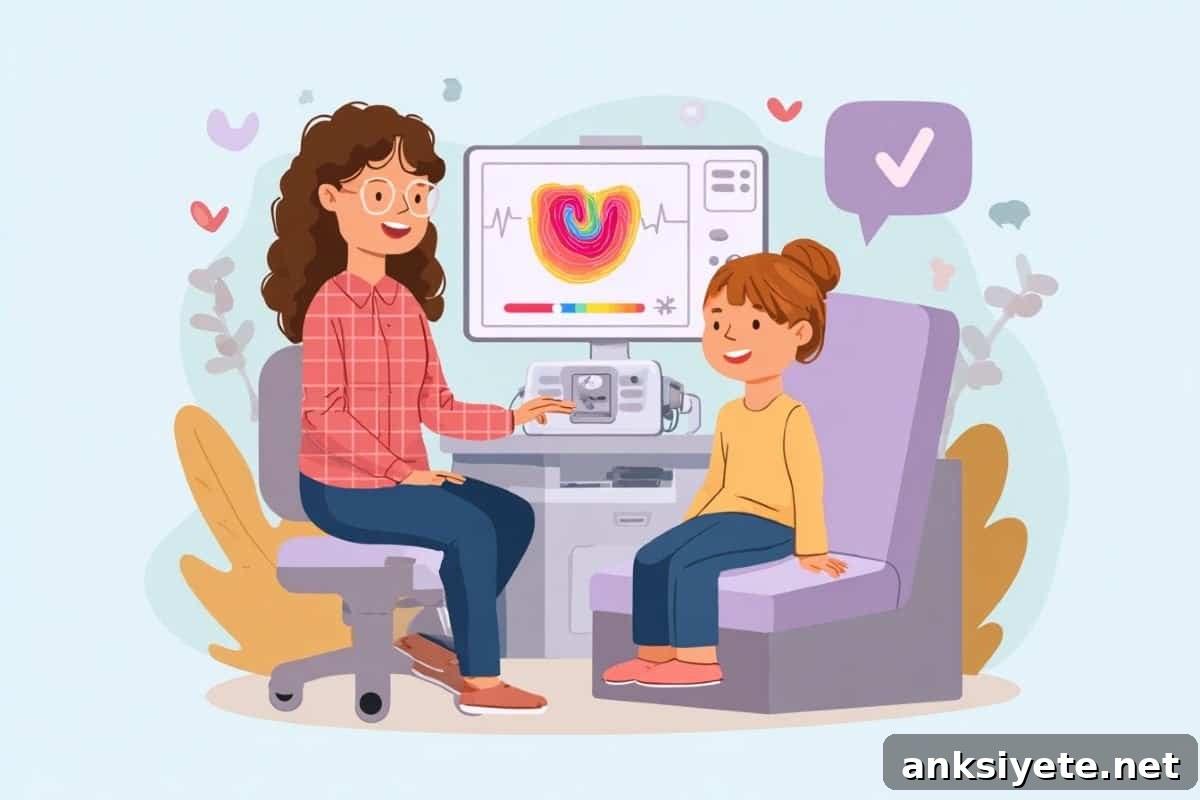
Summary: A large randomized clinical trial evaluated biofeedback-based therapy for children with residual speech sound disorder (RSSD), a condition in which pronunciation errors—most notably the “r” sound—persist beyond the typical age of mastery. Biofeedback approaches, such as ultrasound imaging of the tongue or visual-acoustic displays, give children real-time visual cues to guide tongue placement and movement, accelerating gains on challenging sounds.
The study found that biofeedback produced substantially faster early progress than traditional motor-based speech therapy. Over the initial three therapy sessions, participants receiving biofeedback improved at more than twice the rate of those in conventional treatment. Researchers suggest this may shorten treatment courses, reduce frustration for children, and help speech-language pathologists manage heavy caseloads more effectively.
Key facts
- Accelerated improvement: Biofeedback resulted in a 2.4× faster rate of change over the first three sessions compared with motor-based approaches.
- Visual guidance tools: Techniques included ultrasound imaging of the tongue and visual-acoustic displays that show speech as waveforms, helping children see differences between their productions and target sounds.
- Clinical implications: Faster early gains could reduce total therapy time and ease bottlenecks for clinicians treating persistent “r” errors.
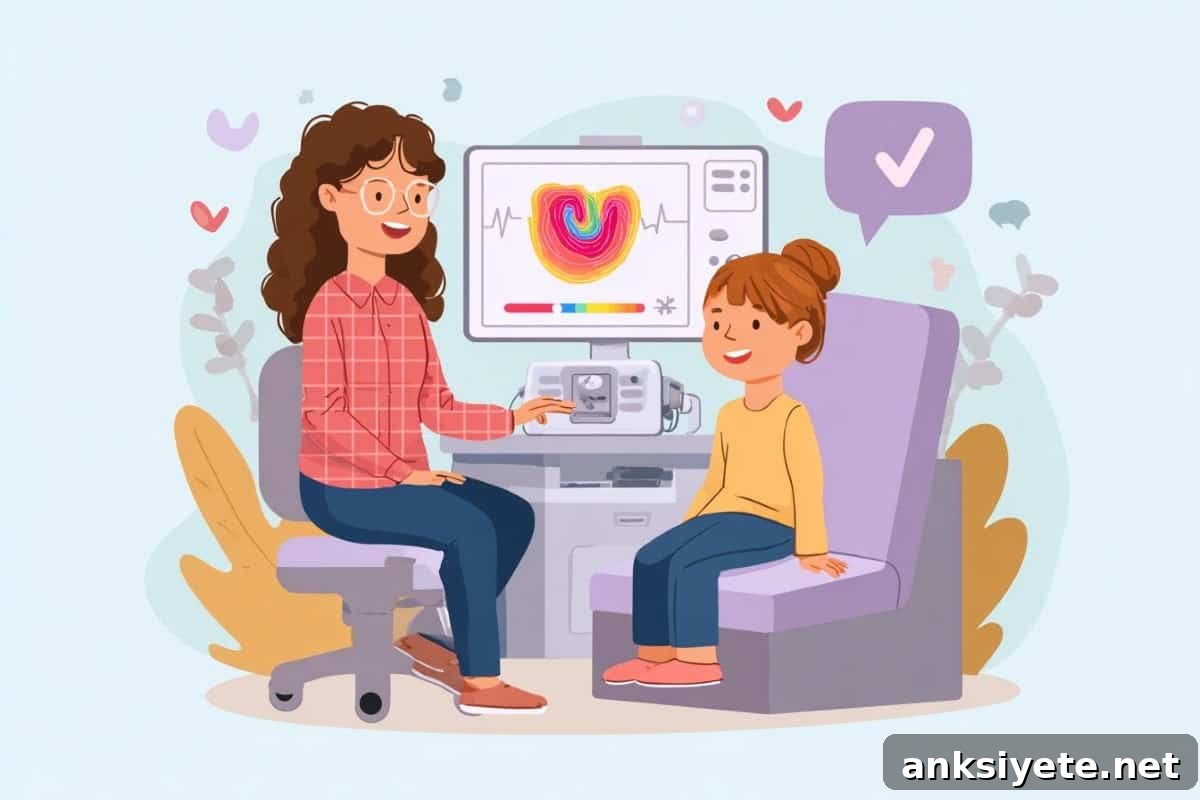
Producing the English “r” requires precise coordination of the tongue’s shape and position. Most children acquire this sound naturally, but some continue to pronounce it incorrectly past age eight, a condition known as residual speech sound disorder (RSSD). These persistent errors can affect intelligibility, academic performance, and self-confidence.
In this multi-site clinical trial, researchers investigated whether integrating biofeedback into therapy could speed correction of persistent “r” errors. Biofeedback augments traditional instruction—where clinicians model sounds and give verbal or tactile cues—by adding a dynamic visual representation. For example, an ultrasound probe placed under the chin captures live video of tongue contours, while visual-acoustic systems display speech energy and formant patterns as waveforms that children can observe and compare to target productions.
Lead author Tara McAllister, an associate professor of communicative sciences and disorders, explains the practical advantage: “Traditional treatment can be frustrating for children who don’t always hear the difference between their pronunciation and the model provided by their clinician. With biofeedback, the clinician can show the difference, making it easier for the child to adjust.” The study provides controlled evidence supporting biofeedback as a way to accelerate progress on persistent “r” difficulties.
The trial enrolled 108 children ages 9–15 with RSSD and randomly assigned them to one of three treatment arms: (1) ultrasound biofeedback, (2) visual-acoustic biofeedback, and (3) motor-based treatment without biofeedback. Each child attended therapy sessions over a 10-week period. Researchers measured improvement toward accurate “r” productions using acoustic metrics that quantify the difference between correct and incorrect pronunciations, then calculated the rate of change over the early sessions.
Results showed that all three approaches produced improvement, but the early rate of change was markedly higher for biofeedback groups. Across the first three sessions, the improvement rate for biofeedback participants was 2.4 times greater than for those receiving only motor-based instruction. The study found no significant difference in effectiveness between ultrasound and visual-acoustic biofeedback, suggesting both modalities can offer meaningful clinical benefit.
These findings, published in the Journal of Speech, Language, and Hearing Research, carry practical implications for speech-language pathologists and educators. Persistent “r” errors are a common source of referral and can create long waits for therapy. By producing faster early gains, biofeedback has the potential to reduce overall treatment time, lower frustration for children and families, and allow clinicians to allocate resources more efficiently across caseloads.
Funding: This research was supported by a five-year, $3.1 million grant from the National Institute on Deafness and Other Communication Disorders (R01DC017476). New York University served as the lead awardee, with collaborative sites at Syracuse University and Montclair State University.
About this neurotech research news
Author: Jade McClain
Source: NYU
Contact: Jade McClain – NYU
Image credit: Neuroscience News
Original research: Findings reported in Journal of Speech, Language, and Hearing Research