
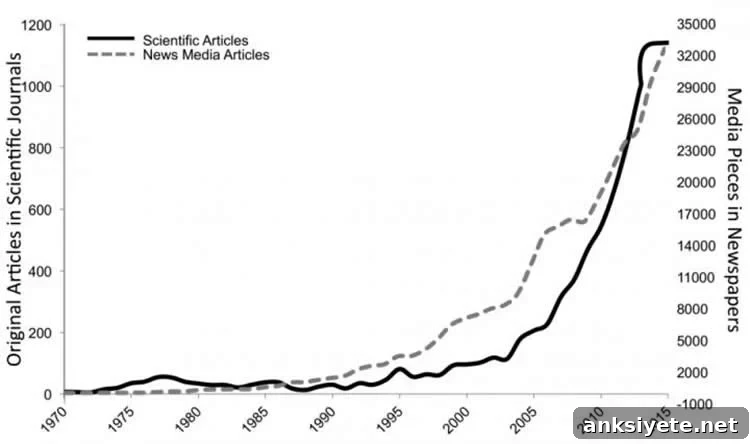
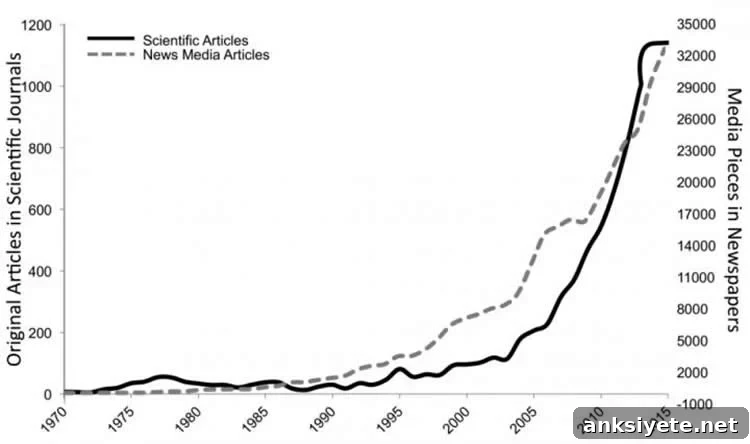
Summary: A new review examines the rapid spread of mindfulness and meditation and calls for stronger scientific standards to determine their real benefits and risks.
Source: Brown University.
Scientific evidence has not kept pace with the rapid adoption of mindfulness and meditation for a wide range of mental and physical health goals, argue 15 experts in a new article in Perspectives on Psychological Science. The paper presents a critical evaluation and a prescriptive research agenda intended to replace hype with rigorous methods in both research and clinical practice.
Interest in mindfulness and meditation has surged in the media, the research literature, and in clinical programs targeting depression, addiction, chronic pain and stress reduction. The authors warn that this rapid uptake has put the field at a crossroads where rigorous standards and safeguards are urgently needed.
“Misinformation and poor methods in previous mindfulness studies risk harming, misleading, and disappointing the public,” the authors write.
Co-author Willoughby Britton, assistant professor of psychiatry and human behavior at the Warren Alpert Medical School of Brown University, notes: “Benefits of mindfulness are sometimes oversold to virtually anyone with a condition, without sufficient caution, nuance, condition-specific adaptation, instructor training standards, or basic science on mechanisms of action. Potentially unsafe or adverse effects have been largely overlooked. Given mindfulness’s wide use in mental health services, schools and consumer apps, this is a public health concern.”
Lead author Nicholas Van Dam, a clinical psychologist and research fellow in psychological sciences at the University of Melbourne, stresses that the goal of the paper is constructive: not to dismiss mindfulness, but to ensure its applications reflect sound scientific evidence. Major reviews in 2007 and 2014, he notes, showed that many claims remained unsupported.
“We believe mindfulness and meditation can be helpful,” Van Dam said. “But the rigor needed to develop and apply these practices is often missing. Large-scale trials to date have produced mixed or equivocal results.”
David E. Meyer, professor of psychology at the University of Michigan and co-author, added: “Sometimes promising areas become commercialized or widely applied before the science matures; researchers and clinicians should pause, reassess, and plan more carefully before moving forward.”
Brown University recently established a research center led by Eric Loucks, associate professor in the School of Public Health, to support higher-quality research into mindfulness and health.
“The center will perform methodologically rigorous research on how mindfulness affects health and will develop evidence-based resources for hospitals, schools and businesses seeking to implement mindfulness-based interventions,” Loucks said.
A young, poorly defined field
One of the field’s largest challenges is inconsistent or vague definitions of “mindfulness.” The authors point out there is no single, universally accepted technical definition and little agreement on the details of the underlying concept. As a result, studies often investigate very different practices while using the same label, making findings difficult to compare or interpret.
“Any study using the term ‘mindfulness’ should be examined closely to determine the exact type of practice, the explicit instructions given to participants, and whether the intervention targeted a specific, well-defined form of mindfulness or another meditation practice,” the authors wrote.
Without precise terminology for both practices and expected effects, programs such as mindfulness-based stress reduction (MBSR) cannot produce valid, comparable measurements needed for reliable evidence. The article therefore proposes a non-exhaustive set of defining features to characterize contemplative and meditative practices.
Greater rigor
Precise, standardized definitions must be paired with stronger research designs, the authors argue. Many intervention studies use weak or inactive control groups, and outcome measures are inconsistent across trials.
Van Dam compares the situation to early intelligence research: intelligence was once treated as a single vague construct, but progress came from studying specific cognitive capacities that contribute to overall functioning. Similarly, future mindfulness research should identify which biological, emotional, cognitive, behavioral and social functions change as a result of specific training protocols.
“We recommend future research clearly describe mindfulness measures, primary outcome measures, the exact meditation practices used, and full intervention protocols,” the authors state. “Replication with randomized designs and proper active controls is essential.”
Clinical care
Although a wide range of contemplative practices have been tested for many purposes, few studies have reached the level needed to confidently say an effect is directly caused by the practice. According to the National Institutes of Health stage model for clinical research, only about 30 percent of mindfulness-based interventions (MBIs) have advanced beyond early-stage studies, and only 9 percent have tested efficacy in a clinical setting against active controls.
“Given the lack of rigorous clinical evidence, use of MBIs in clinical contexts should be considered preliminary,” the authors conclude.
The paper calls for an ambitious research agenda to strengthen the evidence base, including larger randomized trials, consistent outcome measures, and transparent reporting of protocols and measures.
Researchers and clinicians have begun to pay more attention to potential adverse effects of mindfulness practice, but monitoring remains limited: as of 2015, fewer than 25 percent of meditation trials actively tracked negative or challenging experiences.
Contemplative neuroscience
Neuroimaging and related tools hold promise for clarifying how mindfulness affects the brain, but the authors urge caution. Techniques such as MRI depend on minimal head motion and can be influenced by breathing patterns. Experienced meditators may present different physiological baselines than novices or non-meditators, so between-group differences in scans could reflect motion or respiration rather than true differences in neural processes.
“Contemplative neuroscience has often produced overly simplistic interpretations of nuanced neurocognitive and affective phenomena,” the authors write. Such oversimplification can exaggerate benefits and encourage premature societal enthusiasm for mindfulness practices.
Overall, the authors’ core concern is clear: without more and better science, the broad labels “mindfulness” and “meditation” risk being treated as universal remedies when, in reality, well-defined interventions may help only particular people under specific circumstances. Inadequate evidence could cause wasted time and money or, worse, unnecessary harm.
“This paper is a coordinated effort among concerned researchers and meditation scholars to close the evidence gap and to maximize benefit while minimizing harm from mindfulness-based interventions,” Britton said.
Source: David Orenstein – Brown University
Image Source: NeuroscienceNews.com image credited to Van Dam et al.
Original Research: Full open-access research: “Mind the Hype: A Critical Evaluation and Prescriptive Agenda for Research on Mindfulness and Meditation” by Nicholas T. Van Dam et al., Perspectives on Psychological Science. Published online October 10, 2017. doi:10.1177/1745691617709589
Abstract
Mind the Hype: A Critical Evaluation and Prescriptive Agenda for Research on Mindfulness and Meditation
Over the past two decades, mindfulness meditation has moved from a niche research topic to widespread use in psychotherapy, corporate well-being programs, education, and even military resilience training. Yet the mindfulness movement and the evidence base have attracted criticism. Misinformation and weak methods may lead the public to be harmed, misled, or disappointed. This article examines definitional challenges, delineates the proper scope of research, and details crucial methodological issues for interpreting mindfulness studies. Drawing on a range of expertise, the authors summarize what is known and unknown, and propose a prescriptive agenda for contemplative science with a focus on measurement, training protocols, potential adverse effects, and brain imaging. The goals are to inform scientists, the media and the public, to reduce harm, curb poor practices, and limit misinformation about the benefits and limitations of mindfulness meditation.