
Summary: Tumor Paint (BLZ-100) helps surgeons identify and remove brain tumor tissue, improving outcomes for a young child with medulloblastoma.
Source: Seattle Children’s Hospital.
Early signs and an unexpected diagnosis
In late December, Laura Coffman noticed her 2-year-old son, Hunter, leaning to one side and losing his balance more than usual. When he became increasingly lethargic and began vomiting on December 28, she took him to their pediatrician. Standard tests returned normal, so the family was referred to Seattle Children’s Hospital for deeper evaluation. The results were devastating: Hunter had a brain tumor roughly the size of a golf ball.
“What I thought was probably just Hunter being a wobbly toddler with a virus turned out to be a brain tumor,” Coffman recalled. “I will never forget that day. It was the most traumatic six hours of our lives.”
Tumor Paint sheds some light
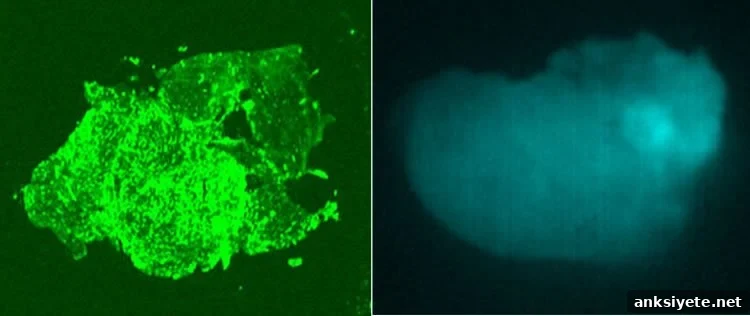
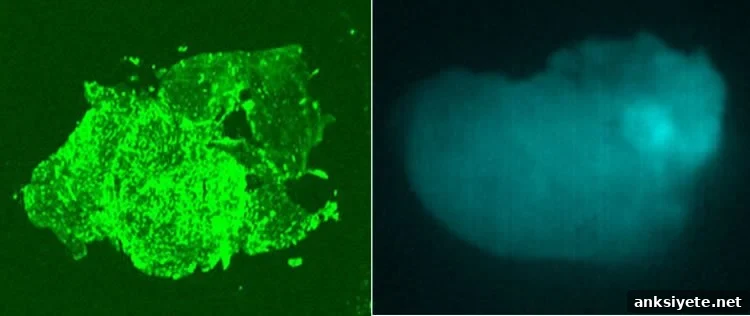
Given the tumor’s size and location, Hunter was scheduled for surgery. Before the operation, Coffman and her husband, Atom, were offered enrollment in a Phase 1 trial at Seattle Children’s studying BLZ-100, commonly called Tumor Paint. BLZ-100 is designed to help surgeons distinguish tumor tissue from healthy brain tissue during surgery by lighting tumor cells under a specialized light and near-infrared camera system.
The family decided to participate. “We didn’t see how it could hurt and we wanted them to use every tool at their disposal, so we enrolled him in the trial,” Coffman said.
On the day of surgery, BLZ-100 was given by intravenous injection before the operation. In the operating room, the drug caused tumor tissue to fluoresce green when viewed under a laser light and imaged with near-infrared equipment, effectively acting as a molecular flashlight to guide the neurosurgeon.
BLZ-100 was developed by a team including Dr. Jim Olson, pediatric neuro-oncologist at Seattle Children’s and Fred Hutch and co-founder of Blaze Bioscience. The Phase 1 trial focuses on safety and the agent’s ability to target tumor tissue; ultimately, the goal is to provide neurosurgeons with a reliable tool to remove tumor while sparing healthy brain tissue and reducing long-term side effects.
“Cure is not just about successful treatment of a tumor, but successful treatment of a child,” said Dr. Sarah Leary, principal investigator of the trial and Hunter’s oncologist. “Much of cancer treatment for children is a trade-off where curative therapy comes with serious long-term side effects. By lighting the way for expert surgeons, we’re hopeful that BLZ-100 Tumor Paint could help improve the quality of life for children by reducing treatment-related damage to the healthy brain.”
Surgery and recovery
Hunter’s surgery, performed by Dr. Amy Lee, went well. Surgeons removed the majority of the tumor, leaving a small portion on the brain stem intentionally because removing it would have risked severe neurological damage. Thanks to the team’s skill and the trial’s tumor visualization, Hunter recovered quickly.
“We were incredibly lucky to have such an amazing surgeon and we were thrilled that he was able to bounce back so quickly,” Coffman said. “He was able to walk, run and put words together only weeks after the operation.”
A terrifying diagnosis and the road to remission
Pathology revealed that Hunter’s tumor was an aggressive medulloblastoma. His next phase of care began promptly: seven months of combined chemotherapy and radiation to address the remaining tumor tissue and small lesions detected in his brain and spine.
“I remember how terrifying that diagnosis was to hear, but Dr. Leary was so optimistic and immediately reassured us when she said ‘this is a cancer that we’ve cured many times,’” Coffman said. The medical team’s experience and clear plan helped the family through the treatment.
Four weeks after completing therapy, MRI scans confirmed that Hunter was in remission. “The news was phenomenal – all of his cancer was gone,” Coffman said. “You can’t ask for anything more.”
Today: thriving after treatment
Today, Hunter is thriving. His hair has grown back, he is active—swimming and playing—and his speech and social skills continue to improve. “You’d never even know he had cancer or brain surgery,” Coffman said. Reflecting on their decision to join the trial, she added that having Tumor Paint available made a difficult situation feel more manageable.
“Brain surgery is not something you ever want to think about your child going through, but if that dreadful day ever comes, you definitely want a tool like Tumor Paint that could help guide the surgeon in making potentially life-altering decisions,” she said.
What’s next for BLZ-100 Tumor Paint in children
Since the trial began in June 2015, Seattle Children’s has used BLZ-100 during 15 pediatric brain surgeries. So far, none of the patients in the study have experienced adverse side effects attributed to the drug, and investigators are working to determine the optimal dose. Early results suggest BLZ-100 is binding to multiple types of pediatric brain tumors and reliably causing tumor tissue to fluoresce under near-infrared imaging.
“We have been excited to see that BLZ-100 Tumor Paint is binding to many different types of brain tumors in children and so far has not resulted in any side effects,” Dr. Leary said. “We are optimistic that in the future it could be an incredible tool when placed in the expert hands of a neurosurgeon that could lead to improved patient outcomes.”
Dr. Amy Lee, the lead neurosurgeon for the trial, added, “We believe BLZ-100 Tumor Paint holds tremendous potential and eventually could be a valuable aid for surgeons in differentiating tumor from healthy tissue, particularly when there are areas of question.”
Seattle Children’s aims for this Phase 1 trial to be followed by larger collaborative studies that evaluate BLZ-100’s effectiveness across multiple pediatric brain tumor centers. The next step will involve a multi-center study to measure how the technology affects surgical precision and long-term outcomes for children with brain tumors.
“In the future, I hope we’ll look back and wonder how these surgeries were ever done without the lights on,” said Dr. Leary.
About this brain cancer research article
Source: Alyse Bernal – Seattle Children’s Hospital
Image Source: Image adapted from the Seattle Children’s Hospital press release.