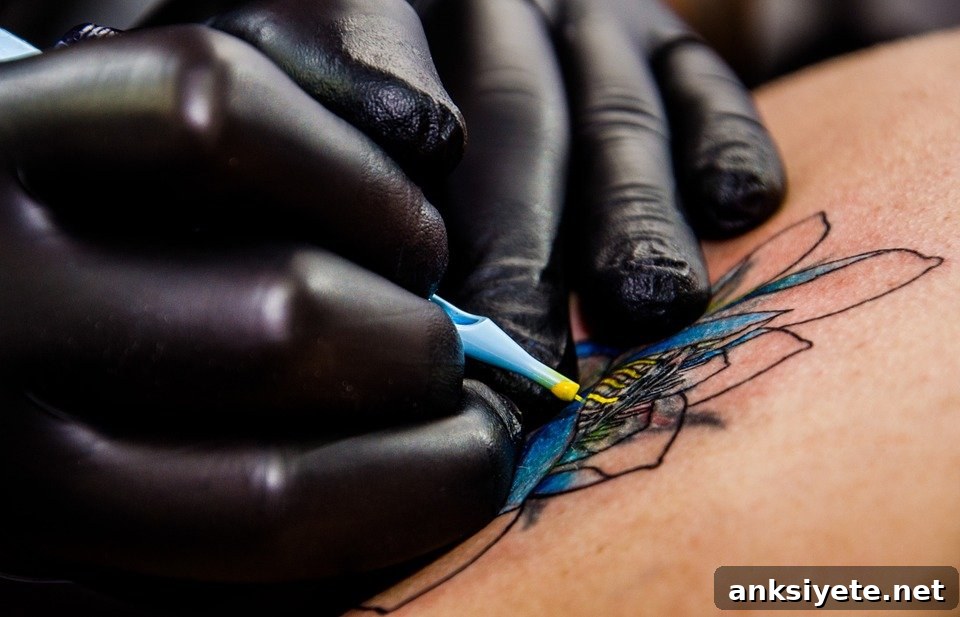
Summary: A new case report describes a woman who developed persistent muscle pain after receiving a tattoo while taking long-term immunosuppressive medication. Although the precise cause remains uncertain, clinicians suspect the tattooing process played a role and that her weakened immune system may have amplified the reaction.
Source: BMJ.
Doctors issue a caution after treating a woman for chronic pain in her left hip, knee and thigh that began several days after she was tattooed.
The patient had been on immunosuppressive medication for several years following a double lung transplant in 2009. She had previously received a tattoo on her right leg without complications, and later chose to have a second tattoo applied to her left thigh.
Immediately after the tattoo, she experienced mild local skin irritation, a common short-term reaction to tattooing. However, nine days after the tattoo was applied she developed intense pain in her left knee and distal thigh. The pain was severe enough to require strong analgesics.
Although her symptoms improved somewhat over time, they remained problematic ten months later. She was referred to a rheumatology clinic for evaluation. Routine tests for common inflammatory and autoimmune conditions were negative.
A biopsy of her thigh muscle, however, showed inflammatory myopathy — chronic inflammation of muscle tissue that typically presents with pain and sometimes weakness. In many instances the underlying cause of inflammatory myopathy is not identified and the condition can arise spontaneously. In this case, the timing and location of symptoms led the treating team to consider the tattooing process as a likely contributing factor, with the patient’s immunosuppression potentially compounding the response.
“While there is no definitive proof of causation, the onset and distribution of symptoms corresponded closely to the tattoo site, and there were no alternate explanations identified,” the authors note.
Treatment consisted primarily of physiotherapy focused on strengthening the thigh muscles. The patient began to show improvement one year after symptom onset and was free of pain three years after the episode began.
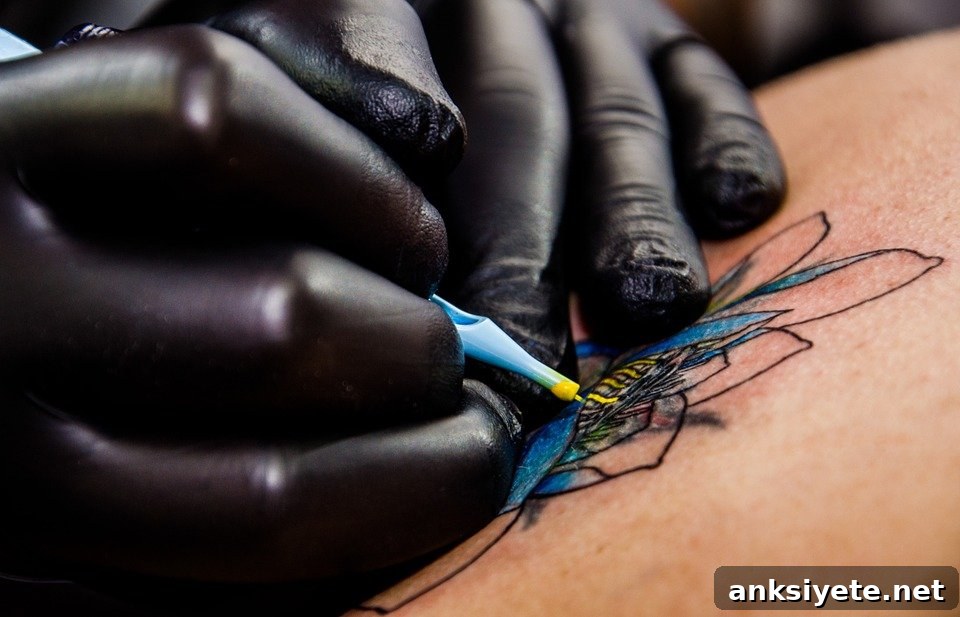
The authors point out that tattoo inks and pigments are known to cause adverse reactions in some individuals. Complications related to tattooing range from mild local irritation and allergic responses to bacterial and mycobacterial infections. In this case, the combination of an unregulated tattoo setting and the patient’s long-term immune suppression may have increased the risk of an atypical reaction.
“The tattoo industry in the UK lacks a single nationally regulated professional body to standardize practices,” the authors emphasize. “This case illustrates how an unregulated tattoo application, together with patient immunosuppression, could contribute to an adverse outcome.”
As tattooing becomes more popular, clinicians advise that patients with compromised immune systems should be aware of potential risks. Health professionals should also consider recent tattoos when evaluating unexplained musculoskeletal pain or unusual local symptoms in immunosuppressed individuals.
Source: Caroline White — BMJ
Publisher: NeuroscienceNews.com
Image source: NeuroscienceNews.com image (public domain).
Original research: Abstract for “Unusual association of diseases/symptoms: Unusual complication of a tattoo in an immunosuppressed patient” by William Thomas Wilson, Mannix O’Boyle, William J Leach. BMJ Case Reports. Published June 18, 2018.
doi: 10.1136/bcr-2018-224968
BMJ. “Beware of Getting a Tattoo if Your Immune System Isn’t Up to Scratch.” NeuroscienceNews. NeuroscienceNews, 18 June 2018.
Abstract
Unusual association of diseases/symptoms: Unusual complication of a tattoo in an immunosuppressed patient
Tattooing is increasingly common, and as uptake rises so do reports of tattoo-related complications. Patients often do not discuss tattoos with their medical teams, even when these could be relevant to clinical presentation. Young adults who require long-term immunosuppression may seek decorative tattoos, but they represent a population at increased risk of infection and atypical reactions, including cutaneous mycobacterial disease. Consequently, immunosuppressed patients merit special consideration before tattooing.
This report documents the first known case of inflammatory myopathy occurring after tattooing in an immunosuppressed individual. The patient presented with distal thigh and medial knee pain, and the connection to a recent tattoo only became apparent after time had passed. The case highlights the importance of including tattoo-related complications in the differential diagnosis of unusual, atraumatic musculoskeletal pain, particularly in patients with impaired immune function.