
QUT scientist explores stem cell approaches to repairing brain injury
Rachel Okolicsanyi, a researcher at the Genomics Research Centre within QUT’s Institute of Health and Biomedical Innovation, is investigating whether adult stem cells from bone marrow can be manipulated to help repair damage to the brain. Unlike many other cells in the body, most mature brain cells have a limited ability to divide and replace themselves, so injury to neural tissue is often considered irreversible. Okolicsanyi’s work focuses on shifting the fate of bone marrow-derived mesenchymal stem cells toward a neural lineage that could one day be applied to treat neurological damage.
Her research, published in the journal Developmental Biology, examines whether mesenchymal stem cells can be encouraged to show characteristics of neural precursor cells. If successful, such cells would be more likely to mature into neurons or glial cells and potentially replace or support damaged neural tissue.
“Neural cells form the structure and connections of the brain that enable movement, speech, hearing and vision,” Okolicsanyi explains. Her team studies how to prompt bone marrow-derived stem cells to adopt neural markers—molecular signs that indicate cells are moving toward a neural identity—rather than their typical differentiation paths into bone, cartilage or fat.
A central focus of the project is a group of molecules called heparan sulfate proteoglycans. These are complex proteins located on the surface of cells that carry long sugar chains and are known to participate in cell signaling and interactions with the surrounding extracellular matrix. By manipulating these proteoglycans and the cells’ microenvironment, the research aims to alter how stem cells respond to biochemical cues.
In the laboratory, the researchers modify the environment around the stem cells by adding or removing specific compounds—such as salts and common biological chemicals—to either inhibit or promote particular cellular processes. Observing how stem cells change their expression of neural markers in response to these interventions helps the team map which conditions favor neural differentiation.
Okolicsanyi uses an analogy to explain the proteins under study: the core protein sits on the cell surface with heparan sulfate chains branching off like limbs of a tree. Changes in the chemical environment can influence how these branches interact with signaling molecules and, consequently, how the cell behaves. Short-term, the research shows that relatively simple manipulations can alter stem cell characteristics. Long-term, the goal is to increase the neural potential of these cells in a controlled and reproducible way.
The broader aim is to develop a foundation for future therapies where stem cells could be introduced into the damaged brain and guided to restore lost function. For example, in stroke patients who have lost movement, speech or facial control when local neural circuits are disrupted, correctly guided stem cells might help re-establish electrical connectivity or provide support so remaining networks can compensate.
Okolicsanyi emphasizes that this research represents an early step focused on understanding mechanisms and demonstrating potential rather than offering an immediate clinical treatment. Moving from cell-culture findings to safe and effective therapies requires extensive further study, including functional testing in appropriate models and rigorous evaluation of safety.
The paper is titled: Mesenchymal stem cells, neural lineage potential, heparan sulfate proteoglycans and the matrix. Co-authors on the study are Professor Lyn Griffiths and Dr Larisa Haupt.
Contact: Sandra Hutchinson – QUT
Source: QUT press release
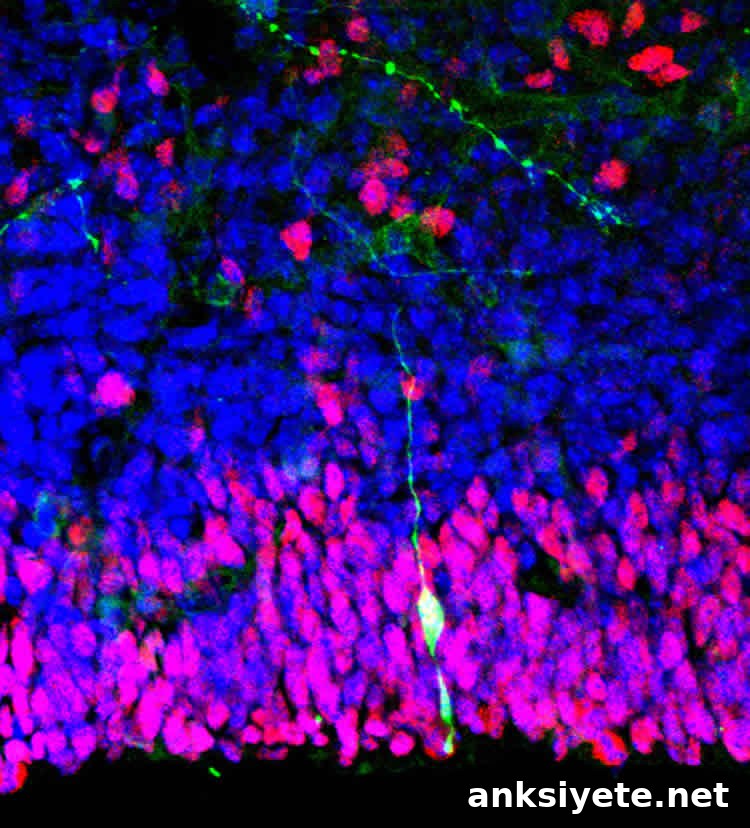
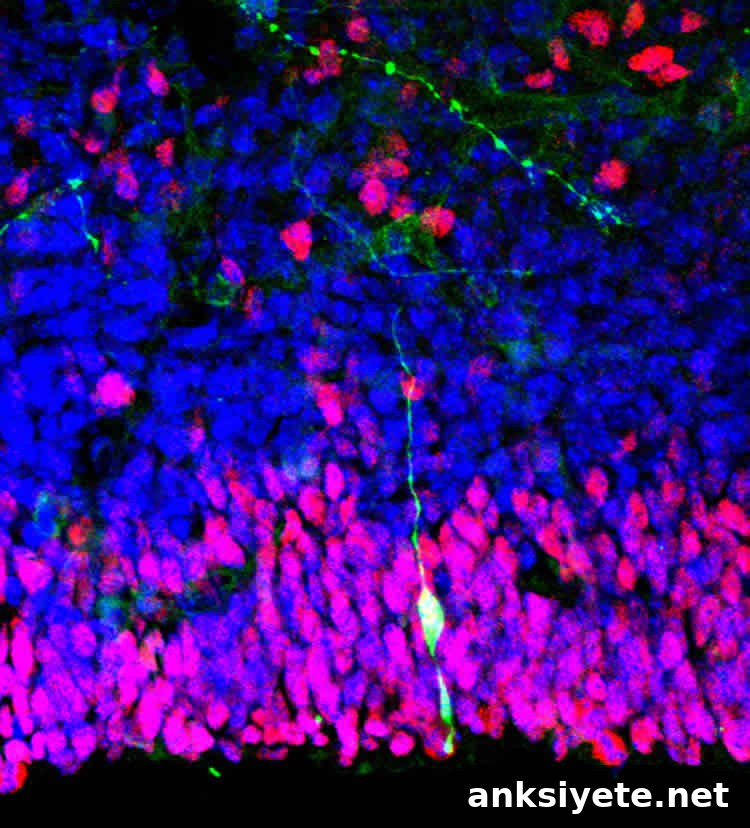
Image Source: Image credited to Joseph Elsbernd, licensed under Creative Commons Attribution-ShareAlike 2.0 Generic. The photograph is provided for illustrative purposes.
Original Research: Rachel K. Okolicsanyi, Lyn R. Griffiths, Larisa M. Haupt, “Mesenchymal stem cells, neural lineage potential, heparan sulfate proteoglycans and the matrix,” Developmental Biology. Published online April 1, 2014. DOI: 10.1016/j.ydbio.2014.01.024