
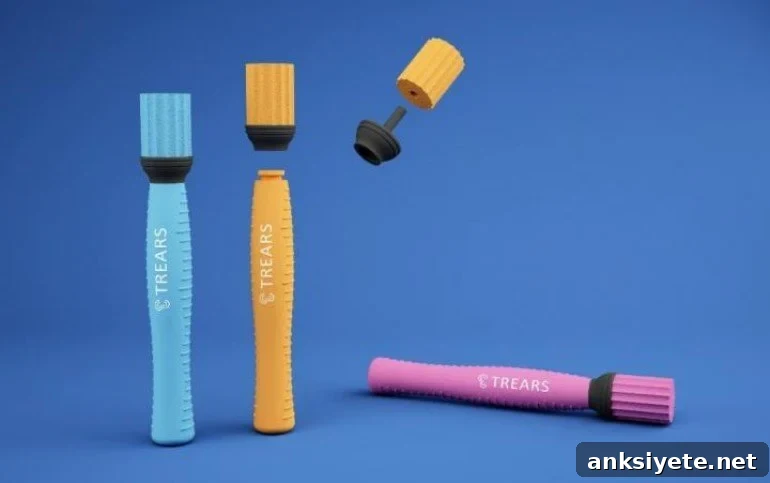
Summary: Researchers have developed a new device that can measure cortisol levels by sampling earwax.
Source: UCL
A simple, low-cost method for sampling earwax could offer an effective way to measure the stress hormone cortisol, according to new research led by teams at UCL and King’s College London.
Published in the journal Heliyon, the study suggests earwax sampling using a novel self-sampling device may provide a reliable biomarker for chronic cortisol exposure and could open new possibilities for monitoring depression and stress-related conditions.
The device is designed for comfortable home use without clinical supervision, supporting remote health checks and social distancing measures. Researchers also note the potential for earwax to carry other health indicators, such as glucose or antibodies, which might be detected with future adaptations of the method.
Lead researcher Dr Andres Herane-Vives (UCL Institute of Cognitive Neuroscience and Institute of Psychiatry, Psychology & Neuroscience, King’s College London) explained that existing cortisol sampling methods can be unreliable because cortisol levels fluctuate and the sampling process itself can cause stress. He said: “Cortisol sampling is notoriously difficult, as levels of the hormone can fluctuate, so a sample might not accurately reflect a person’s long-term cortisol exposure. Moreover, sampling methods themselves can induce stress and skew the results.”
He added: “Cortisol levels in earwax appear to be more stable. With our new device, it is easy to take a sample at home and have it tested quickly, affordably and reliably.”
Cortisol has long been studied as a potential objective biomarker for depression and other stress-linked disorders. Traditional methods—such as saliva, blood, or hair samples—each have limitations: saliva and blood reflect short-term levels, and hair analysis can be affected by short-term fluctuations, hair treatments, and may be unavailable for some individuals. Earwax offers a potentially stable medium that is well preserved and less prone to external contamination.
The inspiration for the device came from observing how well-preserved and contamination-resistant honeycomb is. Earwax shares similar protective properties, making it suitable for postal transport to laboratories without significant risk of degradation or contamination.
The self-sampling kit resembles a cotton swab but includes a built-in stop that prevents the tip from entering too far into the ear canal. The tip is made from an organic sponge material and delivered with a carefully tested solution that improves sample collection and stability.
In a pilot study, researchers from the UK, Chile and Germany recruited 37 participants to compare sampling methods. Participants underwent a clinical syringe extraction—commonly associated with some discomfort—and one month later provided samples again: the clinical syringe extraction in one ear and the new self-sampling technique in the other, which participants administered themselves. The study also collected hair and blood samples for comparison.
Results showed that earwax samples contained higher cortisol concentrations than hair samples, and the self-sampling technique was both faster and potentially less expensive to process. Notably, the novel technique produced cortisol measurements that were less affected by confounders such as recent stressful events or alcohol intake over the prior month. In a separate acceptability study, participants rated the self-sampling device as more comfortable than standard procedures.
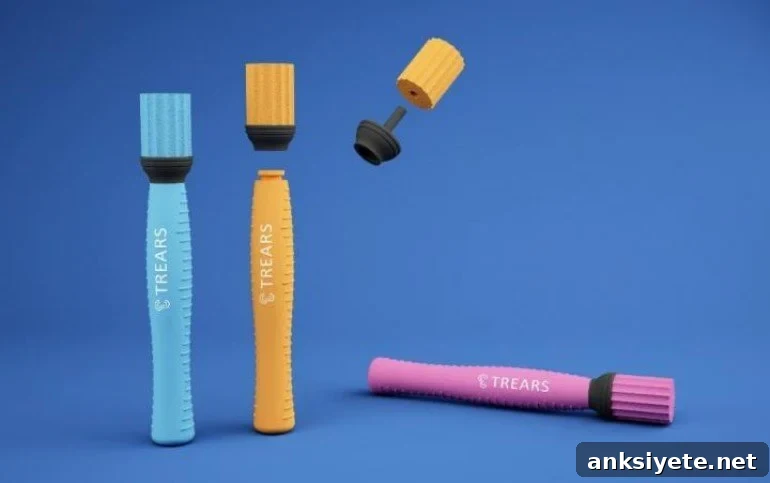
Dr Herane-Vives has founded a company, Trears, with support from the UCL Hatchery incubator to commercialize the earwax sampling kit. The team is also exploring whether the same approach could be adapted to measure glucose for diabetes monitoring or to detect antibodies such as those produced in response to viral infections.
“Following this successful pilot study, if the device continues to perform well in larger trials, we hope it will improve diagnostics and care for people with depression and cortisol-related disorders such as Addison’s disease and Cushing syndrome,” Dr Herane-Vives said. “It may also prove useful for a range of other health conditions where chronic hormone levels are informative.”
About this psychology research news
Source: UCL
Contact: Chris Lane – UCL
Image: The image is credited to Trears
Original Research: Open access.
“Measuring Earwax Cortisol Concentration using a non-stressful sampling method” by Herane-Vives et al. Heliyon
Abstract
Measuring Earwax Cortisol Concentration using a non-stressful sampling method
Background
Short-term samples (blood, saliva) do not reliably reflect long-term cortisol exposure. While hair has been used to estimate systemic cortisol over time, it has clinical limitations: local and systemic factors can influence cortisol deposition, hair may be affected by cosmetic treatments, and not all individuals have sufficient hair for sampling. A comfortable, non-stressful earwax sampling method may provide a more accurate and practical specimen for assessing chronic cortisol levels.
Methods
The study examined 37 healthy participants. Earwax was first extracted from both ears using a standard clinical syringe procedure, which can cause local discomfort. One month later, researchers repeated syringe extraction on the left ear and used the new self-sampling device on the right ear, which participants administered themselves. The protocol also included one centimetre of scalp hair to represent the previous month’s cortisol output and a serum sample to capture systemic, short-term cortisol changes. Earwax cortisol concentration (ECC), hair cortisol concentration (HCC), and serum cortisol concentration (SCC) were measured, compared and analyzed for potential confounding influences.
Results
Serum cortisol showed the highest concentrations and hair the lowest (p < 0.01). Cortisol measured from the left-ear syringe extraction (Left-ECC) was higher than from the right ear self-sampling (Right-ECC) (p = 0.03). Right-ECC was the only measure that was not significantly affected by examined confounders (all p > 0.05). A moderate correlation was observed between Right-ECC and HCC (r = 0.39; p = 0.03), suggesting earwax and hair reflect related but distinct aspects of cortisol exposure.
Conclusions
The self-sampling device did not cause a local cortisol increase and provided measurements least influenced by short-term confounders. Earwax collected with the novel device appears to be a promising, accurate, and affordable specimen for assessing chronic cortisol concentration and may be a practical alternative to hair or other methods for certain diagnostic and monitoring applications.