
A New Model for Understanding Neural Self-Regulation
Researchers present a theoretical framework explaining how neurons maintain stable function while their molecular components are continually replaced.
Unlike a car that must be taken out of service for repairs, the nervous system continually replaces the molecular parts of its cells while remaining fully operational. Neurons can survive for many years, yet the proteins and molecular machines that underpin their function are constantly being synthesized and degraded. Understanding how neurons preserve stable electrical and signaling properties amid this ongoing turnover is a central question in neuroscience.
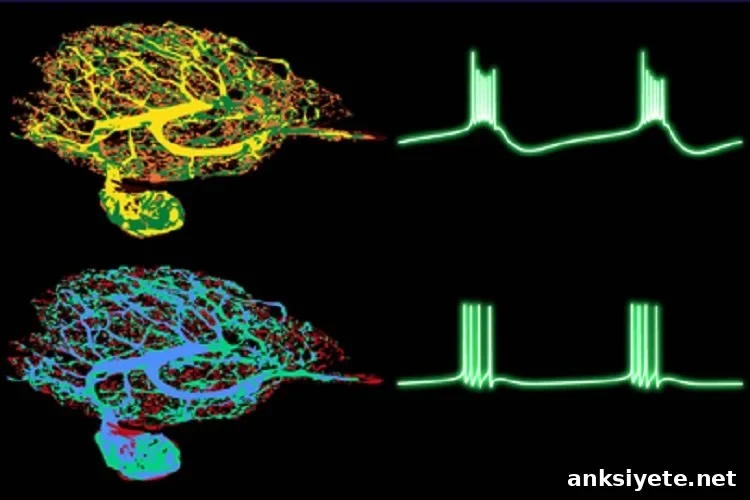
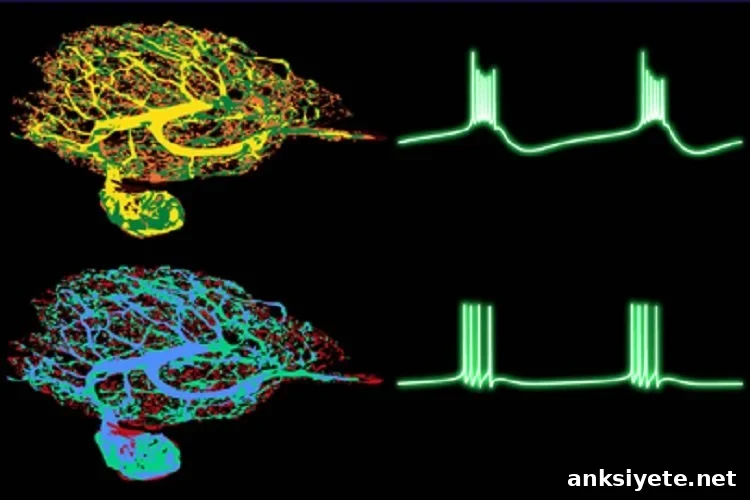
Eve Marder, the Victor and Gwendolyn Beinfield Professor of Neuroscience, and colleagues have developed a new theoretical model that addresses this problem. Published in Neuron, their work explores how cells internally monitor activity and regulate the expression of ion channels and receptors so that essential neuronal functions—such as movement control, sensory processing, learning and memory—are preserved despite constant molecular turnover.
Ion channels are the molecular gates embedded in neuronal membranes that determine how neurons respond to inputs and generate electrical signals. Different neuron types express distinct combinations and densities of ion channels, shaping their firing patterns and computational roles within circuits. Receptors, meanwhile, act like molecular microphones that detect neurotransmitters and enable neurons to communicate. Because both ion channels and receptors are continually synthesized and degraded, neurons must regulate their production and insertion into membranes to avoid disrupting circuit performance.
Earlier ideas suggested neurons might have a fixed “factory” setting that defines the numbers of channels and receptors each cell should maintain. Marder and her team argue that a rigid factory preset is implausible given the dynamic and changing environments neurons encounter throughout life. Instead, they propose that neurons rely on internal monitoring systems—sensors that gauge aspects of electrical activity and then adjust gene expression and protein trafficking to maintain desired functional properties.
The research team—Timothy O’Leary, Alex Williams, Alessio Franci, and Eve Marder—constructed a biologically plausible mathematical model of ion channel regulation centered on this internal monitoring concept. One key insight from their simulations is that neurons do not need to monitor every detail of their activity in order to preserve functional stability. In fact, attempting to regulate too many precise variables can be counterproductive. Redundant or conflicting target variables can interfere with each other, producing unstable regulatory dynamics.
“Certain target properties can contradict each other,” O’Leary explains. “You would not set your air conditioning to 64 degrees and your heat to 77 degrees. One might win over the other but they would be continually fighting each other and you would end up paying a big energy bill.” The analogy highlights how competing regulatory goals can create costly instability rather than robust control.
The model also reveals that neurons with very similar electrical behaviors can achieve those behaviors via different combinations of ion channel expression. In other words, cells can be functional “look-alikes” while differing substantially at the molecular level—what the authors liken to cellular homophones that sound the same but are written differently.
Importantly, the study shows that the same internal monitoring mechanisms designed to prevent runaway activity can, under some conditions, produce pathological outcomes such as neuronal hyperexcitability. This hyperexcitability forms the basis of seizure activity: even if single neurons maintain their individual set points, system-wide homeostasis can break down if compensatory processes interact in unintended ways.
These findings advance our conceptual understanding of how neuronal circuits remain stable in the face of ongoing molecular change and offer a framework for thinking about disease mechanisms. Rather than focusing solely on static deficits, the model points to dynamic regulatory processes that can become maladaptive. As O’Leary notes, “To understand and cure some diseases, we need to pick apart and understand how biological systems control their internal properties when they are in a normal healthy state, and this model could help researchers do that.”
This research was funded by the National Institutes of Health and the Charles A. King Trust.
Contact: Leah Burrows – Brandeis University
Source: Brandeis University press release
Image Source: The image is adapted from the Brandeis University press release
Original Research: Abstract for “Cell Types, Network Homeostasis, and Pathological Compensation from a Biologically Plausible Ion Channel Expression Model” by Timothy O’Leary, Alex H. Williams, Alessio Franci, and Eve Marder in Neuron. Published online May 21, 2014; doi:10.1016/j.neuron.2014.04.002