
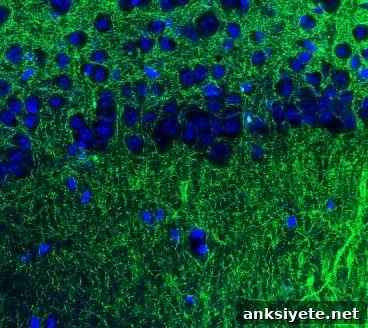
New findings may help neuroscientists pinpoint better targets for anti-anxiety treatments.
Anxiety disorders — including post-traumatic stress disorder (PTSD), social phobias and obsessive-compulsive disorder (OCD) — affect millions of adults each year. Current pharmacological treatments for anxiety are often broad in their action, can produce unwanted side effects, and do not reliably relieve symptoms for all patients. To design more effective, precise therapies, researchers need a clearer map of the brain circuits that produce and regulate anxiety.
Kay Tye, an assistant professor of brain and cognitive sciences and a member of MIT’s Picower Institute for Learning and Memory, and her colleagues have identified a specific neural pathway that appears to directly modulate anxiety-related behavior. By selectively increasing or decreasing the signaling between two brain regions in mice — the basolateral amygdala (BLA) and the ventral hippocampus (vHPC) — the team could reliably raise or lower anxious behavior. These results point to more targeted molecular and circuit-level interventions for anxiety disorders.
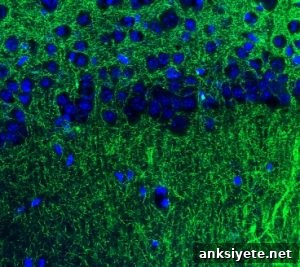
Image credited to Ada Felix-Ortiz/MIT
The study, published in the journal Neuron, was led by technical assistant Ada Felix-Ortiz and postdoctoral researcher Anna Beyeler, with contributions from Changwoo Seo, Christopher Leppla and Craig Wildes. Their work demonstrates a causal role for the BLA-to-vHPC projection in controlling anxiety-like behavior in rodents.
Measuring anxiety in animal models
Both the hippocampus, essential for memory formation, and the amygdala, central to emotion processing, have long been implicated in anxiety. What remained unclear was how specific connections between these regions influence anxiety-related behavior. To probe this question, the researchers used optogenetics, a technique that lets scientists control the electrical activity of genetically modified neurons with precise flashes of light.
They targeted a population of neurons in the basolateral amygdala that send long-range projections into the ventral hippocampus. By implanting optical fibers and selectively activating or silencing these axonal projections, the researchers could tune the strength of communication between the two regions.
Anxiety-like behavior in mice was assessed using standard behavioral paradigms that exploit rodents’ natural avoidance of open, exposed spaces. When the BLA-to-vHPC pathway was activated, mice spent significantly more time along the protective edges of an open arena, indicating an increase in anxiety. When the pathway was inhibited, mice explored open areas more readily, showing reduced anxiety-like behavior. Reversing the manipulation produced corresponding, reversible changes in behavior, underscoring the pathway’s direct influence.
Complex interactions and circuit specificity
This discovery builds on earlier work showing that different microcircuits within the amygdala can have opposing effects on anxiety. Neurons that look very similar in a single brain region may send projections to different downstream targets, and those distinct outputs can produce entirely different behavioral outcomes. This redundancy and complexity make sense from an evolutionary perspective: anxiety is a critical survival trait, so multiple mechanisms exist to scale threat responses up or down.
Understanding which specific projections increase versus decrease anxiety is essential for developing targeted treatments. The new findings specify the BLA-to-vHPC connection as one such modulatory pathway. Identifying molecular components unique to this connection — for example, particular synaptic proteins, receptors or ion channels that are enriched at these synapses — could reveal more selective targets for next-generation anxiolytic drugs with fewer side effects than current broad-acting medications.
Joshua Gordon, an associate professor of psychiatry, notes that the study’s value lies in pinpointing a defined anatomical link that contributes to anxiety. Clarifying the molecular machinery of that link creates a roadmap for drug discovery and more precise neuromodulatory interventions.
Future directions
The MIT team plans to expand this line of research by mapping other outputs from the amygdala to different hippocampal subregions and to the prefrontal cortex, another region implicated in anxiety and emotional regulation. Systematically charting these circuits and their behavioral consequences will improve our understanding of anxiety’s neural architecture and could guide the development of targeted therapies — pharmacological, genetic or circuit-based — that adjust activity in specific pathways rather than broadly altering brain chemistry.
Funding and acknowledgements
The research received support from the JPB Foundation, the Picower Institute Innovation Fund, the Whitehall Foundation and the Klingenstein Foundation. The study’s lead authors are Ada Felix-Ortiz and Anna Beyeler, with contributions from Changwoo Seo, Christopher Leppla and Craig Wildes, under the supervision of Kay Tye.
Written by Anne Trafton
Contact: Anne Trafton, MIT
Source: MIT press release summarizing the research reported in Neuron (August 2013).
Image credit: Ada Felix-Ortiz, MIT.
Original research: Neuron article titled “BLA to vHPC Inputs Modulate Anxiety-Related Behaviors” by Ada C. Felix-Ortiz, Anna Beyeler, Changwoo Seo, Christopher A. Leppla, Craig P. Wildes and Kay M. Tye. Published August 21, 2013.