
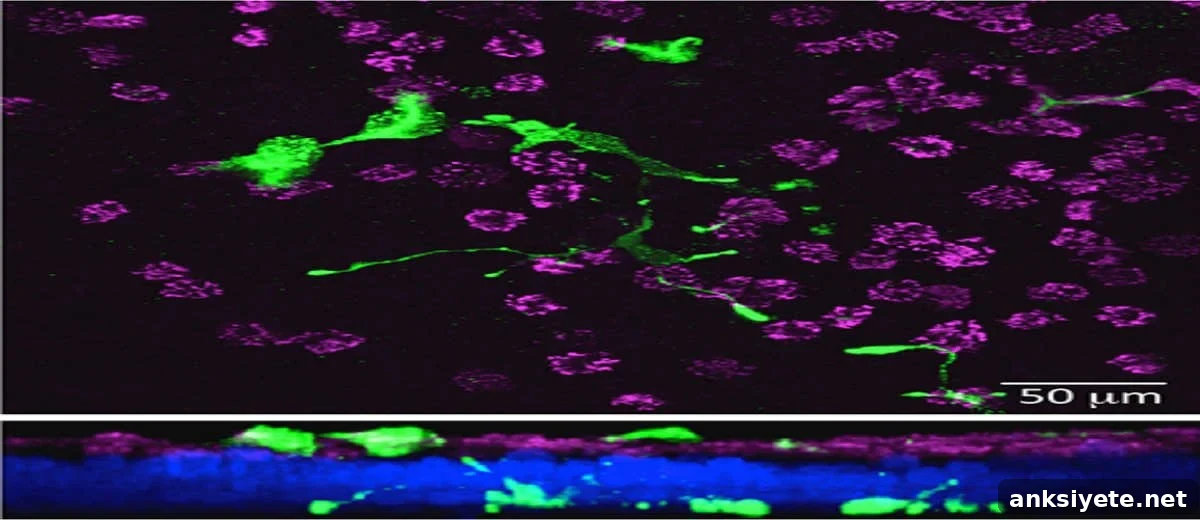
They’re similar to the receptors in your nose, but instead of helping you smell coffee they can provoke coughing and airway constriction.
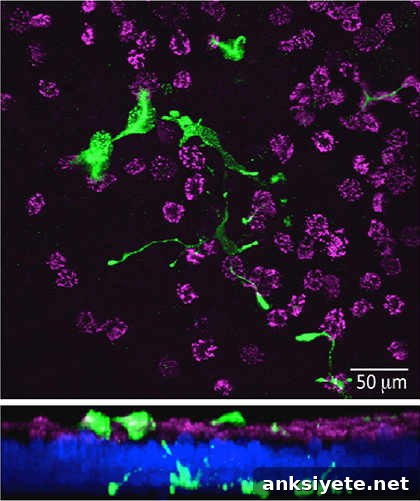
Your nose is not the only organ that detects airborne chemicals. Researchers at Washington University in St. Louis and the University of Iowa have identified odor receptors in the lung — not on nerve cells as in the nose, but on specialized pulmonary neuroendocrine cells (PNECs) that respond to inhaled irritants.
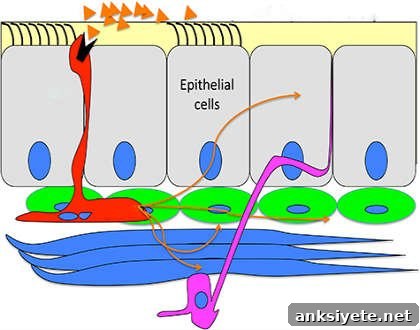
Unlike the olfactory neurons high in the nasal passages that send signals to the brain to create conscious smells, the receptors discovered in the lung are embedded in the membranes of flask-shaped neuroendocrine cells. When these receptors detect volatile chemicals, the PNECs release serotonin and other neuropeptides locally, causing the airways to constrict and often triggering immediate defensive responses such as coughing.
The newly characterized class of cells expressing odor receptors in human airways — pulmonary neuroendocrine cells, or PNECs — was described by a team led by Yehuda Ben-Shahar, PhD, assistant professor of biology and medicine at Washington University in St. Louis, with collaborators Steven L. Brody and Michael J. Holtzman from Washington University School of Medicine and Michel J. Welsh from the University of Iowa.
Ben-Shahar notes that our body is effectively a tube within a tube: the lungs and the gut are exposed to the external environment and constantly face environmental insults. It follows that these organs need sentinel mechanisms to detect and respond quickly to harmful chemicals.
Published in the March issue of the American Journal of Respiratory Cell and Molecular Biology, the study positions PNECs as frontline sentinels whose job is to detect inhaled irritants and trigger immediate protective responses.
Because these cells release signaling molecules directly into the airway environment, they may help explain the rapid, sometimes severe airway reactions reported by patients with diseases such as asthma and chronic obstructive pulmonary disease (COPD). These conditions often involve chemical hypersensitivity: exposure to traffic fumes, perfumes, strong odors, or other irritants can precipitate sudden airway constriction, wheezing, coughing and difficulty breathing.
Ben-Shahar and colleagues suggest that the odor receptors on PNECs could be therapeutic targets. If those receptors or the downstream signaling pathways can be blocked or modulated, it might reduce the frequency or severity of acute attacks and allow patients to rely less on steroids or bronchodilators.
How airborne sensing differs in the nose and the lung
In the nasal passages, inhaled volatile molecules interact with olfactory receptor neurons located in specialized epithelial patches. Each olfactory neuron carries a narrowly tuned receptor: when a molecule binds, the neuron sends an electrical signal along the olfactory nerve to the brain’s olfactory bulb, where signals from many neurons are integrated into the perception of a specific odor.
The lung’s system operates differently. PNECs are secretory, not neuronal. They can express multiple receptors and therefore are more broadly tuned to a variety of chemical stimuli. Rather than sending a conscious signal to the brain, stimulated PNECs release serotonin and neuropeptides that act locally on nearby nerves and airway smooth muscle, producing a fast physiological response to inhaled threats.
This distinction helps explain why smell and taste often involve higher-level cognition and can be learned or adapted, while defensive airway responses such as coughing are rapid and largely reflexive. You can develop a taste for an acquired flavor, but you do not learn to stop coughing when your airways detect an irritant — the reaction is immediate and protective.
The researchers observed that airway tissue from COPD patients contained higher numbers of PNECs compared with healthy donor tissue, suggesting these cells may contribute to the heightened sensitivity to airborne irritants seen in COPD and related respiratory disorders.
Challenges and prospects for research
As a geneticist, Ben-Shahar hopes to probe the causal role of PNECs by manipulating genes in model organisms. However, he cautions that respiratory systems vary substantially across mammalian species. While organs such as the liver show broad conservation, lung structure and cell lineages can differ markedly between rodents and primates, complicating the translation of findings from animal models to humans.
Despite these challenges, the team remains optimistic that pathways involving PNECs could yield new drug targets to better manage asthma, COPD and other airway diseases. With rising prevalence of respiratory conditions and limited curative options, therapies that reduce hypersensitivity and acute episodes would address an important clinical need.
Notes about this research
Written by Diana Lutz
Contact: Diana Lutz – Washington University in St. Louis
Source: Washington University in St. Louis press release
Image source: Images credited to Ben-Shahar and adapted from WUSTL materials.
Original research: Abstract for “Volatile-Sensing Functions for Pulmonary Neuroendocrine Cells” by Xiaoling Gu, Philip H. Karp, Steven L. Brody, Richard A. Pierce, Michael J. Welsh, Michael J. Holtzman, and Yehuda Ben-Shahar in American Journal of Respiratory Cell and Molecular Biology. Published online October 27, 2013.
#neuroscience, #neurobiology, #olfaction