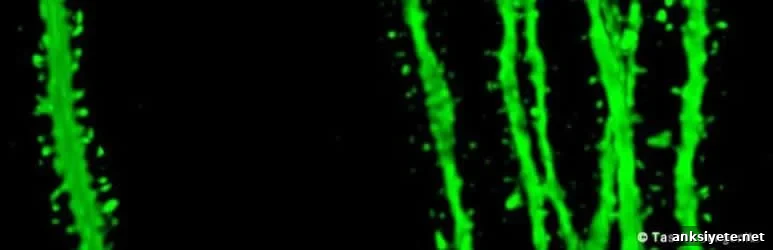
Summary: Repeated stimulation causes dendritic spines on adult-born hippocampal neurons to enlarge, allowing them to connect with existing neural networks.
Source: Goethe University
New neurons continue to form in the adult brain, and a recent study published in PNAS by researchers at Goethe University reveals how repeated neural activity drives structural changes in these adult-born hippocampal neurons. The work shows that frequent stimulation enlarges dendritic spines on newborn granule cells in the hippocampus, enabling stronger contacts with established neural circuits while balancing changes across the dendritic tree.
“Practice makes perfect” applies to the brain: repeated activation strengthens specific synaptic connections, while lack of use can lead to weakening or loss of connections. This capacity for persistent, experience-dependent change is called synaptic plasticity. The hippocampus—a key region for learning and long-term memory—retains the ability to generate new neurons throughout life, and plasticity in these adult-born granule cells is thought to contribute importantly to memory formation and pattern separation.
The research teams led by Dr. Stephan Schwarzacher, Prof. Peter Jedlicka and Dr. Hermann Cuntz studied how synapses on adult-born hippocampal granule cells adapt structurally following stimulation. Synaptic contacts are typically localized on tiny protrusions of dendrites called spines. These spines act like the thorns on a rose stem, densely covering the dendritic tree and providing the sites where neurons receive input.
Using viral labeling to mark newborn and mature granule cells and two-photon microscopy to image spine morphology in detail, the investigators tracked how individual spines responded to patterned electrical stimulation. They found that high-frequency stimulation of afferent inputs induced long-term potentiation in the middle molecular layer (MML) and long-term depression in the non-stimulated outer molecular layer (OML). At the structural level, stimulation produced NMDA receptor–dependent enlargement of spines at the stimulated inputs (homosynaptic enlargement) and a concurrent shrinkage of spines at non-stimulated neighboring inputs (heterosynaptic shrinkage).
Importantly, the researchers observed that the total number and overall size distribution of spines across a cell remained approximately constant. In other words, when stimulated synapses enlarged their spines, a separate population of non-stimulated spines shrank, suggesting a local reallocation of synaptic weight rather than a net growth in spine count. According to the authors, this balanced pattern of spine enlargement and shrinkage may help normalize synaptic strengths across the dendrite, supporting stable neuronal activity and survival.
Stephan Schwarzacher highlights the technical achievement behind the discovery: students Tassilo Jungenitz and Marcel Beining were the first to visualize plastic changes in both stimulated and non-stimulated dendritic spines of individual adult-born neurons using two-photon imaging combined with viral cell labeling. Peter Jedlicka notes that computational models developed by the team support the idea that balanced structural changes are important for maintaining functional equilibrium and network stability.
The time course of these structural plasticity events was characterized in detail. Structural homosynaptic spine enlargement emerged in adult-born granule cells by about 28 days postinjection (dpi). Heterosynaptic spine shrinkage followed and became evident by 35 dpi. By 77 dpi, adult-born granule cells displayed levels of both homo- and heterosynaptic structural plasticity comparable to developmentally born mature granule cells. From 35 dpi onward, roughly 60% of both adult-born and mature granule cells exhibited significant combined homo- and heterosynaptic plasticity at the single-cell level. These observations define when newborn granule cells become functionally and structurally integrated into the mature hippocampal network.
The investigators plan to continue studying the dense, spiny dendritic arbor of newborn granule cells to better understand how these equilibrated structural adjustments support efficient information storage and learning processes in the hippocampus. Clarifying how local growth and shrinkage of dendritic spines contribute to circuit-level function may shed light on the cellular mechanisms that underlie memory formation and the resilience of neural networks.
Funding: This research was partially funded by the EU H2020 TOXI-Triage Project (#653409).
Source: Stephan Schwarzacher, Goethe University.
Original research: “Structural homo- and heterosynaptic plasticity in mature and adult newborn rat hippocampal granule cells” by Tassilo Jungenitz, Marcel Beining, Tijana Radic, Thomas Deller, Hermann Cuntz, Peter Jedlicka, and Stephan W. Schwarzacher. Published in PNAS, May 15, 2018. DOI: 10.1073/pnas.1801889115.
Abstract (summary)
Adult-born hippocampal granule cells contribute to spatial learning and memory and are thought to have a specific role in pattern separation distinct from developmentally generated mature granule cells. The study examined when adult-born granule cells become synaptically integrated and which forms of synaptic plasticity they express. Virus-mediated labeling and in vivo spine morphology analysis in rats revealed that patterned high-frequency stimulation induces NMDA receptor–dependent homosynaptic spine enlargement at stimulated inputs and heterosynaptic spine shrinkage at non-stimulated inputs. Both structural changes occurred concurrently on single dendritic trees of adult-born and mature cells. Structural homosynaptic plasticity appeared by 28 days postinjection, heterosynaptic plasticity by 35 days, and by 77 days adult-born cells showed plasticity similar to mature cells. From 35 days onward, about 60% of cells displayed significant combined homo- and heterosynaptic plasticity, defining the time course of synaptic integration for adult-born granule cells.