
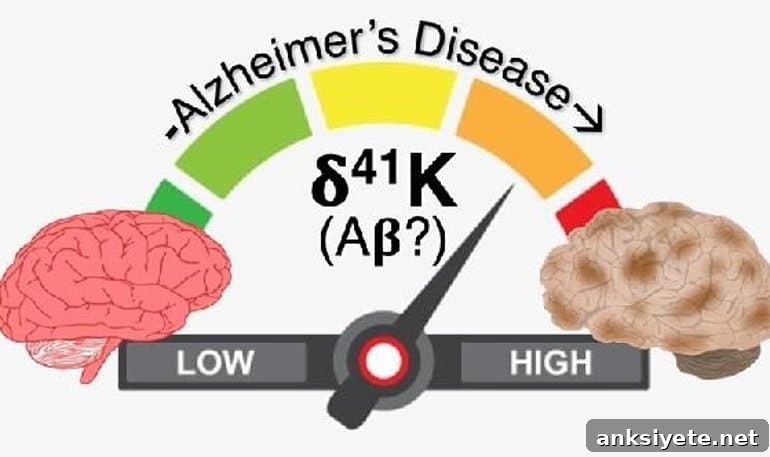
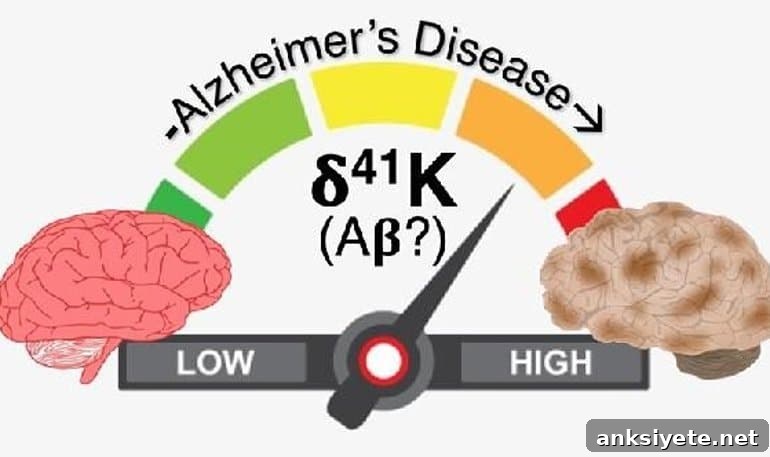
Summary: Analysis of brain tissue from subjects with Alzheimer’s disease revealed notable shifts in potassium isotope composition that align with the buildup of amyloid‑beta protein.
Source: University of Bristol
New research led by James Cook University suggests that changes in specific potassium isotopes circulating in the blood could provide an earlier, non‑invasive indicator of Alzheimer’s disease (AD) than many current diagnostic methods.
Published in the journal Metallomics, the study—led by JCU geochemist Dr. Brandon Mahan—reports that potassium isotope patterns in brain tissue closely correlate with regions where amyloid‑beta protein accumulates, a hallmark of AD. The authors propose that these isotopic shifts in brain potassium may be reflected in the bloodstream and could therefore serve as a blood‑based biomarker for early AD detection.
The research team, working with collaborators from the University of Bristol and l’Institut de Physique du Globe de Paris, examined brain samples from genetically modified Göttingen minipigs, an animal model chosen for its close physiological similarities to humans in studies of neurological disease.
Dr. Mahan explained that the findings were striking when comparing brain regions from an animal showing early signs of AD with those from an unaffected animal. Regions demonstrating amyloid‑beta accumulation exhibited both a depletion of potassium and distinct anomalies in potassium isotope composition.
Based on those observations and prior studies indicating movement of potassium out of affected brain cells, the team hypothesizes that the isotopically light potassium leaving diseased brain tissue could enter the blood, producing a detectable isotopic signature in serum.
If validated in humans, this mechanism could underpin a non‑invasive blood test that detects AD at much earlier stages than many current tools. Dr. Mahan emphasized the potential clinical impact: identifying Alzheimer’s before extensive brain damage occurs could allow patients to adopt interventions aimed at slowing disease progression.
The investigators note that changes in isotopic composition occur rapidly at the molecular level, which raises the possibility of detecting disease‑related shifts long before structural changes become visible on imaging techniques such as positron emission tomography (PET). Early detection is particularly valuable because there is currently no cure for Alzheimer’s; interventions initiated sooner may be better able to slow cognitive decline.
To extend these findings toward clinical application, Dr. Mahan’s team will begin analyzing human blood samples supplied by a major Australian biobank. Their plan is to measure potassium isotope ratios alongside other metal isotopes—such as copper and zinc—and compare those chemical signatures with the extensive cognitive and clinical data associated with the biobanked samples.
The researchers stress that further validation in human cohorts is required before any diagnostic test can be developed. Nonetheless, the study adds to a growing body of work showing that natural variations in stable metal isotopes can reflect underlying changes in brain chemistry and physiology linked to neurodegenerative disease.
About this Alzheimer’s disease research news
Author: Press Office
Source: University of Bristol
Contact: Press Office – University of Bristol
Image: The image is credited to the researchers
Original Research: Open access.
“Exploring the K isotope composition of Göttingen minipig brain regions, and implications for Alzheimer’s disease” by Brandon Mahan et al., Metallomics
Abstract
Exploring the K isotope composition of Göttingen minipig brain regions, and implications for Alzheimer’s disease
Stable metal isotopes have proven useful for distinguishing healthy and diseased brain states, including Alzheimer’s disease (AD). In AD, some metals accumulate in the brain while others are depleted; potassium (K) appears to be purged from affected brain tissue, a process that could raise serum K and shift blood isotope ratios.
This study reports potassium isotope compositions across brain regions of two Göttingen minipig AD models at midlife. Findings show enrichment in heavier K isotopes in regions where amyloid‑beta (Aβ) accumulates, and that enrichment correlates with relative depletion of total K in those tissues.
These patterns suggest preferential removal of isotopically light K+ from brain tissue and a connection between brain K concentrations, isotopic composition, and Aβ presence—consistent with prior evidence that Aβ can promote loss of cellular K+. Because brain K differs in composition from serum and brain K stores exceed those in blood, changes in brain potassium could produce a measurable isotopic excursion in serum, offering a potential early biomarker for AD.