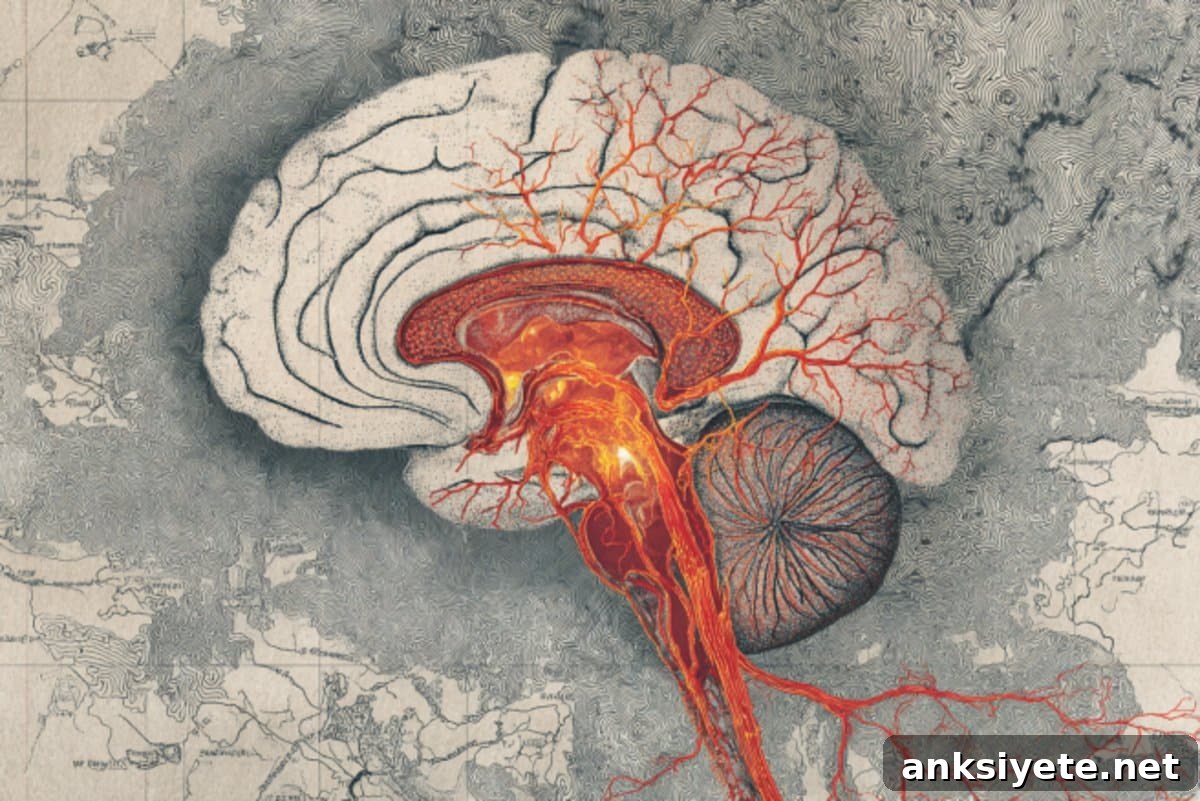
Summary: Even after clinical symptoms improve, people who have experienced recurrent depression can continue to show heightened sensitivity to punishment and negative feedback. A new study found that the habenula—a small brain region central to processing aversive signals—remains overactive in individuals with remitted depression, especially when they anticipate unpleasant outcomes. This persistent neural pattern was accompanied by weaker connections between the habenula and dopamine-producing reward regions, suggesting ongoing difficulty regulating responses to stress and negative cues.
These findings may help explain high relapse rates in depression and point to potential biomarkers for identifying individuals at greater risk of recurrence. Improved detection of these lingering brain changes could support more targeted prevention strategies and long-term treatment planning.
Key Facts:
- Habenula Hyperactivity: People with remitted depression showed increased habenula activation during the anticipation of punishment.
- Altered Reward Circuitry: Functional connectivity between the habenula and the ventral tegmental area (a dopamine-rich reward center) was reduced.
- Implications for Relapse: Persistent aversive-sensitivity signals may underlie vulnerability to relapse and could inform preventative interventions.
Source: Elsevier
Researchers report that even after depressive symptoms remit, the brain’s response to negative cues can remain altered. The study, published in Biological Psychiatry: Cognitive Neuroscience and Neuroimaging, examined aversive learning and neural signaling in people with a history of recurrent major depressive disorder who were currently in remission. By focusing on the habenula and its connections to reward systems, the team sought to determine whether aversive-processing abnormalities persist beyond symptomatic recovery.
Depression carries a high risk of relapse—estimates indicate that up to 80% of people may experience a return of symptoms within five years. This fact underscores the need to understand persistent neural vulnerabilities that might not be apparent from clinical symptoms alone. Identifying such markers could allow clinicians to tailor follow-up care and preventive treatments more effectively.
Lead investigator Henricus G. Ruhé, MD, PhD, from Radboud University Medical Center and the Donders Institute for Brain, Cognition and Behavior, explains that ongoing brain processes could continue to predispose people to future episodes even after symptom improvement. Prior work showed that sensitivity to punishment often remains after remission, guiding the team to study aversive learning, a form of Pavlovian conditioning in which an individual learns to associate a stimulus with an unpleasant outcome and thus avoids it.
The researchers used functional MRI (fMRI) to measure brain activity during an aversive learning task. The study included 36 medication-free participants with remitted recurrent depression and 27 healthy control subjects. While in the scanner, participants learned associations between visual cues and an unpleasant bitter taste, enabling analysis of neural responses during both the expectation and receipt of aversive outcomes.
Imaging results revealed that remitted patients exhibited greater habenula activation specifically during the anticipation of punishment—consistent with persistent hypersensitivity to negative cues. Additionally, these patients showed reduced functional connectivity between the habenula and the ventral tegmental area (VTA), a midbrain nucleus critical for producing dopamine and modulating reward-related processing. The combination of heightened aversive signaling and weakened habenula–VTA coupling suggests an impaired ability to regulate responses to potential punishment.
Cameron S. Carter, MD, Editor-in-Chief of Biological Psychiatry: Cognitive Neuroscience and Neuroimaging, notes that while many studies have characterized brain function during active depression, fewer have examined whether these changes persist during remission. This work highlights that measurable neural alterations can remain after symptoms subside, potentially contributing to relapse risk. Understanding these persistent effects may help clinicians identify at-risk individuals and guide the development of targeted interventions aimed at strengthening resilience and preventing recurrence.
About this depression and neuroscience research news
Author: Eileen Leahy
Source: Elsevier
Contact: Eileen Leahy – Elsevier
Image: The image is credited to Neuroscience News
Original Research: Open access. “Aberrant Aversive Learning Signals in the Habenula in Remitted Patients with Recurrent Depression” by Henricus G. Ruhé et al., published in Biological Psychiatry: Cognitive Neuroscience and Neuroimaging.
Abstract
Aberrant Aversive Learning Signals in the Habenula in Remitted Patients with Recurrent Depression
Background
Hypersensitivity to punishment is a core feature of major depressive disorder and may arise from altered aversive learning processes. The habenula is a key brain region implicated in processing negative feedback and guiding avoidance behavior. While dysfunctional aversive learning has been documented in active depression, it remains less clear whether these neural signatures persist during remission and could therefore represent enduring risk factors for relapse.
Methods
The study analyzed fMRI data from 36 medication-free individuals with remitted recurrent major depressive disorder and 27 healthy controls. Participants completed a Pavlovian classical conditioning task in which visual cues were paired with an unpleasant bitter taste. Data were examined using a computational modeling framework to identify temporal difference–related habenula activation during aversive learning. Generalized psychophysiological interaction analyses evaluated functional connectivity of the habenula with other regions, with a particular focus on the ventral tegmental area.
Results
Compared with healthy controls, remitted patients showed significantly increased temporal difference–related activation in the bilateral habenula, particularly during the expectation of punishment. This heightened habenula activity correlated with residual symptom levels in the remitted group. In addition, patients exhibited decreased functional connectivity between the habenula and the ventral tegmental area, indicating altered communication between aversive and reward-related systems.
Conclusions
Increased habenula activation during aversive learning—especially during punishment anticipation—combined with reduced habenula–VTA connectivity in remitted MDD patients, suggests ongoing hypersensitivity to aversive environmental cues and/or difficulty regulating their impact. These persistent neural differences may contribute to vulnerability for relapse and could serve as targets for monitoring and preventive interventions.
Trial Registration
NTR3768