
Summary: New research shows that neurons can lose their individuality and fuse under certain conditions, challenging the long-held belief that nerve cells remain permanently separate. This discovery may shed light on mechanisms behind some neurological disorders.
Source: University of Queensland
Neurons Can Fuse: Experimental Evidence from C. elegans Reveals Functional Consequences
A discovery that could change how we understand nervous system organization may also offer new clues about the origins of neurological disease.
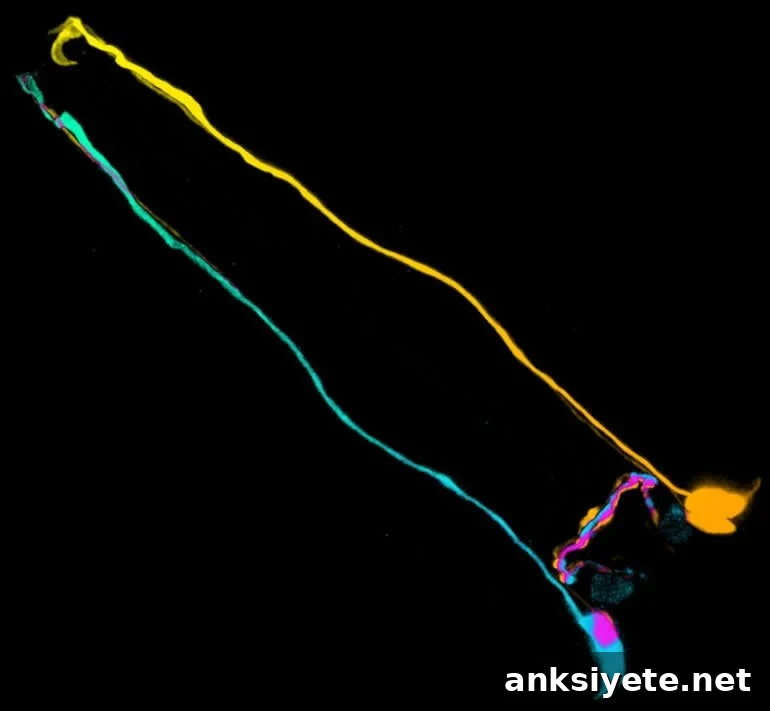
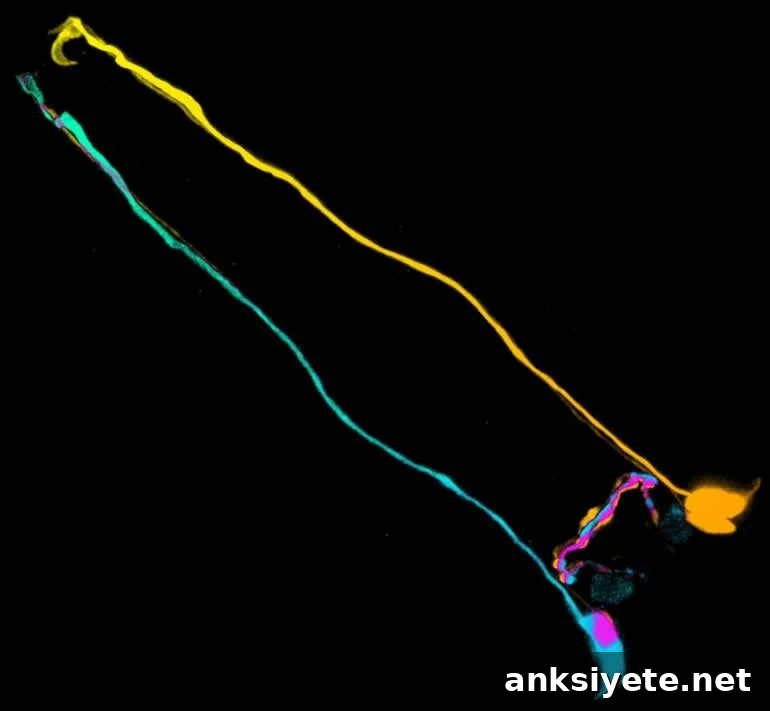
For more than a century, neuroscience textbooks have presented neurons as discrete cells that do not merge with one another. Researchers at the University of Queensland (UQ) have now produced evidence that challenges that view. Using genetically modified nematode worms, the team showed that when specific fusogen proteins are expressed in neurons, those neurons can fuse together and produce measurable changes in neural circuit function and animal behavior.
Fusogens are molecules that mediate membrane fusion during normal development, for example in the formation and repair of certain tissues. They are generally absent from mature neurons under healthy conditions, but prior studies have detected fusogen activity in the nervous system during viral infection, cellular stress, or in association with some neurological conditions. The new UQ study asked directly what would happen if neuronal membranes were driven to fuse by the presence of fusogen proteins.
The research team, led by Professor Massimo Hilliard, Dr Rosina Giordano-Santini and Dr Zhaoyu Li at UQ’s Queensland Brain Institute and the Clem Jones Centre for Ageing Dementia Research (CJCADR), used the microscopic nematode Caenorhabditis elegans as an experimental model. C. elegans is a well-established organism for studying neuronal structure and function because its small size and transparent body allow for direct visualization of individual neurons while genetic tools permit precise manipulation of gene expression.
When the researchers engineered worms to express fusogen proteins in select neurons, those neurons fused together. The fused neurons no longer acted as independent signal units. Instead, their electrical activity became coupled, effectively linking separate circuits that are normally distinct. The authors describe an analogy: it is as if two separate rooms with individual light switches become part of a single circuit, so flipping one switch unexpectedly turns on the light in both rooms.
To probe functional consequences, the team focused on sensory neurons responsible for detecting different odours. In normal worms, these neurons support attraction to food-related cues and avoidance of harmful or noxious stimuli. After fusion, the animals showed impairments in these odor-guided behaviors: they lost the normal attraction to food cues and failed to avoid danger signals, consistent with disruption of the underlying sensory circuits.
These results demonstrate a previously unrecognized mechanism by which neural circuits can malfunction: the physical fusion of neurons that leads to aberrant electrical coupling and altered behavior. While the present experiments were performed in an invertebrate model, the findings raise important questions about whether similar fusion events might occur in mammalian nervous systems under pathological conditions, and whether such events might contribute to neurological symptoms observed in some diseases.
The origin of fusogens in the nervous system remains an open question. Dr Rosina Giordano-Santini noted two plausible routes: neurons might begin expressing fusogens in response to a disease process, or viral infection could introduce fusogen activity by hijacking cellular machinery. Viral entry and infection of the brain are known to occur in some contexts, and certain viruses can alter host gene expression and cell biology, but the extent to which such events drive neuronal fusion in human disease requires further investigation.
The UQ team is now focused on determining whether neuronal fusion and its disruptive effects on electrical circuits can be observed in mammalian cells and tissues. Establishing the frequency and circumstances of such fusion events in humans will be essential to evaluate their relevance to disorders such as neurodegeneration, demyelinating diseases, or psychiatric illnesses where altered cell biology has been implicated. Understanding the mechanisms that control or prevent neuronal fusion could ultimately point to strategies for protecting neurons or restoring circuit function.
Implications and next steps
This work highlights a novel biological process with potential relevance to brain health. It emphasizes the importance of examining cell-membrane dynamics and intercellular interactions in neural tissue, and it suggests new lines of inquiry into how disruptions at the cellular level translate into changes in circuit activity and behavior. Future studies in mammalian models and human tissue will be needed to assess whether neuronal fusion contributes to human disease and whether interventions can prevent or reverse its harmful effects.
About this neuroscience research article
Source: University of Queensland
Contacts:
Massimo Hilliard – University of Queensland
Image Source:
Image credited to Hilliard Lab, Queensland Brain Institute.
Original Research: The study will appear in PNAS.