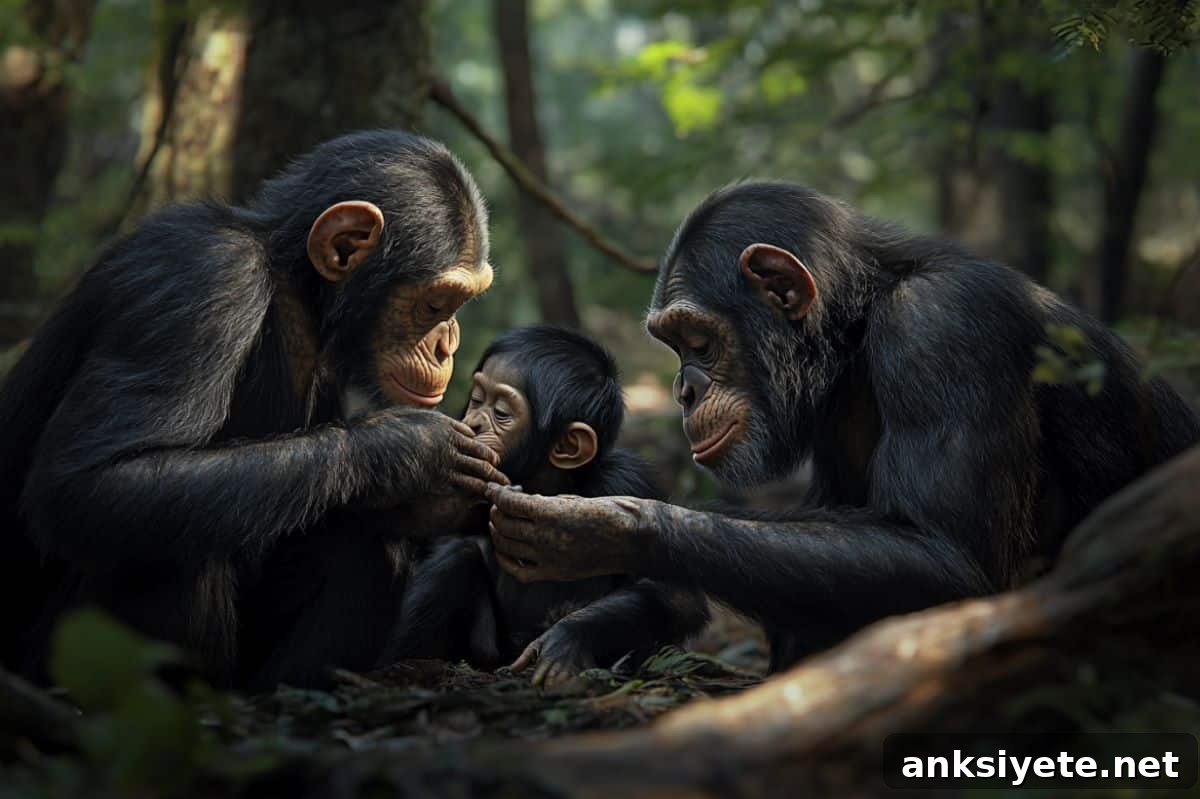
Summary: Grooming and play behaviours among chimpanzees spread through observation, strengthening social bonds and supporting group harmony. A study at a wildlife orphanage demonstrates that watching others engage in friendly actions encourages similar behaviour, with grooming most common between close partners and play contagion especially strong among younger individuals. These results suggest positive social contagion helps maintain cooperative group dynamics.
Researchers suggest these findings shed light on the evolutionary roots of human empathy and sociality. Studying chimpanzees provides a window into how positive behaviours propagate in group-living species and highlights the role of social connections in maintaining stability and cooperation.
Key Facts:
- Grooming spreads more often between close social partners, consistent with empathic social bonds.
- Play contagion is stronger among younger chimpanzees, supporting their social development and learning.
- Positive behavioural contagion can help maintain harmony and cooperation within social groups.
Source: Durham University
Researchers from Durham University have identified patterns of social contagion in chimpanzees, showing that affiliative behaviours such as grooming and play can spread through observation and promote group cohesion.
The field study took place at the Chimfunshi Wildlife Orphanage in Zambia, where researchers observed affiliative interactions in a naturalistic, non-invasive setting. Focusing on two common social behaviours—grooming and play—the team recorded how the actions of one individual influenced others nearby.
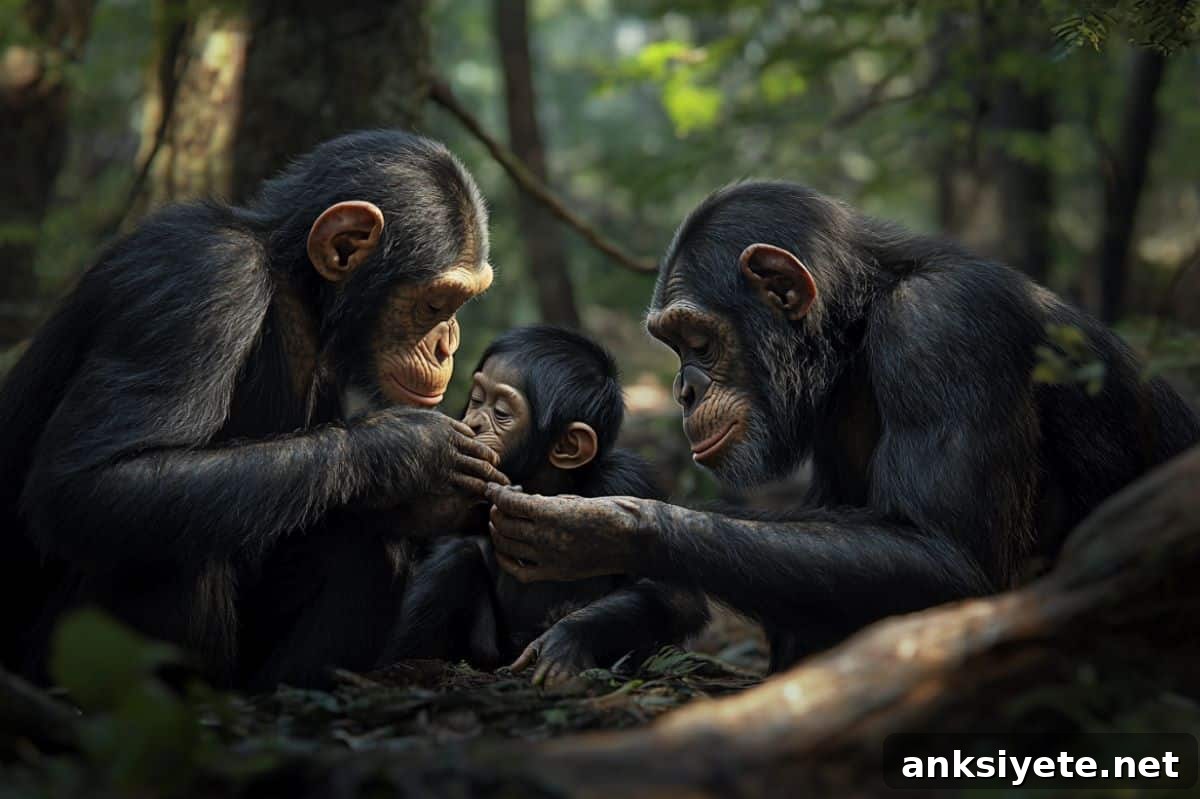
Published in the journal PLOS ONE, the study extends the concept of behavioural contagion beyond the negative or neutral behaviours often emphasized in past work. It demonstrates that positive, affiliative actions can also ripple across a community and influence group dynamics.
Chimpanzees, like humans, show social and emotional sensitivity; their behaviour is often shaped by observing conspecifics. In the study, individual chimpanzees were more likely to start grooming or playing after witnessing a fellow group member do the same activity. The researchers measured both the presence of contagion and the latency—the time taken for an observer to begin the same behaviour—comparing observations with matched control periods.
Key patterns emerged: grooming contagion occurred more frequently between individuals with close social ties, suggesting that empathic or affiliative bonds make an observer more likely to become engaged in the same behaviour. Play contagion was particularly marked among younger chimpanzees, for whom play is a crucial avenue for practising social skills, establishing relationships, and testing social rules.
These patterns imply that behavioural contagion is not uniform across contexts or age groups. Instead, the likelihood that a behaviour spreads depends on the behaviour’s social function and the relationship between participants. In this case, grooming appears tightly linked to existing social bonds, while play supports development and social learning in juveniles.
Lead author Georgia Sandars of Durham University explained that studying basic social processes in chimpanzees helps clarify healthy social functioning among our closest living relatives and offers insight into the evolution of human sociality. The research highlights how simple mechanisms—observing a behaviour and then reproducing it—can scale up to sustain cooperative interactions and group stability over time.
The investigation involved more than 200 hours of systematic observation of 41 sanctuary-living chimpanzees. Researchers recorded focal follows after observing grooming or play bouts and compared those periods to matched controls, while accounting for factors like age, sex, dominance rank, and social closeness.
By documenting how positive interactions spread in a naturalistic setting, the study contributes to our understanding of affective state matching—the tendency for individuals to share or mirror emotional states—and the behavioural processes that underpin social bonding. The results encourage further research into how positive emotional contagion operates across species and how it helps shape cooperation in group-living animals.
This research adheres to ethical standards for non-invasive observation and offers valuable contributions to comparative social neuroscience, behavioural ecology, and the study of empathy and social bonding.
About this social neuroscience and evolution research news
Author: Araf Din
Source: Durham University
Contact: Araf Din – Durham University
Image: The image is credited to Neuroscience News
Original Research: Open access. “ChimpanSEE, ChimpanDO: Grooming and play contagion in chimpanzees” by Georgia Sandars et al., published in PLOS ONE.
Abstract
ChimpanSEE, ChimpanDO: Grooming and play contagion in chimpanzees
Behavioural contagion—the onset of a species-typical behaviour soon after witnessing it in a conspecific—supports synchrony and cohesive group living in social animals. Much prior work has emphasized negatively valenced or neutral contexts, but sharing of positive affect and affiliative behaviours may be particularly important for social bonding.
This study examined the contagion of two affiliative interactive behaviours, grooming and play, using naturalistic observations of N = 41 sanctuary-living chimpanzees at Chimfunshi Wildlife Orphanage. Focal follows after observed grooming or play bouts were compared with matched control observations to assess the presence and timing of contagion and to test whether age, sex, rank, or social closeness influenced outcomes.
Results indicate both grooming and play contagion occur in sanctuary-living chimpanzees. Grooming contagion was shaped by social closeness, while play contagion was most pronounced in younger individuals. These findings show that contagion extends to positively valenced, social behaviours and that predictors of contagious behaviour vary by behaviour and species.
Understanding the factors that influence behavioural contagion advances theories of affective state matching and enriches our knowledge of social bonding and group dynamics in social animals.