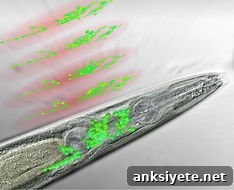
Researchers in Vienna develop a new imaging technique to study entire nervous systems
Scientists at the Campus Vienna Biocenter in Austria have developed a novel light-based imaging method that overcomes several longstanding limitations of conventional light microscopy. Using this approach, the team can record activity across large portions of a small animal brain with both high temporal and high spatial resolution, bringing researchers closer to linking detailed brain anatomy with real-time function. The method and its results are described in a paper published in Nature Methods.
Modern neuroscience aims to understand how a nervous system senses the world, integrates information and produces behavior. To reach that goal, researchers need not only detailed wiring diagrams of neuronal networks but also experimental access to the dynamic activity of those networks as they operate. Historically, efforts have either captured fine structural detail or fast activity from a limited region, but not both simultaneously at brain-wide scale.
Many neuroscientists address this challenge using the transparent soil nematode Caenorhabditis elegans. With only 302 neurons connected by roughly 8,000 synapses, C. elegans has the only complete anatomical wiring diagram of an animal nervous system. Nevertheless, obtaining a functional map that shows how all neurons behave together over time has remained difficult because of trade-offs in microscopy: high spatial resolution often requires slow volumetric scans, while imaging fast dynamics typically sacrifices spatial coverage.
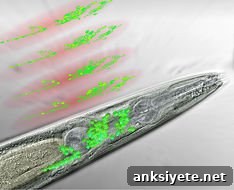
Researchers from the Research Institute of Molecular Pathology (IMP), the Max Perutz Laboratories (MFPL), and the University of Vienna’s Research Platform Quantum Phenomena & Nanoscale Biological Systems (QuNaBioS) have closed that technical gap. Led by the laboratories of Alipasha Vaziri and Manuel Zimmer, and involving physicists and neurobiologists working together, the team developed a high-speed volumetric imaging approach that achieves single-neuron resolution across a large portion of the worm’s head. According to the authors, the technique records activity from about 70% of the neurons in the head region while preserving both spatial detail and millisecond-scale timing.
The core innovation is a method to “sculpt” the three-dimensional distribution of light inside the specimen. Instead of scanning a tightly focused point through the sample in all three dimensions—a process that is too slow to capture synchronous activity across many cells—the researchers shape the illumination into thin optical “discs” at defined depths. This design reduces the scanning problem to a single axis, allowing acquisition of volumetric image sequences at speeds sufficient to follow neural dynamics in real time. As quantum physicist Robert Prevedel explains, the approach manipulates light waves so that a large number of neurons can be recorded simultaneously as three-dimensional movies of their activity.
Optical advances alone would not have solved the problem of distinguishing individual neurons in the densely packed worm head. To improve cellular identification, the team targeted a genetically encoded calcium sensor to neuronal nuclei rather than the whole cell. This concentration of the fluorescent signal into compact nuclear compartments sharpened the images and made it possible to resolve single cells reliably within the crowded tissue. Neurobiologist Tina Schrödel, co-first author of the study, notes that nuclear targeting was essential to separate adjacent cells and attribute signals to individual neurons.
The combined optical and molecular strategy delivers a practical route to collect brain-wide functional data in a small animal. Beyond C. elegans, the researchers emphasize that the technique has broader potential: sculpted-light microscopy could enable experiments that previously were out of reach, including investigations into how sensory inputs are transformed into motor plans and how those plans are executed by distributed neural circuits. Achieving such goals in freely moving animals will require further refinement of both microscopy hardware and computational analysis, and the Vienna teams aim to advance these capabilities in the near future.
By bridging the gap between anatomical maps and dynamic recordings, this work provides a scalable framework for studying how entire nervous systems operate in real time. The innovation lies not only in accelerating volumetric imaging, but also in combining optical engineering with targeted fluorescent labeling to resolve individual neurons in complex tissue. These advances bring large-scale functional mapping within reach for small model organisms and set the stage for new experiments on sensory processing, motor planning and behavior.
Notes about this neuroscience research
Contact: Dr. Heidemarie Hurtl – Research Institute of Molecular Pathology
Source: Research Institute of Molecular Pathology press release
Image Source: The image is adapted from the IMP press release.
Original Research: Abstract for “Brain-wide 3D imaging of neuronal activity in Caenorhabditis elegans with sculpted light” by Tina Schrödel, Robert Prevedel, Karin Aumayr, Manuel Zimmer and Alipasha Vaziri in Nature Methods. Published online September 8, 2013, doi:10.1038/nmeth.2637