New research from Karolinska Institutet and Umeå University demonstrates for the first time a direct connection between how we perceive our bodies and our ability to form episodic memories. The study suggests that experiencing events while feeling disconnected from one’s own body can disrupt the brain processes that normally bind sensory information into lasting memories. The findings may help explain certain memory problems observed in psychiatric conditions.
Episodic memories—such as recalling the details of your first day at school—depend on the brain’s ability to link sights, sounds, emotions and other sensory information into a coherent record. Until now, the role that body perception plays in forming those memories has been unclear. This study shows that when healthy volunteers experienced an illusion of being outside their own bodies during an event, their subsequent memory for that event was impaired.
The experiment, published in the journal PNAS, involved 84 students who each took part in four staged oral interrogations. To make the scenarios memorable, an actor (Peter Bergared) played the role of a eccentric professor at Karolinska Institutet. During two of the sessions, participants experienced the interrogation from a normal first-person, “in-body” perspective. In the other two sessions, the researchers induced a reliable illusion of being outside the body. In all sessions, participants wore virtual reality goggles and earphones to control the sensory environment.
One week after the interrogations, participants either completed a detailed memory test about what had happened, the order of events, and how they felt, or they attempted to recall the events while undergoing functional magnetic resonance imaging (fMRI). The behavioral results showed that memories for the out-of-body sessions were significantly weaker and more fragmented than memories for the in-body sessions, even though participants performed similarly on immediate tasks during the interrogations and reported comparable levels of emotion for both types of sessions.
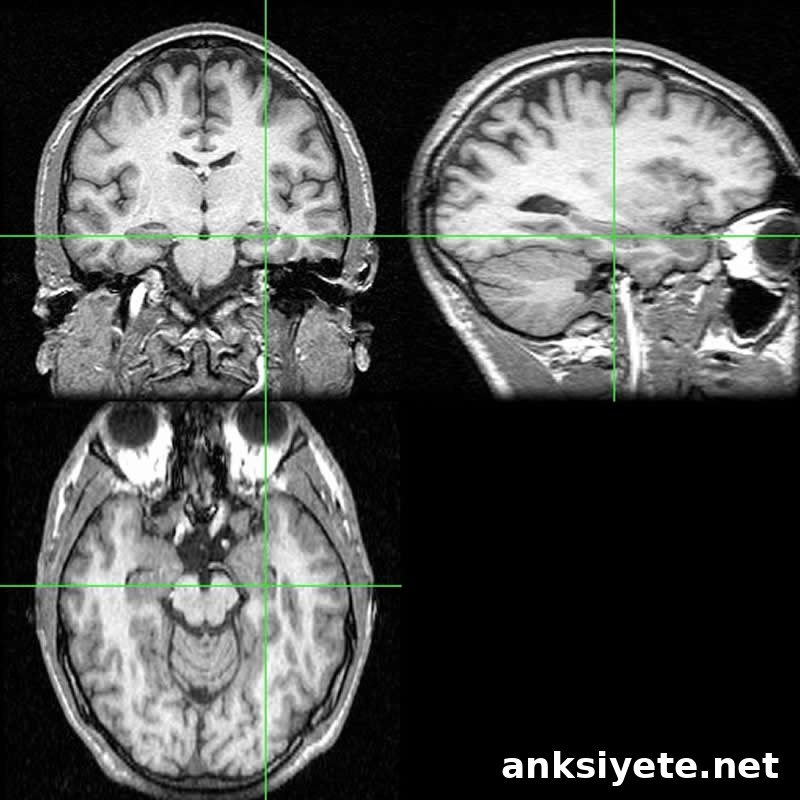
fMRI data revealed a striking neural difference. When attempting to remember the out-of-body experiences, hippocampal activity was markedly reduced compared with attempts to recall in-body events. At the same time, activity in frontal cortical regions was still present, indicating that participants were making an effort to retrieve the memory even though the hippocampus—the structure that typically binds distributed cortical information into an integrated memory—was not engaged in the same way.
The researchers interpret these results as evidence that a coherent sense of being located in one’s own body supports the hippocampus’s role in consolidating episodic memories. Our brain continuously constructs a sense of bodily self in space by integrating visual, auditory, tactile, and other sensory signals. When this bodily representation is disrupted—such as during an out-of-body illusion—the hippocampus may fail to link the widespread cortical information into a unified memory, leading to fragmented or incomplete recollections.
These findings have potential implications for understanding memory disturbances in psychiatric disorders where dissociative experiences occur. Conditions such as post-traumatic stress disorder, borderline personality disorder, and some psychotic disorders are often accompanied by feelings of disconnection from one’s body, and patients can show fragmented or incomplete memories of events. The new evidence supports further research into how disturbances in bodily self-perception might contribute to these clinical memory problems.
Notes about this memory research
The study’s lead authors are Loretxu Bergouignan and Henrik Ehrsson from the Department of Neuroscience at Karolinska Institutet. Lars Nyberg, professor of neuroscience and director of the Umeå Center for Functional Brain Imaging at Umeå University, also contributed to the work. The research received financial support from several funding bodies, including the European Research Council (ERC), the Swedish Research Council, the Knut and Alice Wallenberg Foundation, the Human Frontier Science Program, and the Wenner-Gren Foundations.
Contact: Press Office – Karolinska Institutet
Source: Karolinska Institutet press release
Image Source: Image credited to Michael Firbank and in the public domain.
Original Research: “Out-of-body–induced hippocampal amnesia” by Loretxu Bergouignan, Lars Nyberg, and H. Henrik Ehrsson, published in PNAS (open access).