
Potential Treatments Restore Neural Connections in Autism-Linked Gene Deletion
Summary: Researchers report they have identified treatments that restore brain function in mice lacking a gene critical to neuronal connections, pointing to a possible therapeutic pathway for some people on the autism spectrum.
Source: UT Southwestern.
Researchers at the Peter O’Donnell Jr. Brain Institute at UT Southwestern Medical Center have identified two drug approaches that can rapidly restore neural function in mice that lack a gene important for maintaining connections between neurons.
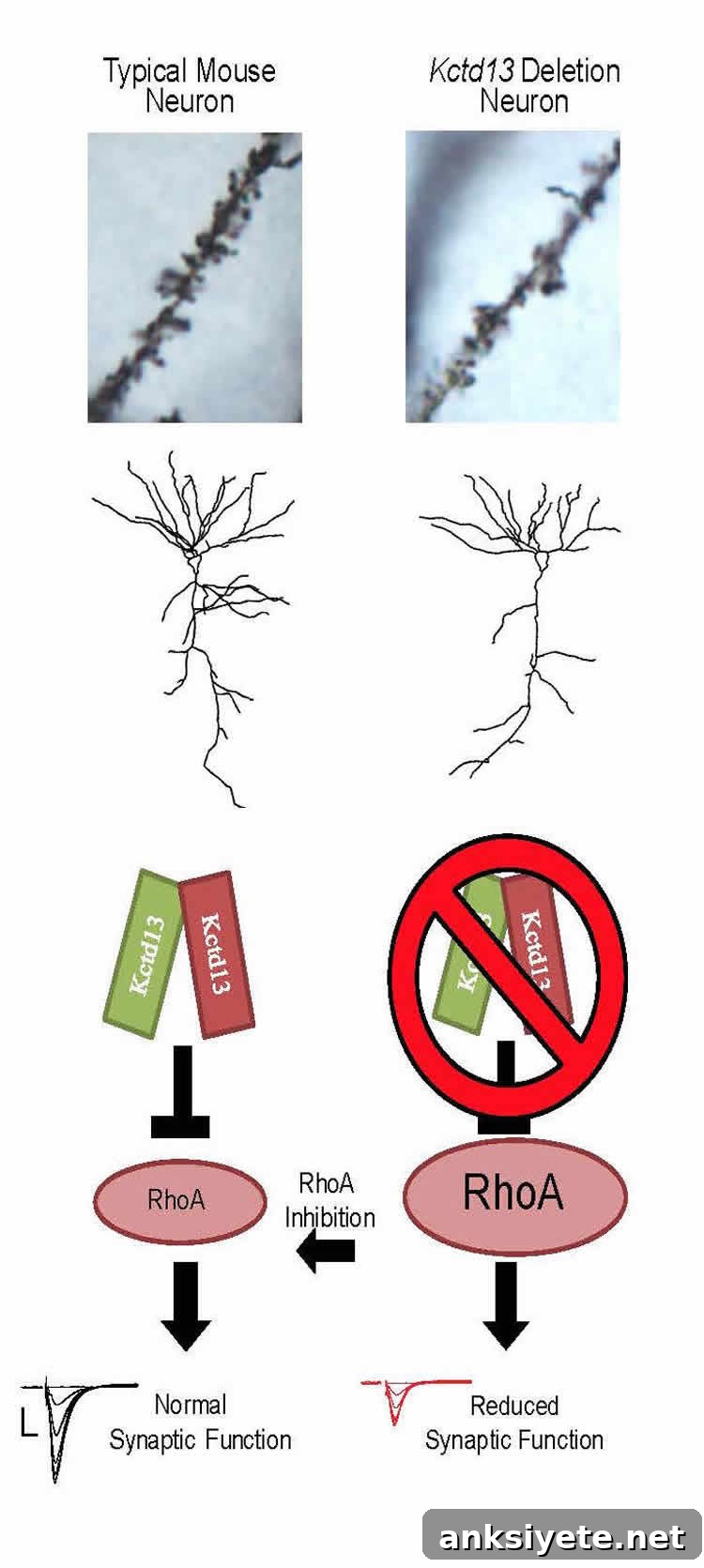
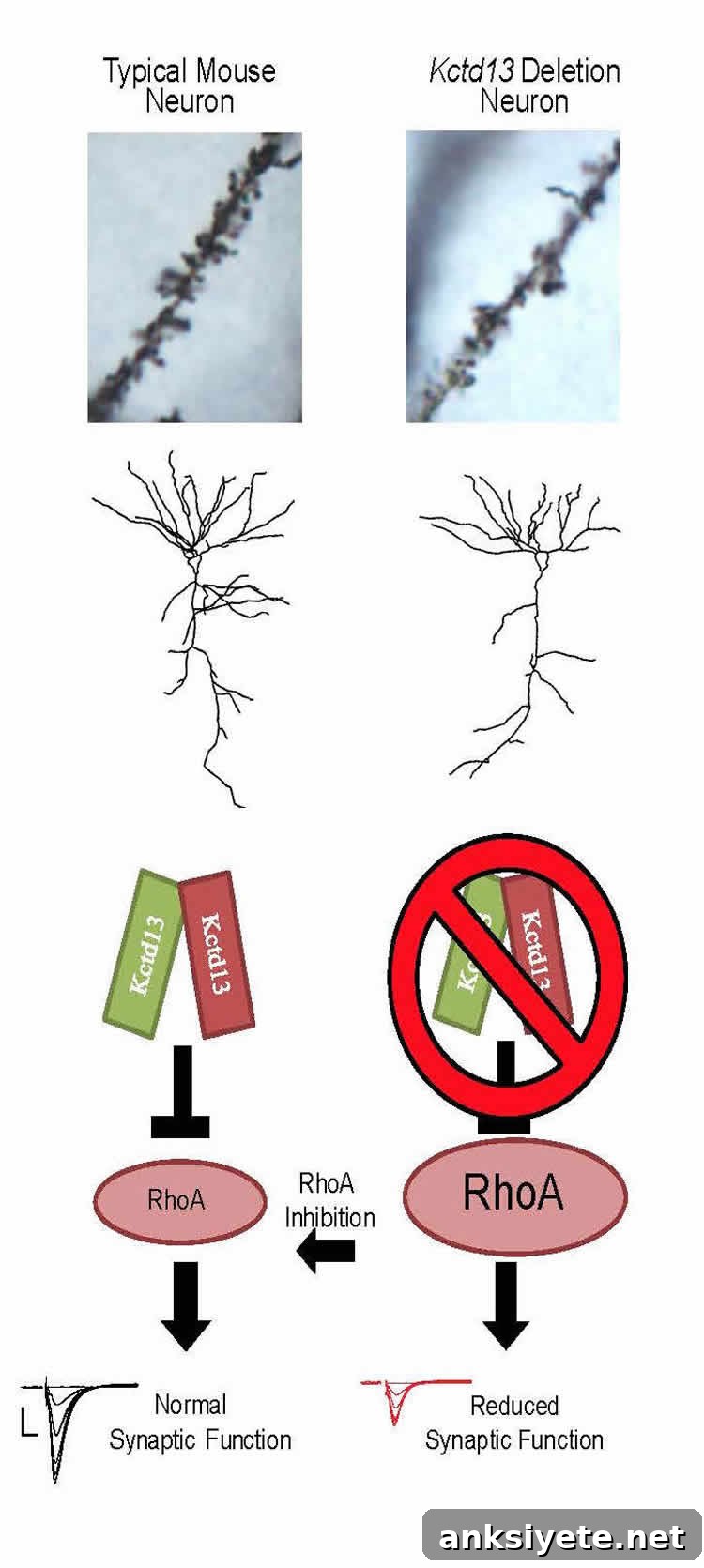
This work challenges earlier ideas about the gene’s role in brain size and instead shows that the gene, KCTD13, is required to regulate a protein that limits neuronal communication. In mice missing Kctd13, the research team found that synaptic connections—the points through which neurons communicate—were cut roughly in half. Importantly, administering drugs that inhibit the protein RhoA restored synaptic function within a few hours.
The study, published in the journal Nature, arrives amid growing efforts to improve early diagnosis and treatment for autism spectrum disorder (ASD). While many initiatives focus on detecting ASD earlier through biological measurements, fewer studies have identified genes that might be viable targets for therapies administered after diagnosis. This research highlights one such candidate pathway.
What the researchers did
Dr. Craig Powell and colleagues concentrated on KCTD13, one of 29 genes in a region of chromosome 16 (16p11.2) strongly associated with autism, developmental delay, and intellectual disability. The team deleted Kctd13 in mice to determine the gene’s role in brain development and function. Contrary to previous reports that linked KCTD13 loss to abnormal brain overgrowth, the new experiments did not reproduce changes in brain size. Instead, the primary consequence observed was a pronounced reduction in synaptic transmission.
Further investigation revealed that the loss of Kctd13 leads to accumulation of the protein RhoA. Elevated RhoA levels correlated with reduced synaptic connections, and crucially, drugs that inhibit RhoA—specifically Rhosin and Exoenzyme C3—reversed the synaptic deficits in less than four hours in these animal models.
Therapeutic implications and next steps
One encouraging aspect is that Exoenzyme C3 is already being evaluated in human clinical trials for spinal cord injury. That prior clinical development may help accelerate future testing if preclinical and safety data continue to support its use for disorders linked to KCTD13 deletion. Nevertheless, Dr. Powell cautions that more research is required before these approaches can be tested in people.
Key areas for follow-up include determining how KCTD13 interacts with other genes in the same chromosomal region and whether restoring synaptic connections will translate into measurable behavioral improvements relevant to autism. The team emphasizes the need to study KCTD13’s function across diverse genetic backgrounds and to assess long-term effects and safety of RhoA-targeting strategies.
Research team, funding, and publication
Dr. Craig Powell, Director of Preclinical Research and Section Chief of Developmental Brain Disorders at UT Southwestern, led the study. Collaborators include Christine Ochoa Escamilla, Irina Filonova, Roopashri Holehonnur, Angela K. Walker, Zhong X. Xuan, Felipe Espinosa, Shunan Liu, Noriyoshi Usui, Haley E. Speed, Genevieve Konopka, and others credited in the published work.
Funding: The study received support from the National Institute of Child Health and Human Development, The Hartwell Foundation, Autism Science Foundation, Autism Speaks, BRAINS for Autism, and private gifts.
Abstract summary
The paper reports that deleting Kctd13 in mice reduces synaptic transmission and increases levels of RhoA, a substrate of a KCTD13/CUL3 ubiquitin ligase complex. RhoA inhibition reversed the synaptic deficits, suggesting increased RhoA as a central mechanism. The deletion did not alter brain size in mice, clarifying Kctd13’s role in neuronal function rather than neurogenesis or gross brain growth. These results point to RhoA as a potential therapeutic target for disorders associated with KCTD13 deletion.
Dr. Powell and colleagues describe these findings as a significant step toward understanding how specific genes within the 16p11.2 region contribute to altered brain function. While promising, the translation of these results into human therapies will require extensive additional study.
This summary is based on a UT Southwestern research report and the original article published in Nature, authored by Christine Ochoa Escamilla, Irina Filonova, Angela K. Walker, Zhong X. Xuan, Roopashri Holehonnur, Felipe Espinosa, Shunan Liu, Summer B. Thyme, Isabel A. López-García, Dorian B. Mendoza, Noriyoshi Usui, Jacob Ellegood, Amelia J. Eisch, Genevieve Konopka, Jason P. Lerch, Alexander F. Schier, Haley E. Speed, and Craig M. Powell.
Feel free to share this summary of neuroscience news in contexts that credit the originating institutions and authors.