
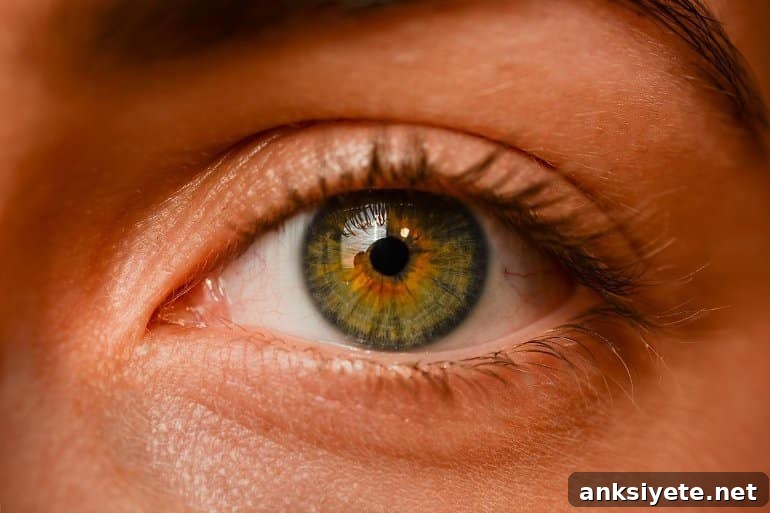
Summary: The visual system responds to lost photoreception by increasing sensitivity, but this compensation is accompanied by harmful hyperactivity. These findings point to new directions for therapies to preserve or restore vision.
Source: ICHF
Why do photoreceptors in the retina die, and can that process be slowed or prevented? An international team of researchers, including Dr. Andrzej Foik from ICTER, has produced results that may guide development of treatments to slow vision loss.
Retinal degeneration covers a range of conditions that damage the retina and destroy photoreceptor function, and it is a leading cause of blindness worldwide. Some forms have a clear genetic origin: specific mutations that cause photoreceptor death are known. However, how the retina and the downstream visual pathway respond in the earliest stages of disease has been poorly characterized until now.
In the study titled “Visual System Hyperexcitability and Compromised V1 Receptive Field Properties in Early-Stage Retinitis Pigmentosa in Mice,” published in eNeuro, researchers examined how retinal, midbrain and cortical visual functions change in animal models of retinal degeneration.
The paper, authored by Henri Leinonen, David C. Lyon, Krzysztof Palczewski, and Andrzej Foik, addresses mechanisms that could improve early diagnosis and ultimately enable interventions to protect vision.
“We observed that the visual system adapts to reduced photoreceptor input by becoming more sensitive, yet this adaptation also produces harmful hyperactivity,” says Andrzej Foik, Ph.D., ICTER. “Clarifying this process could open avenues for therapies that protect or restore sight.”
How does retinal degeneration develop?
Retinal degeneration arises from several retinal diseases that reduce the retina’s ability to detect and transmit light, primarily by damaging rods and cones. The two most common manifestations are age-related macular degeneration (AMD), which predominantly affects central vision, and retinitis pigmentosa (RP), a group of inherited disorders that often lead to progressive peripheral vision loss.
The retina is the light-sensitive tissue that lines the back of the eye. Photoreceptors (rods and cones) convert light into electrical signals that travel via the optic nerve to the brain. The macula, a small central retinal region rich in cones, supports high-acuity tasks like reading and recognizing faces. When macular photoreceptors are lost, central vision deteriorates, as in AMD.
AMD is the leading cause of irreversible vision loss in people over 50. Its exact cause remains incomplete, and early detection is critical to slow or halt disease progression. Retinitis pigmentosa comprises a diverse set of inherited conditions caused by mutations that affect photoreceptor survival. RP typically presents with pigmentary changes in the retina and progressive constriction of the visual field, often leaving only central “tunnel” vision. Accurate diagnosis can be challenging because presentations vary widely, and there are currently limited approved treatments, though gene therapies and other experimental approaches are under investigation.
Visual pathway hyperexcitability in early-stage RP
The study focused on early-stage RP in RhoP23H/WT mice, an established model of pigmentary retinopathy. Researchers applied a multimodal evaluation of visual function, including electroretinography (ERG) to assess retinal responses, optomotor response (OMR) testing for behaviorally measured visual reflexes, visual evoked potentials (VEPs) to gauge cortical responses, and single-neuron electrophysiology in the primary visual cortex (V1).
Two age groups were examined: juvenile mice (~one month old) and young adults (~three months old). Across RhoP23H/WT animals, the team found increased sensitivity to light—photopic ERG measures indicated roughly 30% greater sensitivity based on the light intensity needed to reach half-maximal b-wave amplitude. Behaviorally, the animals showed elevated OMRs to low spatial frequency drifting gratings, consistent with midbrain-level overexcitation.
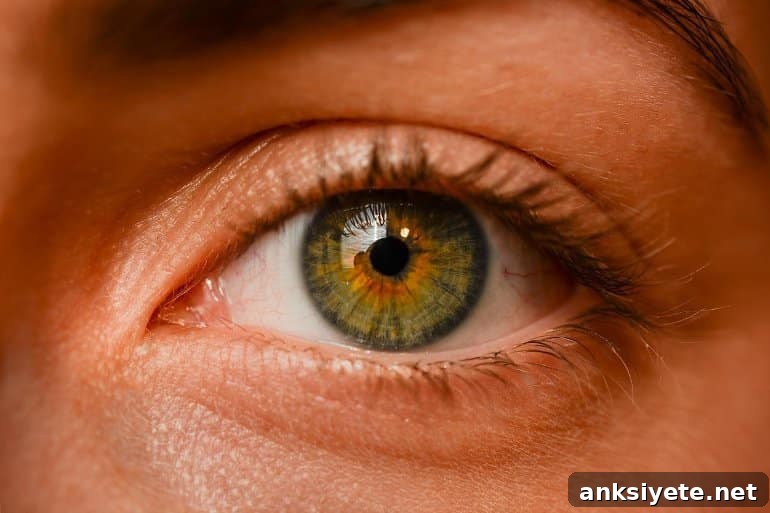
Electrophysiological recordings at the cortical level revealed pronounced hyperexcitability in juvenile RhoP23H/WT mice. Visual evoked potentials to light-On stimuli nearly doubled in amplitude compared with controls, and light-Off responses more than doubled. Single-cell recordings in V1 showed increased spontaneous firing rates, preserved contrast and temporal sensitivity, but substantially impaired direction selectivity. These results indicate that during early RP the entire visual pathway becomes hyperexcitable, which may temporarily compensate for reduced input but also produce detrimental effects on visual processing and behavior.
“Our findings suggest that hyperexcitability could be both adaptive and harmful,” Dr. Foik explains. “Understanding the cellular and circuit mechanisms underlying this change is important because it may reveal targets for therapeutic intervention in RP.”
Prior clinical observations have reported modest slowing of RP progression with high-dose vitamin A supplementation, but such regimens carry health risks and require careful consideration. Research like this study contributes to a more precise identification of individuals at risk and could help tailor safer, mechanism-based therapies before irreversible vision loss occurs.
Funding: The International Centre for Translational Eye Research (MAB/2019/12) project is conducted by the Institute of Physical Chemistry, Polish Academy of Sciences under the International Research Agendas programme of the Foundation for Polish Science, co-financed by the European Union through the European Regional Development Fund.
About this visual neuroscience research news
Author: Marcin Bernatek
Source: ICHF
Contact: Marcin Bernatek – ICHF
Image: The image is in the public domain
Original Research: Open access. “Visual System Hyperexcitability and Compromised V1 Receptive Field Properties in Early-Stage Retinitis Pigmentosa in Mice” by Andrzej Foik et al. eNeuro
Abstract
Visual System Hyperexcitability and Compromised V1 Receptive Field Properties in Early-Stage Retinitis Pigmentosa in Mice
Inherited retinal degenerative diseases, including retinitis pigmentosa, are major causes of blindness. While many mutations that trigger photoreceptor death have been identified, how downstream retinal circuits and the visual pathway respond at early disease stages remains poorly defined.
This study evaluated retinal, midbrain and cortical visual function in light-adapted juvenile (~one month) and young adult (~three months) RhoP23H/WT mice—an early-stage RP model—using photopic electroretinography (ERG), optomotor response (OMR), visual evoked potentials (VEPs) and single-unit recordings in primary visual cortex (V1).
Photopic ERG showed up to approximately 30% increased light sensitivity in RhoP23H/WT mice, based on the intensity needed to evoke half-maximal b-wave responses. Behaviorally, these mice displayed stronger OMRs to low spatial frequency gratings, indicating midbrain-level overexcitation. At the cortical level, juvenile mutants exhibited markedly larger VEPs for both light-On and light-Off stimuli. Single-neuron recordings revealed elevated spontaneous firing rates, maintained contrast and temporal sensitivity, but a severe loss of direction selectivity.
Together, these results indicate that the visual pathway becomes hyperexcitable in early RP, with potential compensatory and harmful effects on visual function. Further investigation of the mechanisms driving hyperexcitability could identify therapeutic targets to protect or restore vision in retinal degenerative diseases.