
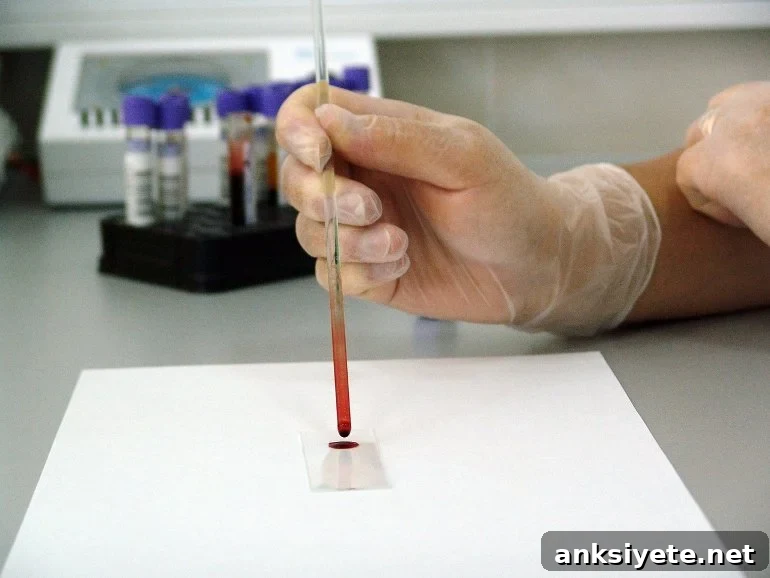
Summary: Researchers have developed a sensitive new blood test that detects brain-derived tau (BD-tau), enabling accurate tracking of Alzheimer’s disease progression while distinguishing it from other dementias.
Source: University of Gothenburg
A new blood test can specifically monitor neurodegeneration in Alzheimer’s disease and reliably exclude other types of dementia. This advancement, presented by researchers at the University of Gothenburg in collaboration with teams in Italy and the United States, represents a major step toward accessible, disease-specific blood biomarkers for Alzheimer’s disease (AD).
Over the past decade, the search for blood-based biomarkers for AD has intensified. Tau protein — a core component of Alzheimer’s pathology — has been central to these efforts. While phosphorylated-tau blood tests have recently shown promise for screening patients suspected of having AD, measuring brain-derived proteins in blood remains technically challenging because many circulating tau forms originate outside the brain.
To overcome this, researchers engineered a novel antibody that selectively recognizes tau isoforms produced in the brain while avoiding the peripheral ‘big tau’ isoform. By exploiting structural differences between brain and peripheral tau, the team developed an ultrasensitive assay that measures non-phosphorylated brain-derived tau (BD-tau) in blood with high specificity and stability.
Addresses an unmet need
This BD-tau assay fills a critical gap: a blood-based neurodegeneration marker that reflects Alzheimer’s disease pathology specifically, rather than general neuronal damage. In technical validation the BD-tau test demonstrated robust and reproducible performance in blood samples. Clinically, BD-tau levels in blood strongly correlated with cerebrospinal fluid (CSF) BD-tau, supporting that the assay detects tau originating from the brain.
The researchers analyzed BD-tau in blood from 609 participants across international cohorts, including a rare blood-to-autopsy group. In autopsy-confirmed cases, plasma BD-tau distinguished Alzheimer’s disease from non-Alzheimer neurodegenerative disorders. Notably, plasma BD-tau — but not neurofilament light (NfL), a general marker of neuronal injury — correlated with measured amyloid plaque and neurofibrillary tangle burdens at autopsy, underscoring BD-tau’s disease-specific link to AD pathology.
High accuracy to differentiate
To assess real-world clinical utility, the team examined two independent memory clinic cohorts containing patients diagnosed with AD, other dementias, and control subjects. In both cohorts, plasma BD-tau accurately separated Alzheimer’s patients from those with other neurodegenerative disorders and outperformed plasma NfL. In some cohort comparisons, BD-tau achieved very high diagnostic accuracy for distinguishing AD from conditions such as frontotemporal lobar degeneration and atypical parkinsonian syndromes.
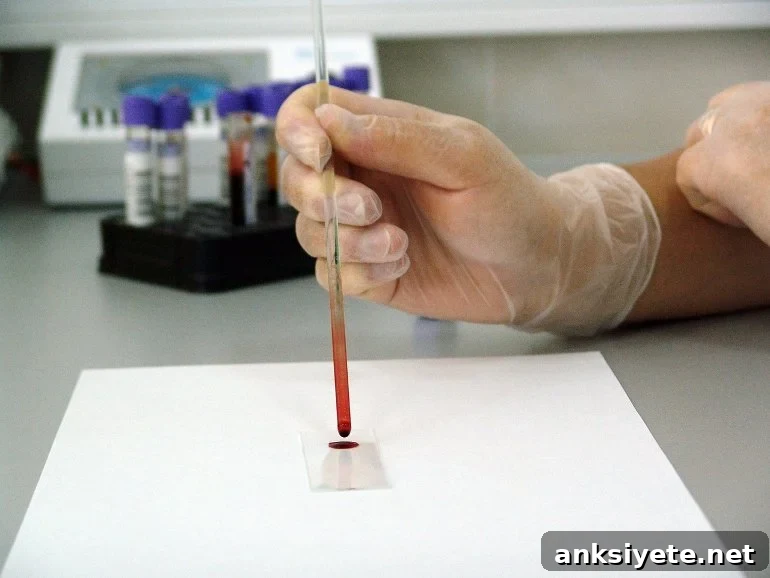
Overall, the findings establish plasma BD-tau as a blood biomarker that reflects Alzheimer’s-type neurodegeneration specifically, distinguishing it from other causes of dementia. Unlike total tau measured in plasma, which largely reflects peripheral sources, and unlike NfL, which signals general neuronal injury, BD-tau uniquely correlates with Alzheimer’s pathology and cognitive decline in affected individuals.
A decade ago, the National Institutes on Aging and the Alzheimer’s Association proposed the AT(N) research framework — a biological staging system for AD based on amyloid (A), tau (T), and neurodegeneration (N) biomarkers. While CSF and neuroimaging markers have supported implementation of AT(N), a blood-based N marker specific to Alzheimer’s pathophysiology has been missing.
Quick and accessible blood test
Plasma BD-tau provides this missing component and offers a way to complete the AT(N) framework using blood tests alone. For research, BD-tau enables more precise study of Alzheimer’s-specific neurodegenerative mechanisms and how they differ from other disorders. Clinically, BD-tau could be adopted as a fast, minimally invasive test to aid diagnosis, monitor disease progression, and evaluate treatment responses in patients with Alzheimer’s disease.
About this Alzheimer’s disease research news
Author: Margareta Gustafsson Kubista
Source: University of Gothenburg
Contact: Margareta Gustafsson Kubista – University of Gothenburg
Image: The image is in the public domain
Original Research: Open access.
“Brain-derived tau: a novel blood-based biomarker for Alzheimer’s disease-type neurodegeneration” by Kaj Blennow et al. Brain
Abstract
Brain-derived tau: a novel blood-based biomarker for Alzheimer’s disease-type neurodegeneration
Recent advances in blood biomarkers for Alzheimer’s disease have produced reliable assays for amyloid-beta and phosphorylated tau that align well with CSF and neuroimaging measures within the amyloid/tau/neurodegeneration [A/T/(N)] framework. However, a blood-based neurodegeneration marker specific to Alzheimer’s-type pathology has been lacking: neurofilament light (NfL) lacks disease specificity, and plasma total tau does not consistently correlate with CSF total tau because much circulating tau derives from peripheral tissues.
To address this, the investigators developed an antibody that selectively binds tau isoforms derived from the brain while avoiding peripherally expressed ‘big tau.’ Using this antibody, they created an ultrasensitive blood assay for brain-derived tau and validated it across five independent cohorts (n = 609), including paired blood-to-autopsy samples, CSF-classified biomarker cohorts, and memory clinic populations.
In paired serum and CSF samples, BD-tau levels were strongly correlated, whereas total tau levels were not. Blood BD-tau matched the diagnostic performance of CSF total tau and CSF BD-tau in distinguishing biomarker-positive Alzheimer’s cases from biomarker-negative controls. Plasma BD-tau accurately separated autopsy-confirmed Alzheimer’s disease from other neurodegenerative disorders (AUC ≈ 86.4%), whereas NfL did not (AUC ≈ 54.3%).
BD-tau levels in plasma were associated with global and regional amyloid plaque and neurofibrillary tangle counts, while NfL showed no such association. These findings were replicated in memory clinic cohorts where serum BD-tau differentiated Alzheimer’s disease from a range of other neurodegenerative conditions (AUC up to 99.6%). Across cohorts, BD-tau related to CSF and plasma AT(N) biomarkers and to cognitive performance. Importantly, BD-tau correlated with NfL only within Alzheimer’s disease, not in other disorders.
In summary, brain-derived tau is a new, blood-based biomarker that outperforms plasma total tau and uniquely reflects Alzheimer’s disease–type neurodegeneration. BD-tau has the potential to complete the AT(N) biomarker scheme in blood and to support both clinical practice and research into Alzheimer’s-specific neurodegenerative processes.