
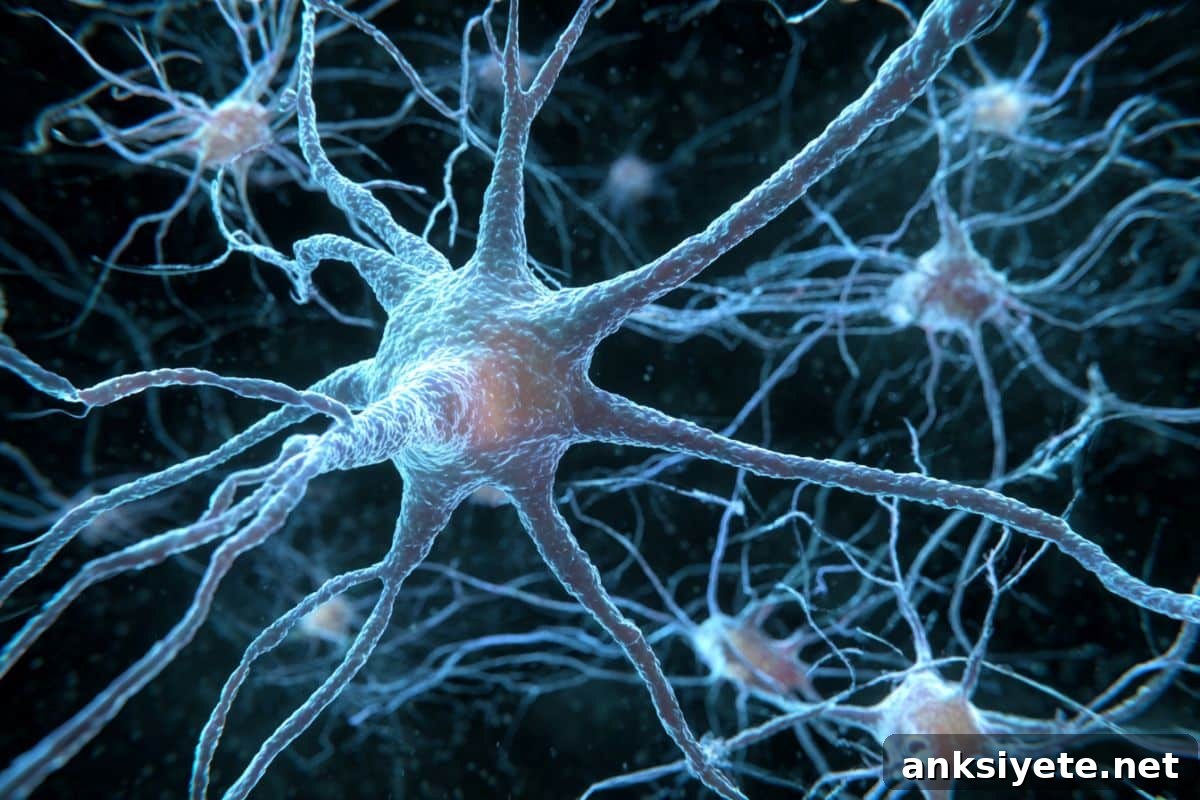
Summary: For roughly one in four people who carry the APOE4 variant, the brain’s wiring begins to change decades before memory loss appears. A new landmark study maps the precise molecular chain linking neuronal APOE4 to early hippocampal hyperactivity and later cognitive decline.
Researchers found that APOE4 produced inside neurons drives an increase in the protein Nell2. Elevated Nell2 causes hippocampal neurons to shrink and become hyperexcitable—firing too easily and too frequently. In animal models, the degree of early-life hyperactivity predicted the severity of memory impairment in later life.
Key Facts
- The Nell2 mechanism: High Nell2 levels correlate with smaller neuronal cell size. Smaller neurons are more readily activated, which leads to sustained hyperactivity and eventual strain on memory circuits.
- Reversibility with CRISPRi: Lowering Nell2 expression in adult mice using CRISPR interference restored normal neuron size and firing behavior, demonstrating that these changes are not permanently fixed.
- Neuronal APOE4 vs. astrocytic APOE4: Although most APOE4 protein is made by astrocytes, the study shows that only APOE4 produced within neurons causes neuronal shrinkage and hyperexcitability.
- Early-life predictor: Hyperactivity observed in young APOE4 mice—before any overt memory loss—accurately predicted later cognitive decline.
- Human relevance: The hippocampal subregions affected in mice match the regions shown to be hyperactive in human APOE4 carriers.
Source: Gladstone Institute
Overview
Gladstone Institutes researchers report a detailed molecular and circuit-level pathway connecting neuronal APOE4 to early hippocampal network dysfunction and age-related cognitive decline. Their results, published in Nature Aging, identify Nell2 as a central mediator and suggest a potential target for therapies aimed at APOE4 carriers.
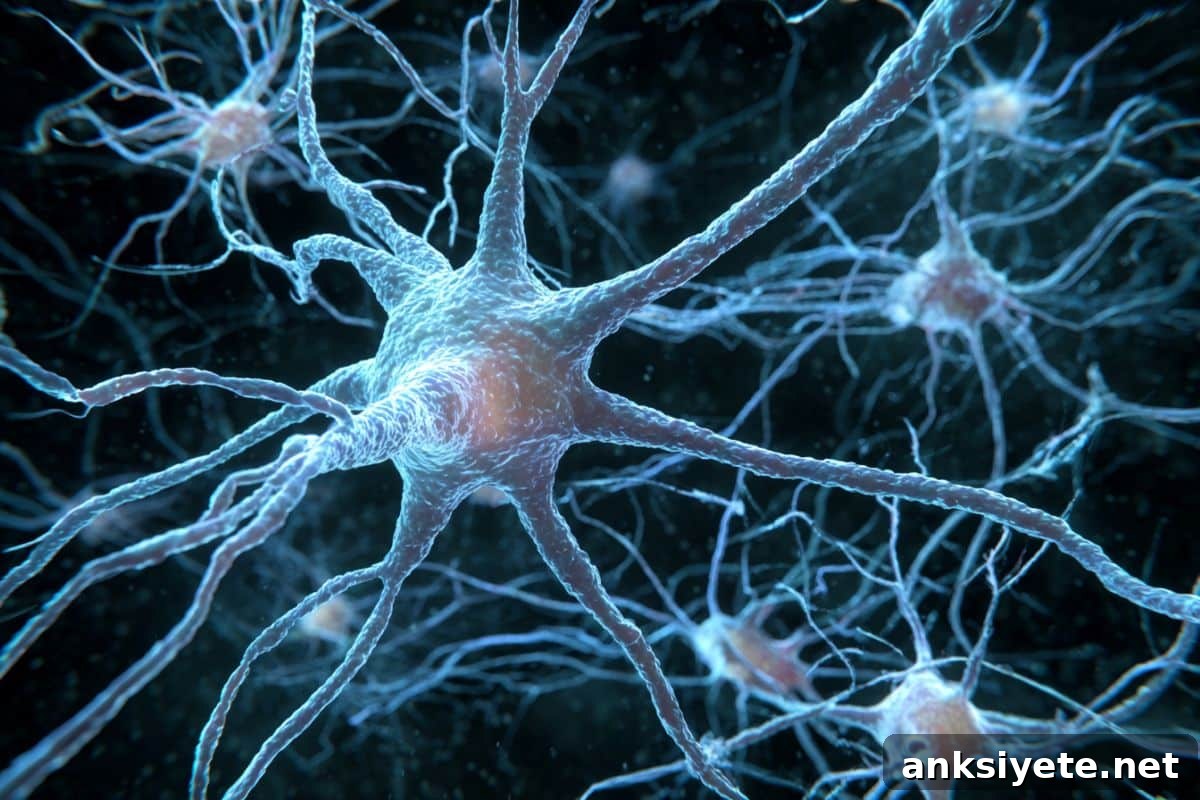
Using APOE4 knockin mouse models, the team linked neuronal APOE4 expression to elevated Nell2, smaller neuron size, and increased excitability in specific hippocampal regions. Importantly, the level of early hyperactivity predicted how severely the animals later failed spatial learning and memory tests.
When Nell2 expression was reduced in adult APOE4 mice, neurons returned to normal size and firing rates. That rescue in mature animals suggests a therapeutic window for interventions that target Nell2 or its downstream effects.
“This is the first study to examine how APOE4 changes neuronal function across ages,” says Misha Zilberter, PhD, senior author. “We observed early circuit alterations in young animals that still performed normally on memory tests, yet those early abnormalities forecasted later cognitive decline.”
APOE4 is one of three common APOE gene variants and is the strongest genetic risk factor for Alzheimer’s disease. It appears in roughly one quarter of the population and is overrepresented among people who develop Alzheimer’s.
“These findings open new possibilities for understanding how APOE4 accelerates age-related decline and for developing treatments that block harmful effects early,” adds Yadong Huang, MD, PhD, co-senior author.
Smaller Neurons, Greater Vulnerability
Previous human research showed APOE4 carriers can display increased brain activity decades before symptoms. The cellular cause of that hyperactivity and its contribution to later decline were unclear. By combining in vivo recordings and single-cell analysis, the investigators found region-specific hyperexcitability in the hippocampus of young APOE4 mice—matching regions reported in human imaging studies.
At the single-neuron level, APOE4 neurons in the affected zones were smaller than their APOE3 counterparts. Because compact neurons reach firing threshold faster, populations of smaller, more excitable cells create a noisier network that compromises memory encoding and retrieval. In APOE3 mice, similar increases in excitability emerged only with advanced age, suggesting APOE4 accelerates an aging-like process.
Mechanism and Intervention
Although astrocytes are the main source of APOE in the brain, the team demonstrated that the hyperactivity effect depends on APOE4 produced inside neurons. Removing APOE4 from neurons rescued cell size and function, while deleting it from astrocytes had no effect on the phenotype.
Single-nucleus RNA sequencing highlighted Nell2 as a top candidate that is upregulated specifically in APOE4 neurons. Targeted CRISPRi knockdown of Nell2 in adult hippocampal neurons reduced hyperexcitability and restored normal cell size, confirming Nell2’s causal role.
Nell2 has been reported at higher levels in the brains of Alzheimer’s patients and linked to worse cognitive outcomes, but it had not previously been connected directly to APOE4-driven neuronal dysfunction. The ability to reverse the phenotype in adults supports the idea that therapeutic targeting of Nell2 could be beneficial even after early disease processes begin.
About the Study
Funding: Supported by multiple grants from the National Institute on Aging, the National Institute of Neurological Disorders and Stroke, and the National Center for Research Resources.
Key Questions Answered:
A: Human studies show APOE4 carriers can show increased brain activity as early as their 20s and 30s. This work explains a likely cellular basis: neurons with APOE4 tend to be smaller and more easily triggered. That early overactivity may gradually undermine memory circuits even while behavior remains normal.
A: Smaller neurons reach firing threshold with less input, so they are more prone to excessive activity. When many neurons are overly excitable, the resulting network “noise” disrupts clear memory encoding and retrieval.
A: Not yet. The study identifies Nell2 as a promising drug target and demonstrates that reducing Nell2 reverses dysfunction in adult mice. This supports future efforts to develop therapies that could benefit APOE4 carriers after early changes have begun.
Editorial Notes:
- This article was edited by a Neuroscience News editor.
- The journal paper was reviewed in full.
- Additional context was provided by editorial staff.
About this genetics and Alzheimer’s research news
Author: Kelly Quigley
Source: Gladstone Institutes
Contact: Kelly Quigley, Gladstone Institutes
Image credit: Neuroscience News
Original Research: Open access. “Neuronal APOE4-induced Early Hippocampal Network Hyperexcitability in Alzheimer’s Disease Pathogenesis” by Dennis R. Tabuena et al., Nature Aging. DOI: 10.1038/s43587-026-01096-0
Abstract
Neuronal APOE4-induced Early Hippocampal Network Hyperexcitability in Alzheimer’s Disease Pathogenesis
APOE4, the strongest genetic risk factor for Alzheimer’s disease, has unclear effects on neuronal and network function during early, preclinical stages. This study shows that young APOE4 knockin mice display region-specific hippocampal hyperexcitability that predicts later cognitive decline. The phenotype arises from subpopulations of smaller, hyperexcitable neurons and is reversed by selective removal of neuronal APOE4. Aging leads to progressive excitation–inhibition imbalance in the dentate gyrus. Single-nucleus RNA sequencing identifies age- and cell-type-specific transcriptional changes, including upregulation of Nell2. CRISPR interference targeting Nell2 rescues abnormal excitability, implicating Nell2 as a mediator of APOE4-driven dysfunction. These findings link neuronal APOE4-induced early network impairment to Alzheimer’s disease pathogenesis with aging.