
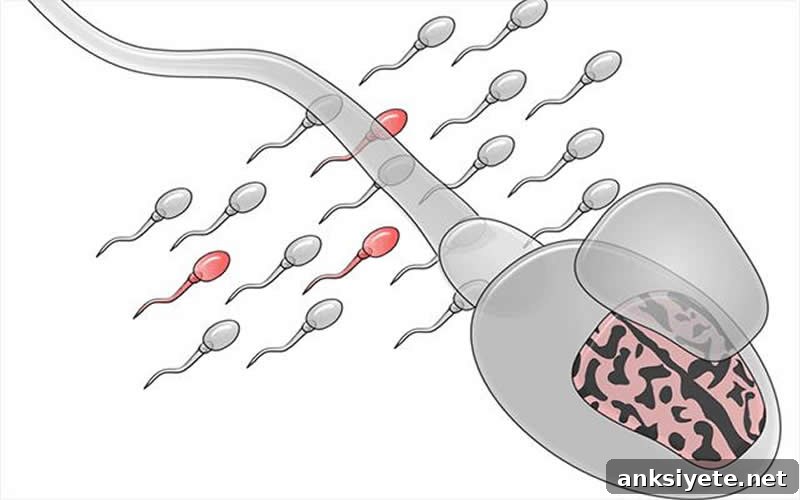
Summary: Spontaneous mutations present in a father’s sperm can contribute to autism spectrum disorder (ASD) in children. Researchers at the University of California San Diego have developed a sensitive approach to quantify these sperm-specific mutations and to estimate the likelihood that they will be transmitted and cause ASD in future offspring.
Source: UCSD
Understanding causes of autism: The causes of autism spectrum disorder (ASD) involve both genetic and environmental factors, and in many cases the origin remains unclear. A substantial fraction of ASD cases are linked to de novo mutations—genetic changes that are not inherited from either parent but arise spontaneously in the egg, sperm, or very early during embryo development. Because these mutations are newly acquired, they can be difficult to trace and to factor into family risk estimates.
In a study published on December 23, 2019 in Nature Medicine, an international team led by investigators at the UC San Diego School of Medicine described a method to measure disease-causing mutations that occur specifically in paternal sperm. Their work provides a practical way to assess recurrence risk for ASD within individual families by detecting and quantifying sperm mosaicism—genetically distinct cell populations within the same person.
“Autism affects about one in 59 children, and a significant portion of cases are caused by de novo DNA mutations. Yet until now we have lacked precise tools to know when and where these mutations arise,” said co-senior author Jonathan Sebat, PhD, professor and chief of the Beyster Center for Molecular Genomics of Neuropsychiatric Diseases at UC San Diego School of Medicine.
“With our new study, we can trace some of these mutations back to the father, and we can directly assess the risk of these same mutations occurring again in future children.”
Previous studies estimate that damaging de novo mutations contribute to roughly 10–30% of ASD cases, and the number of such mutations tends to increase with the father’s age at conception. Historically, recurrence risk estimates within a family have been generalized from population frequencies—typically cited around 1–3%—but they do not account for whether a specific parent carries mosaic mutations that raise the chance of transmission.
“Those population-based estimates don’t tell an individual family whether the exact mutation that caused disease in their child could recur,” said co-senior author Joseph Gleeson, MD, Rady Professor of Neuroscience at UC San Diego School of Medicine and director of neuroscience research at the Rady Children’s Institute for Genomic Medicine. “Families facing reproductive decisions often have to proceed amid considerable uncertainty.”
Study design and findings: The research team analyzed sperm samples from eight fathers who already had a child with ASD. Using deep whole-genome sequencing, they searched for mosaic variants—single-nucleotide changes, structural variants, and short tandem-repeat alterations—that appeared in the affected child and also in the father’s sperm, but not in the father’s blood or other tissues. This approach allowed the team to detect low-frequency mutations confined to the germline that would be missed by routine genetic testing.
“Although textbooks often say every cell in the body shares the same DNA, mutations occur whenever cells divide, so no two cells are truly identical,” explained first author Martin Breuss, PhD, an assistant project scientist in Gleeson’s laboratory. “Mosaicism can be clinically silent in a parent yet still be transmitted to offspring if it is present in sperm.”
Their results showed that disease-associated mutations could be present in up to about 15% of a father’s sperm cells in some cases—information that cannot be obtained from blood tests alone. By quantifying the fraction of sperm that carry a pathogenic variant, the method can stratify recurrence risk more precisely: most families fall into a near-0% recurrence category, while a smaller subset faces a substantially higher and measurable risk.
Clinical implications: The authors suggest that if this technique is translated into a clinical test, men could have their sperm analyzed to estimate their personal risk of passing on specific de novo mutations. This could inform reproductive choices for families who already have an affected child as well as for men who have not yet had children but wish to understand their genetic risk profile.
“Our laboratory has long aimed to trace the origins of pediatric brain disorders and to understand how mutations contribute to disease,” Gleeson added. “We previously demonstrated that mosaic mutations within a child can cause epilepsy and other conditions. This study highlights that parental mosaicism, particularly in the sperm, is equally important for genetic counseling and risk assessment.”
Disclosure: Martin Breuss, Danny Antaki, Morgan Kleiber, Kiely N. James, William M. Brandler, Jonathan Sebat and Joseph Gleeson are listed as inventors on a provisional patent filed by UC San Diego titled “Assessing risk of de novo mutations in males.”
Co-authors include: Danny Antaki, Morgan Kleiber, Oanh Hong, Madhusudan Gujral, William M. Brandler, Ileena Mitra, Melissa Gymrek and many collaborators from UC San Diego, the Rady Children’s Institute for Genomics, the Howard Hughes Medical Institute, institutions in Spain, Cold Spring Harbor, and New York University School of Medicine.
Source:
UCSD
Media contacts:
Scott LaFee – UCSD
Image source:
Image credited to UCSD.
Original research: The peer-reviewed study is titled “Autism risk in offspring can be assessed through quantification of male sperm mosaicism.” The authors used deep whole-genome sequencing to measure mosaicism in sperm and demonstrated that quantifying germline mosaic variants can refine recurrence-risk estimates for ASD caused by de novo mutations, supporting the potential value of adding sperm mosaicism assessment to genetic counseling.