Summary: Researchers explain how the anterior cingulate cortex and secondary motor cortex cooperate to update behavior when a familiar task requires an added step.
Source: MIT
Daily life often requires us to learn processes and then adapt them when expectations change. You might add two-factor authentication to a login that used to accept only a password, or discover that your favorite microwavable meal now must be heated, stirred, then heated again. How does the brain detect and implement that extra step? New research from neuroscientists at The Picower Institute for Learning and Memory at MIT sheds light on the cortical circuitry that enables a mammal to incorporate an additional action into an already learned sequence.
Published in Nature Communications, the study shows that when task rules were altered so rats had to perform two actions in sequence instead of one, two cortical regions—the anterior cingulate cortex (ACC) and secondary motor cortex (M2)—worked together to update internal rule representations and change behavior accordingly.
The investigators found that the ACC detected when the animals’ responses were insufficient and influenced neurons in M2 to incorporate the second action into the sequence. By manipulating ACC activity and recording M2 responses, the researchers traced how error feedback drives adaptive changes in sequential decision making.
“I began this project seven to eight years ago to study decision making,” says Daigo Takeuchi, who led the experiments while a postdoctoral researcher at the RIKEN‑MIT Laboratory for Neural Circuit Genetics in the Picower Institute, supervised by senior author Susumu Tonegawa. “Emerging work pointed to M2’s involvement, and I wanted to know which upstream circuits guide it.”
Disrupting the second step
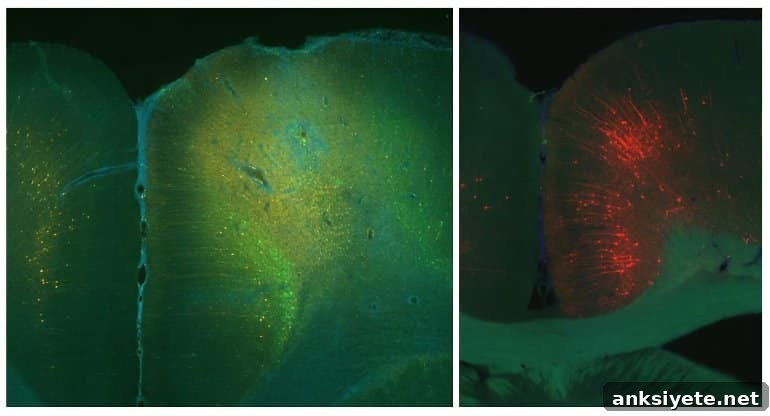
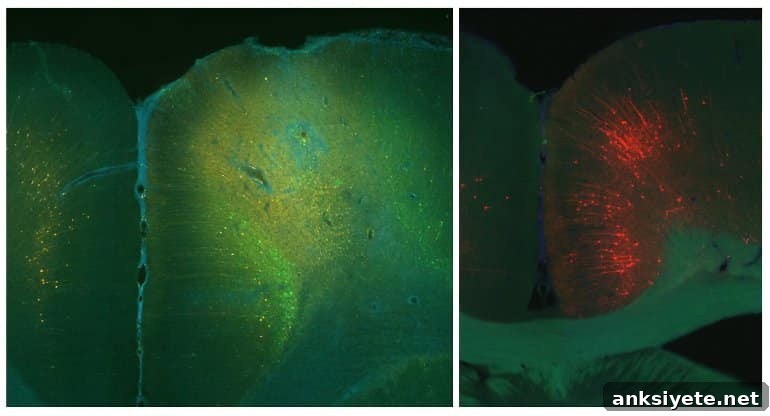
Takeuchi and Tonegawa mapped input pathways to M2 and found many originating in the ACC. To test ACC function, they used chemogenetic tools to suppress ACC neurons. This targeted inhibition produced a distinct behavioral effect.
When the task changed from requiring one nose poke for a reward to requiring two nose pokes in sequence, rats with silenced ACCs took far longer to adjust. Compared with control animals, these rats persisted in performing only the first poke and failed to incorporate the second step for many trials. In contrast, the transition from two steps back to one was unaffected by ACC inhibition—rats could reduce the sequence regardless of ACC status.
Silencing ACC projections specifically at their terminals in M2 produced the same failure to adapt, confirming that the ACC-to-M2 pathway is necessary for detecting and implementing the new two-step rule. Inhibiting other cortical regions did not produce this specific deficit, reinforcing the unique role of the ACC–M2 connection in updating sequential behavior.
To understand how ACC input alters processing in M2, the team recorded electrical activity from M2 neurons as rats performed the task. Many M2 cells showed selectivity for the current rule—responding differently when the task required one step versus two. Chemogenetic silencing of the ACC diminished this rule selectivity in M2 neurons, indicating that ACC input helps shape M2’s representation of task rules.
The researchers also identified distinct M2 cell populations that preferentially encoded positive outcomes (reward) and negative outcomes (lack of reward). When ACC activity was suppressed, neurons encoding negative outcomes became unusually active during error feedback, especially during the first 10–20 trials immediately after the rule switched from one step to two. That heightened negative-outcome signaling closely matched the time window when the rats showed the worst performance.
“The epoch-specific disruption of second-choice performance appears linked to an excessive enhancement of negative-outcome activated neurons caused by ACC silencing,” the authors report.
To test whether timing of ACC activity during feedback was critical, the team used optogenetics to silence ACC neurons with millisecond precision. Suppressing ACC activity immediately after an incorrect second choice—during the negative feedback period—caused the animals to continue making errors on subsequent trials. By contrast, turning off ACC activity after correct responses did not impair later performance. Together these results indicate that ACC neurons monitor error feedback and, when active, help update M2 rule representations so animals adjust future sequential choices.
Thresholds, inhibition, and behavioral consequences
The data support a model in which the ACC reads error feedback and signals M2 to add the required second action. When ACC input is absent during feedback, inhibitory control within M2 may be reduced, allowing negative-outcome encoding neurons to become overactive. Takeuchi suggests the ACC may normally activate inhibitory interneurons in M2 that suppress those negative-outcome cells. Without that modulation, animals may demand more confirming evidence before they adopt the new two-step rule—effectively raising the decision threshold for recognizing the change.
Although the exact cellular and circuit mechanisms remain to be fully defined, the study establishes a specific cingulate‑to‑motor cortical pathway that supports adapting to rule changes that add steps to a learned sequence. The findings raise new questions: Is there a separate circuit specialized for detecting when a multistep process can be simplified? How might such circuits interact with the ACC–M2 pathway? And what precise inhibitory mechanisms implement the proposed threshold adjustment?
Beyond basic neuroscience, these results may inform artificial systems that must adapt to changing multi‑step procedures, including AI models for sequential decision making in games, robotics, or industrial tasks.
About this neuroscience research news
Author: Press Office
Source: MIT
Contact: Press Office – MIT
Image: The image is credited to Tonegawa Lab/MIT Picower Institute
Original Research: Open access.
“Cingulate-motor circuits update rule representations for sequential choice decisions” by Daigo Takeuchi et al. Nature Communications
Abstract
Cingulate-motor circuits update rule representations for sequential choice decisions
The anterior cingulate cortex (ACC) supports flexible updating of choice responses when environmental rules change. How the ACC entrains motor cortex to reorganize rule representations and produce the required motor outputs has been unclear.
This study shows that chemogenetic silencing of ACC terminal projections in secondary motor cortex (M2) disrupts choice performance in trials immediately following rule switches, indicating those inputs are necessary for updating rule representations in M2. Silencing the ACC also reduces rule selectivity among M2 neurons.
Additionally, optogenetic suppression of ACC neurons targeted to error trials right after rule switches increases errors on subsequent trials. These findings suggest the ACC monitors behavioral errors and updates rule representations in motor cortex, revealing a critical role for cingulate‑motor circuits in adaptive sequential choice behavior.