
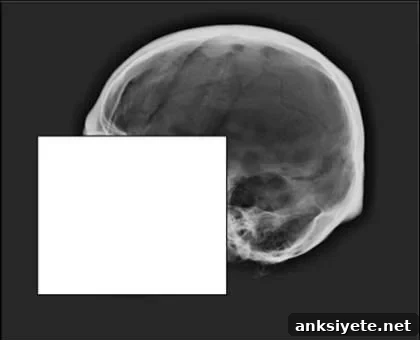
New research from North Carolina State University challenges the long-standing forensic practice of using skull shape to make definitive identifications of human remains.
Forensic anthropologists and examiners have historically relied on the outline of the skull, particularly the cranial vault outline seen in profile X-rays, as one tool among several for identifying unknown remains. The cranial vault outline runs from just above the bridge of the nose to the base of the skull where it meets the neck. However, a recent study led by Dr. Ann Ross of NC State indicates that this feature alone does not provide enough individual variation to establish positive identifications reliably.
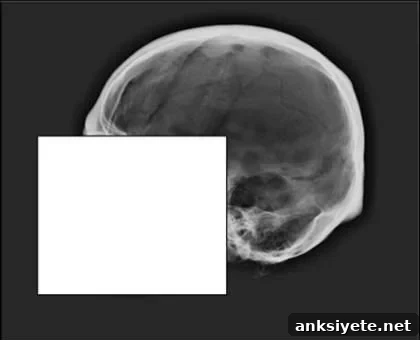
“Many victims—particularly those from lower socioeconomic backgrounds—do not have extensive dental or medical records that are easy to match,” says Dr. Ann Ross, a professor of anthropology and senior author of the study. “In those cases, skull X-rays from emergency rooms or trauma care have often been used to attempt identifications. That practice is common in our field and I have used it myself. Our research set out to validate whether cranial vault outlines are sufficient for making a positive ID, and the results suggest they are not.”
The study evaluated how accurately experienced forensic professionals could match antemortem (before death) and postmortem (after death) cranial X-rays using only the cranial vault outline. Researchers surveyed 106 members of the American Academy of Forensic Sciences and presented each participant with a set of 14 antemortem X-rays and five postmortem X-rays. Participants were asked to match each of the five postmortem images to the correct antemortem image to establish identity.
Results showed limited reliability for sole reliance on cranial vault outlines: only 47 percent of participants correctly matched all five skulls. Participants holding Ph.D. degrees performed somewhat better, with 56 percent correctly matching all five, but this still leaves a substantial margin of error. These findings indicate that cranial vault outlines carry useful information but should not be the primary or only basis for declaring a positive identification.
Ashley Maxwell, lead author of the paper and a former NC State graduate student, emphasizes nuance: “Cranial vault outlines can be valuable, especially when other identifying features such as teeth are missing or destroyed. But our data show these outlines should not be weighted too heavily. The best practice is to combine multiple lines of evidence—facial features, dental records, cranial outlines and other anatomical or radiographic markers—to improve accuracy.”
The implications are important for forensic casework, mass disaster response, and medicolegal investigations where accurate identification is critical for both investigative and humanitarian reasons. The study highlights the need for methodological validation of common forensic techniques and encourages practitioners to corroborate cranial-outline matches with additional evidence whenever possible.
Notes about the research and publication
The paper, titled “A Radiographic Study on the Utility of Cranial Vault Outlines for Positive Identifications,” is published in the Journal of Forensic Sciences. The research received support from the National Institute of Justice (Grant 2010-2078-01). The study’s authors are Ashley B. Maxwell and Ann H. Ross.
Contact: Matt Shipman — NC State University
Source: NC State University press release
Image credit: Ashley Maxwell, adapted from NC State University materials.
Original research: “A Radiographic Study on the Utility of Cranial Vault Outlines for Positive Identifications,” Ashley B. Maxwell and Ann H. Ross, Journal of Forensic Sciences. Published online November 25, 2013. doi: 10.1111/1556-4029.12346
Keywords: forensic identification, cranial vault outline, skull X-ray, forensic anthropology, positive identification, NC State University, Journal of Forensic Sciences.