
Stony Brook-led fMRI study identifies brain activity patterns linked to childhood social reticence, pointing toward prevention of later anxiety
A functional MRI (fMRI) study led by Johanna M. Jarcho, PhD, at Stony Brook University examined how preadolescent brains respond during peer interactions and found reliable differences between children who showed high social reticence in early childhood and those who did not. The research used an innovative virtual classroom paradigm to simulate realistic peer evaluation and identified patterns of brain activation and connectivity that may mark risk for later social anxiety.
Social reticence—characterized by shy, anxiously avoidant behavior in early childhood—can be an early indicator of persistent social withdrawal or the later emergence of social anxiety. To investigate neural correlates of this trait, the team followed a cohort of children first assessed at age 2 with repeated follow-ups through age 11. At the preadolescent scan, 53 children participated in the fMRI protocol: 30 had been identified with high social reticence across early childhood assessments, while 23 showed low levels of reticence.
For the scanning session, researchers developed a novel, interactive cartoon classroom task. Each 11-year-old created a personalized avatar and completed a brief online personality profile. During fMRI, the child’s avatar engaged in scripted social exchanges with other animated classroom characters categorized by social style—examples included an unpredictable peer, a bully, and a friendly student. The task was designed to separate anticipation of social feedback from the receipt of that feedback, and to examine brain responses to predictable versus unpredictable peer evaluation.
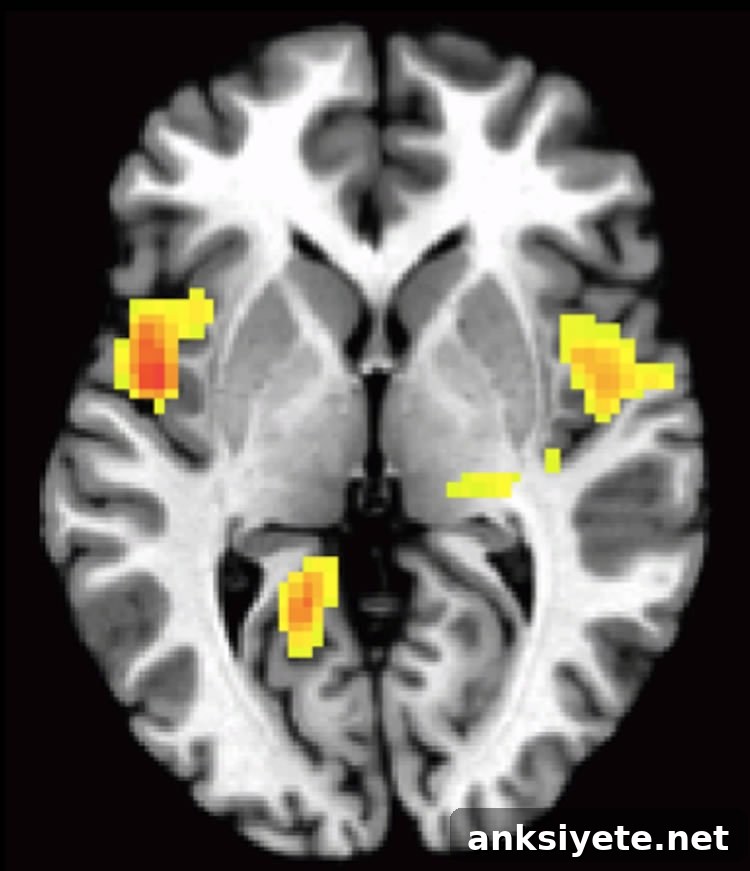
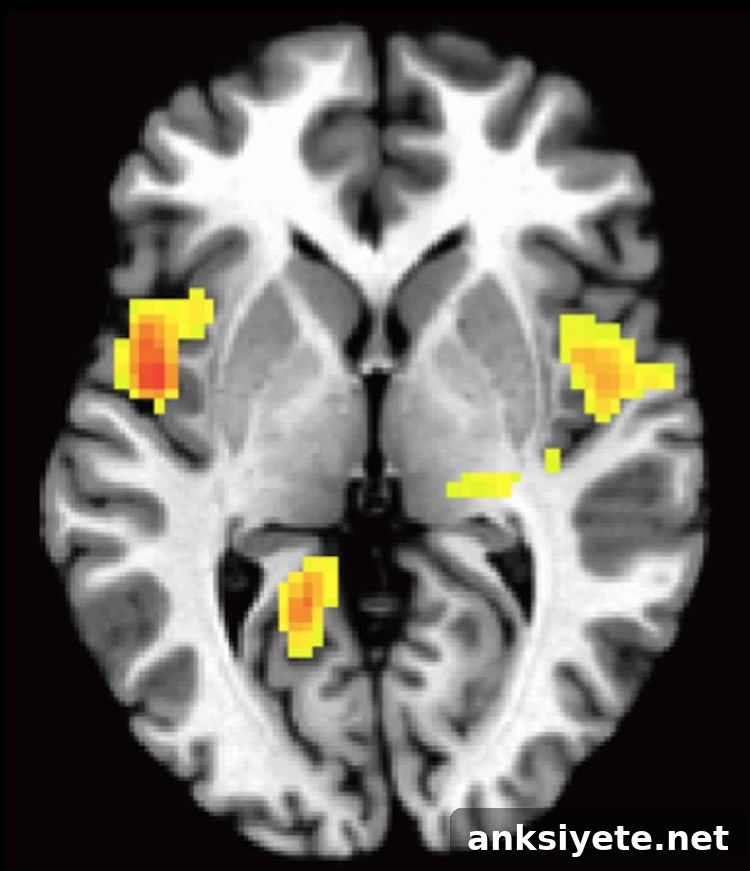
Results showed that early-childhood social reticence predicted distinct patterns of brain function in preadolescence. Children with high social reticence exhibited greater activation in the dorsal anterior cingulate cortex (dACC) and bilateral insula when anticipating unpredictable versus predictable feedback. These regions are commonly associated with processing salience and distress. High-reticent participants also showed negative functional connectivity between the insula and the ventromedial prefrontal cortex (vmPFC), a circuit implicated in emotional regulation. In addition, amygdala responses were heightened among high-reticent children, but specifically during negative feedback from unpredictable peers.
These neural signatures—elevated dACC and insula activation, altered insula–vmPFC connectivity, and selective amygdala responses—offer a biologically grounded measure of how socially reticent children process peer evaluation. Identifying such brain-based markers is an important step toward understanding mechanisms of risk and resilience for social anxiety and related psychopathology.
The authors emphasize that the virtual classroom paradigm is a useful tool for mapping brain activity during real-time, peer-based interactions that vary in social quality. This approach allows researchers to capture nuanced neural responses to different forms of social evaluation that traditional tasks may miss.
Next steps include following the same participants as they move through adolescence to determine whether the preadolescent brain patterns associated with early social reticence predict later emergence or persistence of social anxiety symptoms. Ongoing interviews and clinical assessments with these participants will test whether the observed neural differences track with behavioral outcomes and could inform early intervention strategies aimed at teaching children more adaptive ways to interpret and respond to social situations.
This study, titled “Early-Childhood Social Reticence Predicts Brain Function in Preadolescent Youths During Distinct Forms of Peer Evaluation,” was led by Johanna M. Jarcho, PhD, Assistant Professor, Department of Psychology, Stony Brook University. Co-authors include researchers from Stony Brook University, University of Maryland, the National Institute of Mental Health, University of Illinois, University of Haifa, University of Waterloo, Nationwide Children’s Hospital (Ohio), and Ohio State University.
Funding: The research received partial support from the National Institute of Mental Health and the National Institute of Child Health and Human Development.
Source: Greg Filiano, Stony Brook University. Image credit: adapted from the Stony Brook press release. Original research citation: Johanna M. Jarcho et al., “Early-Childhood Social Reticence Predicts Brain Function in Preadolescent Youths During Distinct Forms of Peer Evaluation,” Psychological Science. Published online May 5, 2016. DOI: 10.1177/0956797616638319.
Abstract
Social reticence in early childhood—manifesting as shy, anxiously avoidant behavior—may become less visibly pronounced with age while still influencing neural responses to peers. In this longitudinal sample, measures of social reticence collected between ages 2 and 7 were used to identify children as high or low in reticence. At age 11, participants completed an fMRI-based peer-interaction task that separated anticipation from receipt of social evaluation and contrasted predictable versus unpredictable feedback. Early high social reticence predicted greater activation in dorsal anterior cingulate cortex and bilateral insula during anticipation of unpredictable feedback, negative insula–ventromedial prefrontal cortex connectivity, and increased amygdala responses to negative evaluation from unpredictable peers. These findings highlight neural mechanisms that may underlie risk for later social anxiety and provide targets for future research on prevention and intervention.