
Research shows the brain’s lasting plasticity and how early language exposure shapes later processing
You might feel you’ve forgotten a language you heard as a child, but the brain often retains traces of that early exposure. New research indicates that even brief exposure to a first language in infancy can influence how the brain processes sounds from a later-learned language, even if the original language is no longer spoken.
Published in Nature Communications, a study by researchers at McGill University and the Montreal Neurological Institute reveals that early auditory experiences leave neural patterns that persist and affect subsequent language processing. The findings illuminate how the brain becomes organized for language and demonstrate the flexibility—yet persistence—of neural wiring in response to changing language environments. These results have implications for understanding brain plasticity and for informing educational approaches for diverse learners.
Testing language processing with pseudo-words
The research team used a phonological working memory task involving French pseudo-words (for example, vapagne and chansette) while scanning the brains of three groups of children aged 10 to 17 with functional magnetic resonance imaging (fMRI). The three groups were: (1) monolingual French children raised in French-speaking families; (2) children adopted from China before age three who subsequently stopped hearing or speaking Chinese and were raised in French-only households; and (3) children who were fluent bilinguals in Chinese and French and maintained both languages.
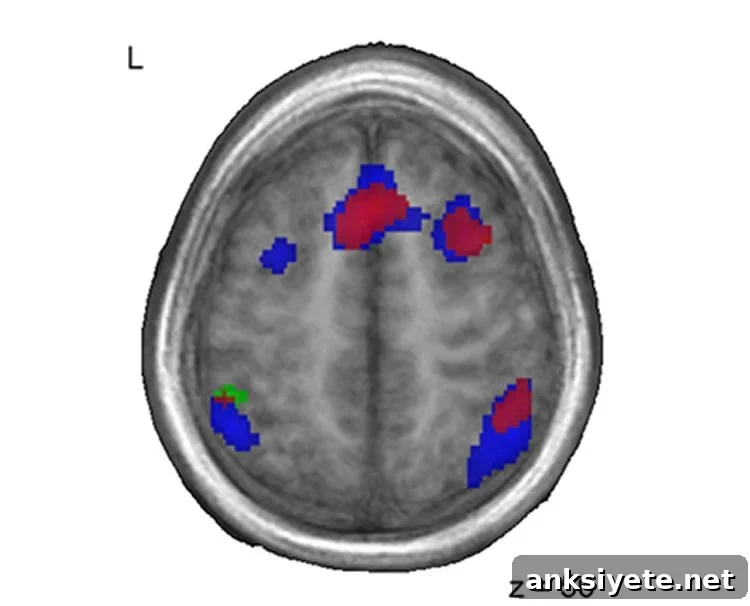
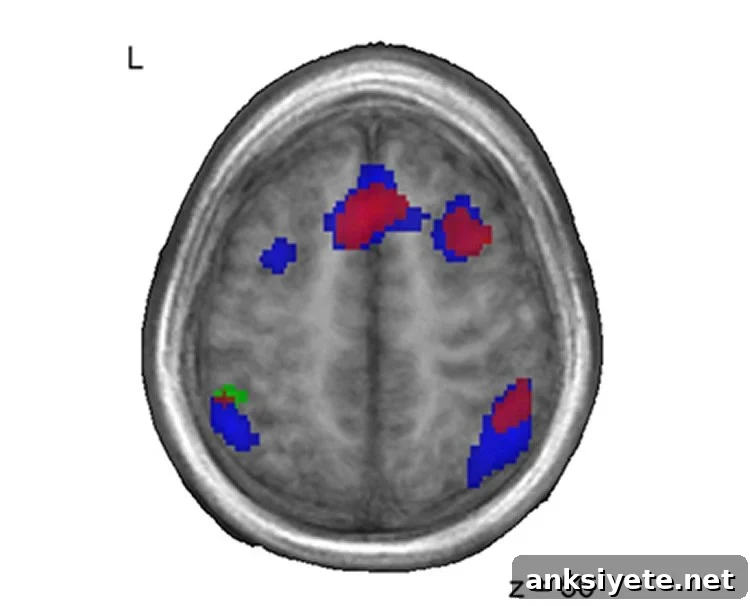
All groups performed the task at comparable behavioral levels, but the patterns of brain activation differed. Monolingual French children primarily engaged brain regions typically associated with phonological working memory and language processing, including the left inferior frontal gyrus and the anterior insula. By contrast, both groups with early Chinese exposure—the bilingual children and the adopted children who no longer spoke Chinese—recruited additional brain regions. These included the right middle frontal gyrus, the left medial frontal cortex, and bilateral superior temporal gyri, areas commonly implicated in cognitive control, attention, and working memory.
Early language sounds leave lasting neural traces
Remarkably, the adopted children who had discontinued Chinese and functioned as monolingual French speakers at the time of testing still showed brain activation patterns resembling those of bilingual peers. This suggests that early auditory experience establishes neural templates that continue to shape how a later language is processed, even when the original language is no longer used.
“During the first year of life, infants’ brains are highly tuned to gather and store information about relevant sounds in the language they hear,” explained Lara Pierce, a doctoral student at McGill and lead author of the study. “Our results show that children who were exposed to Chinese as infants process French differently than monolingual French children. Even when they no longer speak Chinese, early exposure appears to engage brain regions related to attention and working memory during language tasks.”
Insights into bilingualism, adoption, and brain organization
The study highlights two important points: first, that very early language experience can leave a durable mark on neural organization; and second, that the brain can adapt its functional networks when children enter a new language environment. The unique situation of internationally adopted children—exposure to one language at birth followed by a swift transition to a different language environment—offers a natural experiment for separating the influence of early auditory templates from the effects of continued exposure to multiple languages.
The authors note that future research should investigate whether similar neural patterns emerge when the first and later languages are more closely related—for example, exposure to Spanish followed by French—since linguistic similarity might influence how early templates interact with later-acquired sounds.
Source: Lara Pierce – McGill University
Image credit: Lara Pierce
Original research: “Past experience shapes ongoing neural patterns for language” by Lara J. Pierce, Jen-Kai Chen, Audrey Delcenserie, Fred Genesee, and Denise Klein, published in Nature Communications. Published online December 1, 2015. DOI: 10.1038/ncomms10073
Abstract
Past experience shapes ongoing neural patterns for language
Early experiences may establish a foundation for later learning, yet the impact of early language exposure on later neural processing has been unclear. Using fMRI, researchers compared three groups performing a French phonological working memory task: (1) monolingual French children; (2) children adopted from China before age three who discontinued Chinese and spoke only French at testing; and (3) Chinese-speaking children who learned French as a second language but maintained Chinese. Although all groups performed the task equally well behaviorally, brain activation differed. Monolingual French children engaged typical phonological working memory regions, while both groups with early Chinese exposure also recruited regions linked to cognitive control. These findings indicate that early exposure to a language—and possibly delays in exposure to a subsequent language—continues to influence neural processing of later-learned language sounds years later, even in highly proficient users.