
When I told my doctor that the sight of a starfish tastes like copper, she sat across from me in stunned silence, as if waiting for a punchline.
“I’m serious,” I said, half-laughing. “It tastes like a penny in my mouth.”
For as long as I can remember, my senses have overlapped in unexpected ways. Sometimes visual input triggers taste; other times colors evoke a tactile sensation. My earliest encounters with this phenomenon were striking enough to hold my attention, yet subtle enough that I lived with them for years without asking questions. Certain sensations simply appear more vivid to me than to others. For example, the feel of ice on my skin looks like the color brown, and viewing hedgehogs produces the sensation of someone vigorously tickling my back—so I tend to avoid images of them. These experiences make me uncomfortable at times.
I’ve always known I think a little differently. I embraced that oddness and even coined a playful term: “a sensory allergy.” It wasn’t until my interest in neuroscience deepened three years ago that I learned there was a name for what I was experiencing: synesthesia.
Synesthesia, often described as a union of the senses, is a neurological condition in which stimulation of one sensory pathway produces an involuntary experience in a second sensory pathway. An estimated four percent of the population experiences some form of cross-wiring among senses. In synesthesia, neurons and synapses that normally support one sensory modality—such as touch—appear to overlap or connect with systems that process another modality—such as taste—creating a blended sensory experience. It is not uncommon for people with synesthesia to see days of the week as colors, to hear sounds when they are touched, or to taste specific flavors when they hear certain words or musical notes.
Although researchers have not pinpointed a single brain region responsible for synesthesia, neurologist Richard Cytowic has suggested the limbic system may play a central role. The limbic system helps regulate emotion and memory, which may help explain why synesthetic experiences can be vivid and emotionally resonant. Other studies highlight activity in the cerebral cortex, especially in areas linked to visual processing. For instance, brain scans of people who hear colors have shown activation in visual cortex regions associated with color perception when they hear certain words—activity that is generally absent in people without synesthesia, even when they are asked to imagine colors or to associate colors with words.
Knowing this made me wonder how many others live with synesthetic perceptions without recognizing them. There is growing evidence that synesthesia may be more common than previously believed, and it is plausible that many people possess a mild form of cross-sensory association. Most people have fleeting cross-sensory reactions—such as the visceral cringe at the sound of nails on a chalkboard—but for synesthetes these experiences are more consistent and more intense. Prominent creative figures have described synesthetic perceptions: musician Pharrell Williams associates music with colors and has described it as a gift; historical figures including Billy Joel, Vincent Van Gogh, and Vladimir Nabokov also reported synesthetic experiences.
Of course, some people remain skeptical or simply unable to imagine what synesthesia feels like because they have never experienced it. Synesthetic sensations are real for those who have them; they are not hallucinations nor inherently pathological conditions requiring treatment. Rather, synesthesia is a consistent and involuntary way of perceiving the world. At times it can be disorienting or uncomfortable, but I try to remind myself that this feeling comes from experiencing something my brain interprets as unusual. Then again, what counts as normal perception?
The study of synesthesia underscores the brain’s capacity to construct individualized perceptual realities. For synesthetes, the world can feel doubled: richer, sometimes overwhelming, but unmistakably vivid. That dual experience has its challenges, yet it can also be a source of creativity and insight.
Neuroscience News would like to thank D’Arcy Brishon Carter for submitting this original article for inclusion.
Author Information: D’Arcy Brishon Carter is a freelance writer and student.
Source: D’Arcy Brishon Carter
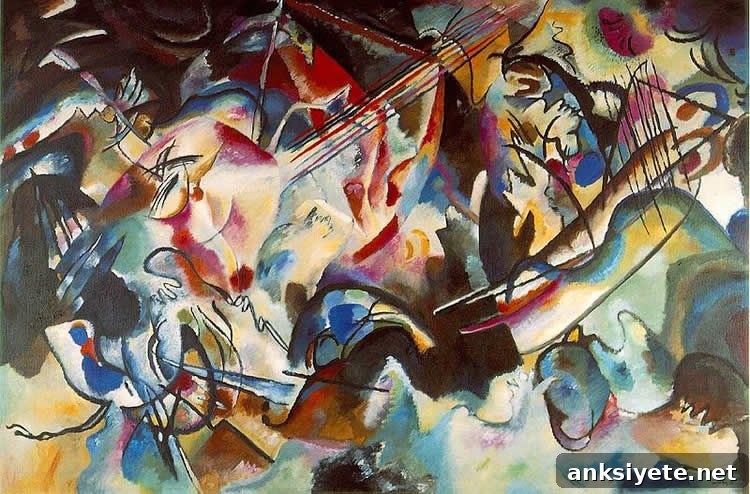
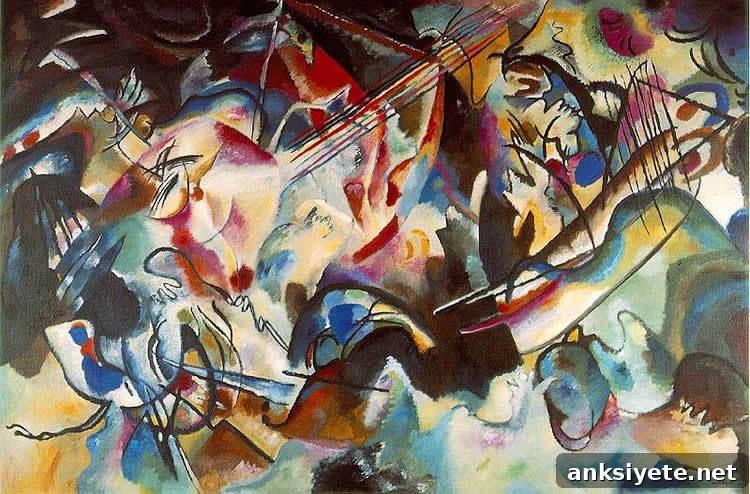
Image Source: The image accompanying this article is credited to Vassily Kandinsky and is in the public domain.
MLA: Neuroscience News. “Synesthesia: When Tuesday Is The Color Red.” Neuroscience News. 9 September 2016.
APA: Neuroscience News. (2016, September 9). Synesthesia: When Tuesday Is The Color Red. Neuroscience News.
Chicago: Neuroscience News. “Synesthesia: When Tuesday Is The Color Red.” Accessed September 9, 2016.