
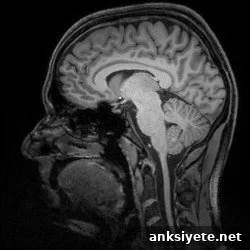
German researchers gain new insights into the functioning of the brain.
Researchers from the DZNE and the University of Bonn report new evidence that the human brain can spontaneously replay memory-related activity patterns during rest, and that these recurrences support longer-lasting memories. Published in The Journal of Neuroscience, the study led by Dr. Nikolai Axmacher combined behavioral testing with functional magnetic resonance imaging (fMRI) to track brain activity while participants encoded images, rested, and took a short nap inside the scanner. The results indicate that offline replay of stimulus-specific neural patterns during brief rest periods correlates with improved memory performance.
At any moment our brains show distinct activity patterns depending on mood, attention and the content of perception. When we experience or learn something, that experience becomes reflected in a pattern of neuronal activity across visual and memory-related regions. Later, when that information is recalled or consolidated, similar activity patterns can re-emerge. How and when these spontaneous reactivations occur, and their exact role in stabilizing memories, remain active topics of research.
The dominant view of memory formation describes an initial, labile encoding stage followed by consolidation, the process that stabilizes memories so they persist over time. “Consolidation is essential for turning temporary traces into durable memories,” explains Dr. Axmacher, a researcher in the Department of Epileptology at the University of Bonn and at the Bonn site of the DZNE. “One mechanism that has been proposed to support consolidation is reactivation, where the brain replays the neural activity linked to a given memory. Reactivation can occur during sleep or quiet wakefulness, and animal studies have shown it to be important for long-term storage. We wanted to test whether similar spontaneous replays occur in humans and whether they predict later memory accuracy.”
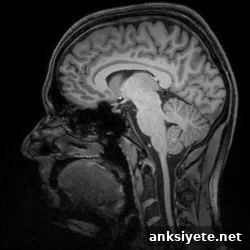
A memory test inside the scanner
To examine reactivation in humans, Axmacher and colleagues ran an experiment with ten healthy volunteers (mean age 24). During the encoding phase participants viewed a series of images — for example, frogs, trees, airplanes and people — each paired with a small white square placed at a unique location on the picture. Participants were instructed to remember the position of the square for later recall. After intervening rest and a short nap in the scanner, the images were presented again without the marker and participants used a mouse cursor to indicate the remembered location. Memory accuracy was quantified as the distance between the original spot and the participant’s response.
“This associative task requires linking visual content with spatial location,” notes Axmacher. “It engages multiple brain regions, notably visual cortex and the hippocampus, which is strongly implicated in many forms of memory.” Participants completed the entire protocol while fMRI recorded brain activity continuously across encoding, wakeful rest periods and the short sleep episode.
Recurrent brain patterns increased the accuracy
To detect spontaneous replays, the team trained a multivariate pattern recognition algorithm to identify neural activity patterns associated with each image during encoding, then searched for matches to those patterns later during rest and sleep. “The analysis is technically demanding, but it allows us to objectively track stimulus-specific neural activity over time,” Axmacher explains. The results revealed that neural patterns tied to specific images indeed reappeared during subsequent rest periods and during the short nap inside the scanner.
Crucially, the frequency of pattern recurrence predicted memory performance: images whose neural signatures reemerged more often during offline periods were recalled more accurately. “The more times a pattern replayed, the closer participants’ responses were to the original marker,” Axmacher summarizes. These findings provide direct evidence in humans that spontaneous replay of stimulus-specific neural activity supports the formation of long-lasting memories — a phenomenon previously established in animal models.
Memory performance benefits from resting periods
The study suggests that quiet rest, and possibly brief sleep, can enhance memory consolidation by allowing replay to occur. Axmacher cautions that the experiment did not isolate a special role for sleep over wakeful rest, likely because only a short nap was possible inside the scanner. “Full night sleep involves many hours and transitions across distinct sleep stages, which are widely considered beneficial for consolidation,” he says. Nevertheless, other research indicates that even short naps can aid memory, and the present results show that offline reactivation during short rest episodes is associated with improved recall.
An objective look at memory contents
Whether the observed reactivations were accompanied by conscious recall or remained below awareness is unclear. “Participants probably let their thoughts wander during rest and may have spontaneously remembered the images, but subjective recall reports were not central to our study,” Axmacher remarks. Instead, the strength of this approach is its objective measurement of memory-related neural patterns through fMRI and pattern-recognition methods. This external, data-driven perspective on memory content opens new avenues for research, including links to dream research and the study of spontaneous cognitive processes during rest.
Notes about this memory research
Contact: Marcus Neitzert – DZNE
Source: DZNE press release
Image source: DZNE/Guido Hennes (image adapted from the press release)
Original research: “Memory consolidation by replay of stimulus-specific neural activity” by Lorena Deuker, Jan Olligs, Juergen Fell, Thorsten A. Kranz, Florian Mormann, Christian Montag, Martin Reuter, Christian E. Elger, and Nikolai Axmacher. Published in Journal of Neuroscience, December 4, 2013.
Keywords: neuroscience, memory consolidation, reactivation, replay, fMRI, hippocampus, memory, neuroimaging