
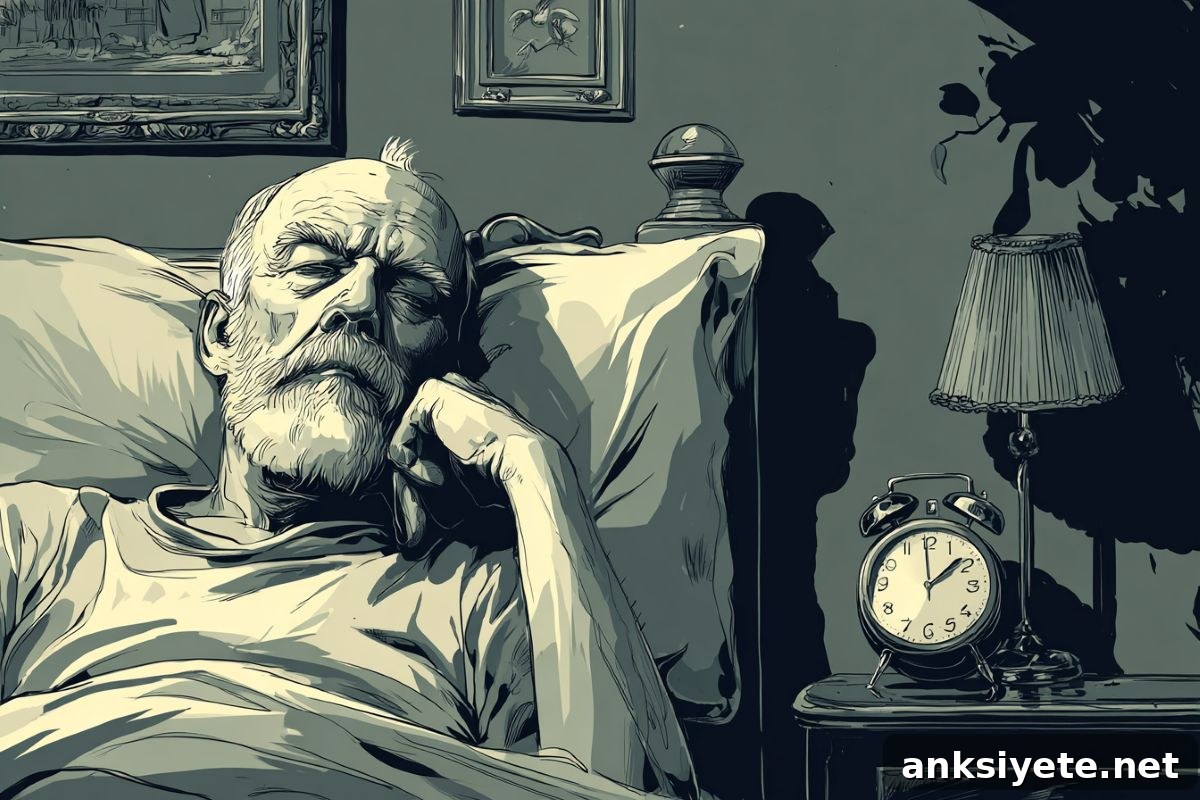
Summary: A recent study presented at SLEEP 2026 identifies a strong psychological driver of chronic sleep problems and related declines in physical health. Researchers found that “age discrepancy” — the gap between how old a person feels (subjective age) and their chronological age — reliably predicts worse sleep outcomes, including more severe insomnia symptoms, irregular sleep patterns, and greater daytime impairment.
Across a large sample of adults, feeling older than one’s chronological age was linked with poorer overall sleep health and, indirectly, with worse self-reported physical health. These associations persisted even after accounting for demographic factors and mental health symptoms, suggesting subjective age is an independent and meaningful factor in sleep and well-being.
Key Facts
- What is age discrepancy? The study defined age discrepancy as the difference between a person’s subjective age and their chronological age, divided by chronological age. Positive values indicate feeling older than one’s calendar years; negative values indicate feeling younger.
- Large sample size: The analysis included 3,177 adults (mean age 42.8 years; 49% female) who completed an online survey assessing subjective age, insomnia severity, sleep regularity, sleep-related daytime impairment, depression, anxiety, and self-reported physical health.
- Independent predictor: Age discrepancy predicted multiple measures of poor sleep even when researchers controlled for chronological age, sex, race, depression, and anxiety.
- Three linked sleep harms: Individuals who felt older than their chronological age consistently reported higher insomnia symptoms, lower sleep regularity, and greater daytime impairment — a cluster that directly undermines daily functioning.
- Indirect pathway to physical decline: Mediation analyses showed that the link between feeling older and poorer self-reported physical health operated indirectly through its effects on insomnia severity, sleep irregularity, and daytime sleep-related impairment.
- Public health relevance: The study’s lead investigator highlights that addressing subjective perceptions of aging may be an important addition to clinical care and public health messaging aimed at improving sleep and long-term quality of life.
The research, led by Joseph M. Dzierzewski, PhD, Senior Vice President of Research and Scientific Affairs at the National Sleep Foundation, emphasizes that subjective age is not merely an anecdotal feeling but a measurable psychological factor with real consequences for sleep and health. “Adults who felt older than their actual age consistently reported poorer sleep outcomes, including more insomnia symptoms, less regular sleep, and greater daytime impairment,” Dzierzewski said. He also noted that these patterns remained significant after adjusting for depression and anxiety.
The authors used correlational, regression, and parallel mediation models to examine how subjective age related to multiple sleep outcomes and to determine whether sleep problems could explain associations between age discrepancy and physical health. Insomnia disorder — defined by difficulty falling or staying asleep plus daytime impairment — and other dimensions of sleep health such as regularity and timing are essential to overall well-being, according to sleep-health principles endorsed by professional bodies.
Practical implications are immediate. Clinicians who evaluate sleep complaints may find it useful to ask patients about how old they feel in addition to assessing mood, anxiety, and medical conditions. Public health campaigns that address attitudes toward aging and promote positive subjective age may help protect sleep quality and downstream physical health.
Frequently Asked Questions
A: The study suggests that subjective perceptions of aging can alter cognitive and emotional regulation, producing a chronically heightened stress or hyper-arousal state. That heightened arousal undermines the brain’s ability to initiate and maintain regular, restorative sleep, increasing insomnia symptoms and disrupting sleep routines.
A: The link appears to be indirect: feeling older is associated with worse sleep (more insomnia, irregular sleep, and daytime impairment), and these sleep problems in turn are strongly associated with poorer self-reported physical health. In other words, sleep functions as the intermediary between subjective age and health perceptions.
A: While the study is observational and cannot prove causation, its findings indicate that subjective age is a meaningful target. Interventions that reduce the feeling of being older, increase positive attitudes toward aging, or address the stress associated with feeling older may help improve sleep-related outcomes and daytime functioning. Further research is needed to test specific interventions.
Editorial Notes:
- This article was edited by a Neuroscience News editor.
- The full journal paper was reviewed for accuracy.
- Additional context was added by editorial staff.
About this sleep and aging research news
Author: Hannah Miller
Source: AASM
Contact: Hannah Miller – AASM
Image: Image credited to Neuroscience News
Original Research: Findings presented at SLEEP 2026