
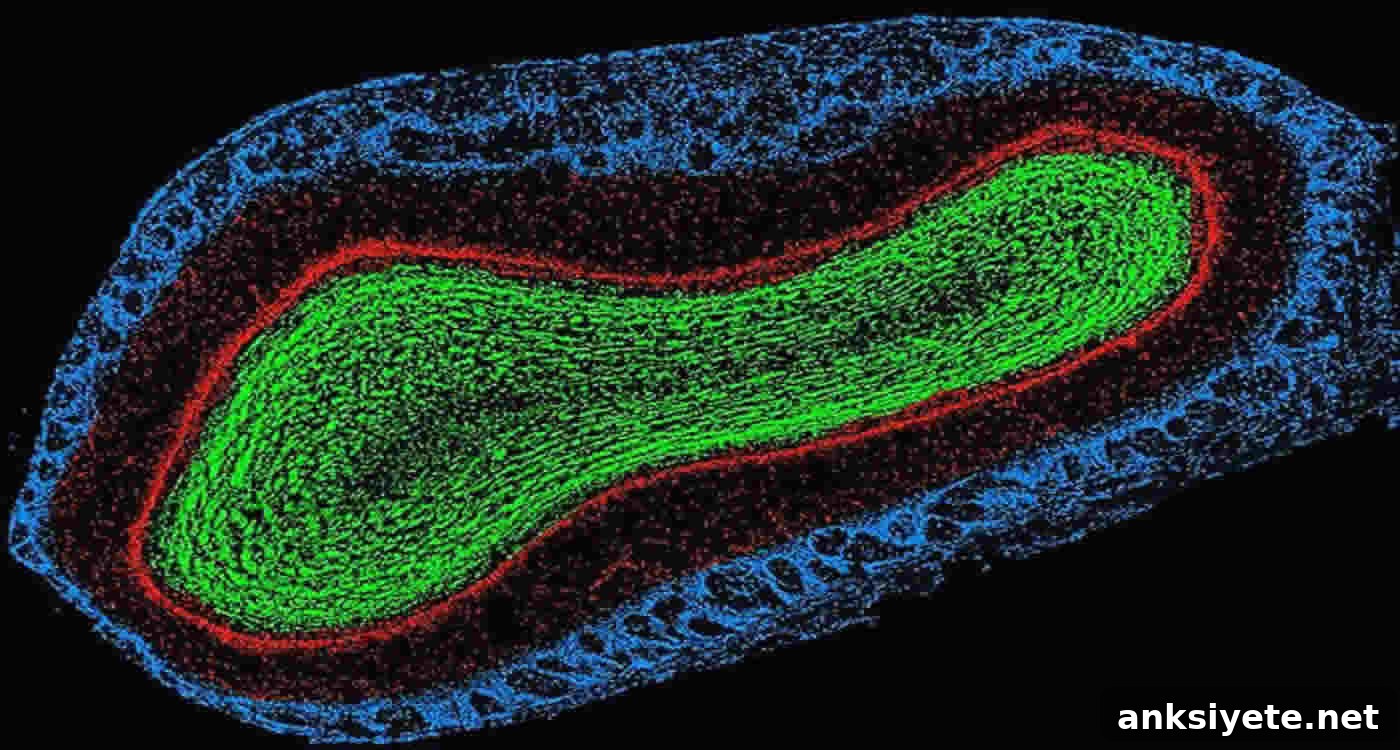
New cells are quick to respond to sensory stimuli and take on a function, says international research team.
Adult stem cells retain a remarkable flexibility: they can become many different specialized cell types and, because they are taken from adult organisms, their use does not raise the ethical concerns associated with embryonic sources. This makes them especially promising for biomedical applications such as stabilizing or regenerating damaged tissue. In the nervous system, neural stem cells serve as a reservoir for new neurons, and researchers hope to harness them for therapies against neurodegenerative conditions such as Parkinson’s and Alzheimer’s disease.
Researchers from the University of Tübingen, Yale University, the Max Planck Institute of Neurobiology in Martinsried and the Helmholtz Center in Munich collaborated to study how newly generated neurons integrate into an existing brain circuit in a living animal. Led by Professor Olga Garaschuk at the Institute for Physiology, the team published their findings in Nature Communications. Using advanced in vivo microscopy and activity-sensitive fluorescent markers, they tracked migrating neural progenitor cells as they reached the olfactory bulb in mice and monitored how quickly these cells became functionally integrated into the sensory network.
In adult mammals, neurogenesis is largely confined to two regions: the subventricular zone along the lateral ventricles and the hippocampus. From the lateral ventricle niche, progenitor cells migrate long distances to the olfactory bulb, a brain structure that processes smell information received from the nasal epithelium. Once there, these newly born cells differentiate and incorporate into the circuits that detect and interpret odors.
By labeling migrating progenitors with fluorescent indicators that change brightness with neural activity, the researchers were able to observe the cells’ physiological responses in real time. Remarkably, they found that within just 48 hours after arriving in the olfactory bulb, approximately half of these adult-born cells already responded to odor stimulation. Although many of the labeled cells still displayed molecular markers typical of immature, migrating neuroblasts, their sensitivity to odorants and their electrical response patterns closely resembled those of neighboring, mature neurons.
This rapid acquisition of functional properties demonstrates that adult-born neurons can integrate into a sensory circuit far sooner than their molecular profile would suggest. The study indicates that sensory-driven activity—input from the external environment—can strongly influence when and where these cells stop migrating, begin to differentiate, and adopt stable roles within the neural network. In other words, environmental stimuli do not merely activate these cells; they appear to help orchestrate the final stages of migration, differentiation and synaptic integration.
The findings carry important implications for understanding neurogenesis and for developing strategies that might guide newly generated neurons in therapeutic contexts. If sensory experience can accelerate and direct integration, carefully designed stimulation protocols or sensory-enriched environments could potentially be used to promote functional recovery in conditions where new neurons are needed. At the same time, the results deepen our basic knowledge of how plastic and responsive the adult brain remains: even cells with an immature molecular profile can rapidly adopt mature functional behaviors when placed into the right context.
Methodologically, the work demonstrates the power of in vivo imaging combined with genetically encoded fluorescent activity reporters to track the behavior of single cells over time within intact brain tissue. This approach allows scientists to connect molecular identity, cellular migration, and functional responses in living animals, providing a more complete picture of how adult neurogenesis contributes to circuit function and sensory processing.
Contact: Professor Olga Garaschuk – University of Tübingen
Source: University of Tübingen press release
Image Source: Image credited to Matt Valley (public domain)
Original Research: Kovalchuk Y, Homma R, Liang Y, Maslyukov A, Hermes M, Thestrup T, Griesbeck O, Ninkovic J, Cohen LB, and Garaschuk O. “In vivo odourant response properties of migrating adult-born neurons in the mouse olfactory bulb.” Nature Communications. Published online February 19, 2015. doi:10.1038/ncomms7349