
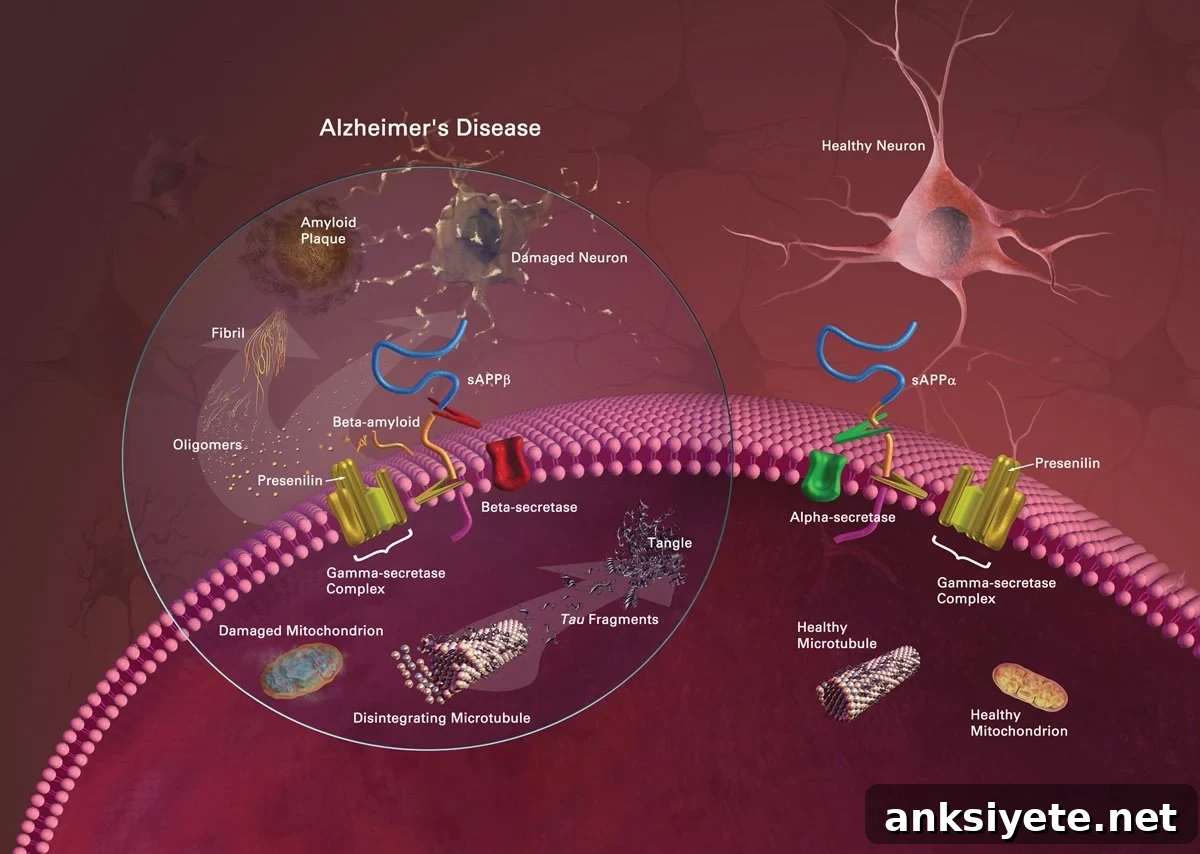
Introducing a protective APOE variant into the brain appears to halt—and in some cases reverse—amyloid progression in mouse models
A specific version of the apolipoprotein E gene (APOE) is the strongest known genetic risk factor for late-onset, sporadic Alzheimer’s disease, yet the mechanisms behind that risk have remained debated. New research led by investigators at Massachusetts General Hospital (MGH) demonstrates in mouse models that even modest amounts of the Alzheimer’s-associated APOE4 protein increase amyloid-beta (Aβ) plaque number and density, elevate toxic soluble Aβ in the brain, and worsen local neuronal damage. Conversely, delivering the rare APOE2 variant—previously linked to reduced Alzheimer’s risk—into brains with existing plaques decreased Aβ deposition and neurotoxicity, supporting the idea that APOE-targeted gene therapies could modify disease progression.
“Using a technique developed by collaborators at the University of Iowa, we achieved long-term expression of human APOE variants in the cerebrospinal fluid that bathes the brain,” says Bradley Hyman, MD, PhD, of the MassGeneral Institute for Neurodegenerative Disease (MGH-MIND), senior author of the study published online November 20, 2013, in Science Translational Medicine. “Our data suggest that lowering harmful APOE4 levels while increasing protective APOE2 could be beneficial for patients.”
Researchers have known for more than two decades that APOE genotype influences Alzheimer’s risk: inheriting two copies of APOE4 raises risk roughly twelvefold compared with two copies of the common APOE3 form, while APOE2 carriers have a substantially lower risk. Many rare familial Alzheimer’s mutations directly affect Aβ production and aggregation, but how common APOE variants impact Aβ deposition was less clear. APOE proteins, produced by several brain cell types, regulate cholesterol in the brain and bind Aβ peptides, making them plausible modulators of plaque formation and clearance.
Instead of studying lifelong expression models or full gene knockouts, the MGH-led team used viral gene transfer to introduce specific human APOE isoforms into the cerebrospinal fluid of adult Alzheimer’s model mice that already had established plaques. This approach mimics a potential therapeutic scenario in which APOE levels are adjusted after disease onset. Two months after injection, roughly 10 percent of the APOE detected in the animals’ brains was the introduced human protein. By five months, brain analyses showed that mice receiving APOE4 had more numerous and denser Aβ plaques than those given APOE2. APOE3-treated animals showed intermediate plaque growth comparable to controls.
Notably, mice injected with APOE2 had higher Aβ levels in the bloodstream than other groups, consistent with enhanced clearance of Aβ from the brain into peripheral circulation. In vivo imaging through cranial windows enabled direct tracking of plaque dynamics: APOE4 accelerated plaque progression, whereas APOE2 slowed it and sometimes produced a net decrease in plaque burden. The extent of neuritic injury—damage to neurons surrounding plaques—also correlated with the APOE variant present, and in a separate slower-onset model APOE4 increased soluble, extracellular Aβ levels in the cerebrospinal fluid.
“These experiments allowed us to pinpoint, in mice, which APOE-related effects most strongly influence amyloid plaque deposition,” says Eloise Hudry, PhD, of MGH-MIND, lead author of the report. “The findings support pursuing APOE-based therapies—either lowering APOE4 or delivering protective APOE2—to slow or reverse amyloid-driven pathology. Further work will be needed to test safety, durability, and whether similar results occur in other models and ultimately in humans.”
Notes about this neurology and Alzheimer’s disease research
Hudry is an Instructor in Neurology and Hyman is the John B. Penney, Jr. Professor of Neurology at Harvard Medical School. Additional co-authors on the Science Translational Medicine paper include Jonathan Dashkoff, Allyson Roe, Shuko Takeda, MD, PhD, Robert Koffie, MD, PhD, Tadafumi Hashimoto, PhD, Tara Spires-Jones, PhD, Michal Arbel-Ornath, PhD, Rebecca Betensky, PhD, Beverly L. Davidson, PhD, and Maria Scheel. The study received support from NIH grants R00AG33670, NS34568, HD33531, DK54759, 1RC1AG026265-01, and funding from the Dreyfoos Program.
Contact: Sue McGreevey – Massachusetts General Hospital
Source: Massachusetts General Hospital press release
Image Source: National Institute on Aging/NIH (public domain)
Original Research: Abstract for “Gene Transfer of Human Apoe Isoforms Results in Differential Modulation of Amyloid Deposition and Neurotoxicity in Mouse Brain” by Eloise Hudry et al., Science Translational Medicine, published online November 20, 2013. DOI: 10.1126/scitranslmed.3007000
#neurology, #Alzheimers, #neurodegeneration