
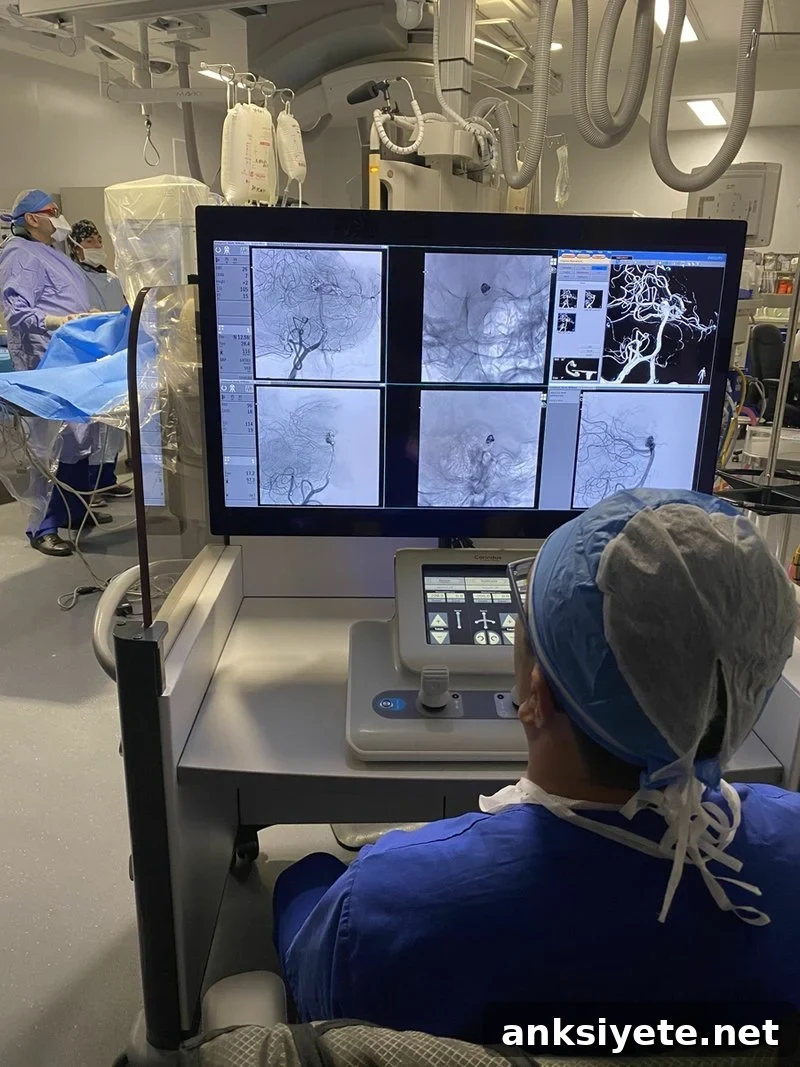
Summary: Physicians have demonstrated that a robot can be used to treat brain aneurysms. The adapted robotic platform enabled precise placement of stents, coils and other endovascular devices inside the brain and points toward the possibility of remote neurovascular surgery in the future.
Source: American Heart Association
Using a robot to treat brain aneurysms is technically feasible and may improve precision when deploying stents, coils and other devices, according to late-breaking science presented at the American Stroke Association’s International Stroke Conference 2020. The meeting, held Feb. 19–21 in Los Angeles, brings together researchers and clinicians focused on stroke and brain health.
Robotic systems are already established in several surgical specialties and in interventional cardiology, but their use in brain vascular procedures has been limited. In this report, a Canadian team describes the first series of neurovascular procedures performed with a robotic platform that was specifically adapted for intracranial endovascular work. The system received both software and hardware adjustments to accommodate the very small microcatheters, guidewires and ancillary devices used to navigate cerebral arteries. These refinements enhanced fine-motor control for the operator relative to previous robotic systems, making delicate intracranial maneuvers possible.
The clinical series began with a 64-year-old woman who had an unruptured aneurysm located at the base of her skull. Using the robotic arm for the intracranial portions of the procedure, the team first deployed a stent across the aneurysm neck. Through the same microcatheter, the operator then entered the aneurysm sac and secured it with detachable coils. Following that initial successful case, the group completed five additional aneurysm treatments with the robot, including procedures that used flow-diverting stents and other devices commonly employed in neuro-endovascular practice. In total, the group reports six robotic-assisted intracranial aneurysm interventions.
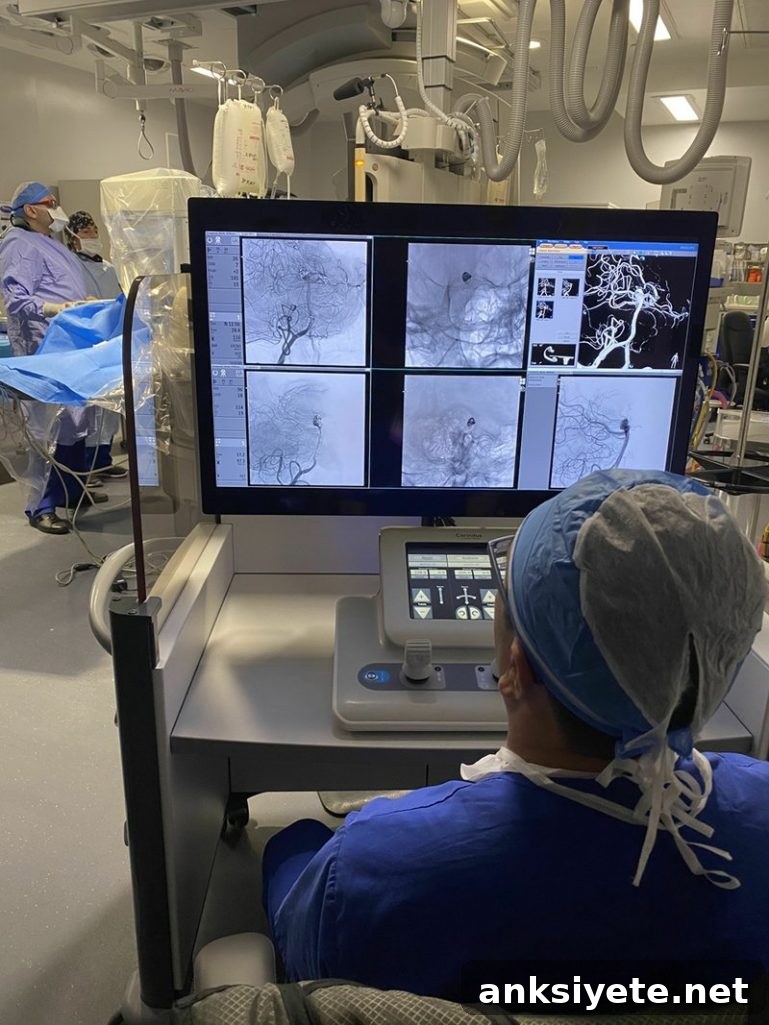
“This experience is the first step towards achieving our vision of remote neurovascular procedures,” said lead researcher Vitor Mendes Pereira, M.D., M.Sc., a neurosurgeon and neuroradiologist at Toronto Western Hospital and professor of medical imaging and surgery at the University of Toronto. He emphasized that demonstrating safe, precise intracranial device placement with a robotic interface is an important milestone in the development of neuro-endovascular interventions.
Mendes Pereira and colleagues highlight several potential benefits of robotic assistance for brain vascular care. Robotic control can enhance stability and precision during device delivery, potentially reducing unintended micro-movements and improving the accuracy of stent or coil placement. Because the robotic system can be operated from a workstation, it also opens the possibility of remote procedures: an experienced operator controlling neurovascular therapy for patients at distant hospitals. For time-sensitive conditions such as ischemic stroke or ruptured aneurysm, the ability to deliver expert care rapidly across long distances could expand access and improve outcomes for patients who currently lack local specialty services.
The investigators acknowledge that broad adoption of robotic neurovascular interventions will require additional steps. Training programs, standardized workflows, and procedural protocols must be developed to ensure consistent performance and patient safety. Technical, regulatory and logistical issues around remote operation will need careful evaluation, and further clinical studies are necessary to compare robotic-assisted approaches with conventional manual techniques in larger patient cohorts.
According to the authors, the early clinical experience reported in this series will inform development of best practices and operational pathways for future robotic programs. As more operators gain experience, those lessons will help shape networks for remote neurovascular care and clarify where robotic systems may offer the greatest clinical advantage.
The full list of study authors and disclosures is available in the conference abstract. The work was supported by institutional funding, and single-use patient cassettes for the robotic system were provided by Corindus, a Siemens Healthineers Company.
Source:
American Heart Association
Media Contacts:
Press Office – American Heart Association
Image Source:
The image is credited to Roger Boyle.
Original Research: The findings were presented at the American Stroke Association’s International Stroke Conference 2020.