
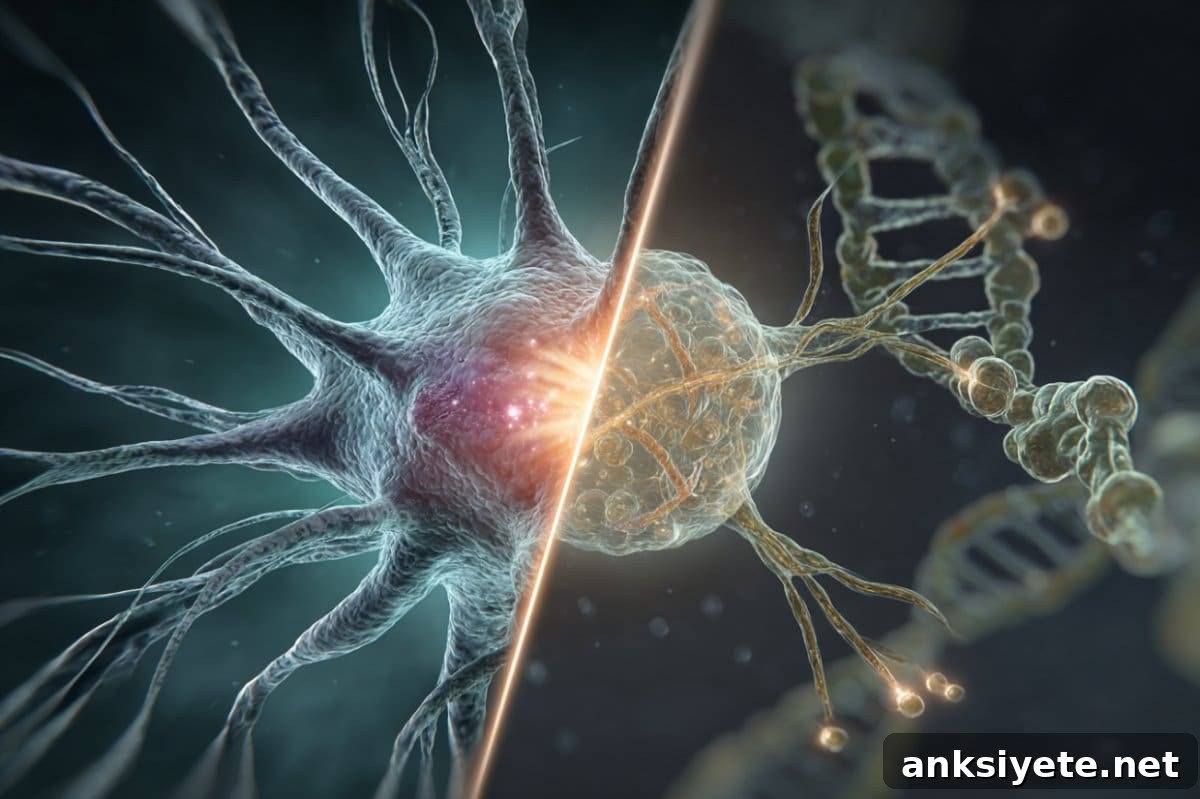
Summary: New research shows that autism spectrum disorder (ASD) and congenital heart disease (CHD) may share a common biological mechanism: tiny cellular structures called cilia. Mutations in genes that disrupt cilia formation were found to interfere with both brain and heart development, helping to explain why ASD and CHD often co-occur.
The research team identified 45 genes that impair neuron growth and cilia function, suggesting new opportunities for earlier identification of children at elevated autism risk among newborns diagnosed with heart defects. These insights could reshape screening strategies, enabling earlier intervention and better long-term outcomes.
Key Facts:
- Cilia connection: Forty-five genes linked to ASD and CHD converge on cellular cilia, which are essential for intercellular signaling, movement, and sensory functions.
- Early clinical clue: Congenital heart disease is often diagnosed at birth, so CHD could serve as an early marker to prioritize newborns for autism monitoring.
- Shared gene highlight: TAOK1, one of the identified genes, impairs cilia formation and is implicated in both heart and brain development when mutated.
Source: Development
Autism spectrum disorders are complex neurodevelopmental conditions affecting about 1 in 100 children worldwide. Early diagnosis allows timely intervention that can improve development and quality of life for children with ASD.
Although over 200 genes have been associated with autism, predicting ASD risk from genetic information alone remains challenging. Autism frequently co-occurs with congenital heart disease, a structural heart condition detectable at or soon after birth. Because CHD is identifiable in newborns, linking specific CHD-associated genetic variants to autism risk could enable targeted early monitoring and intervention.
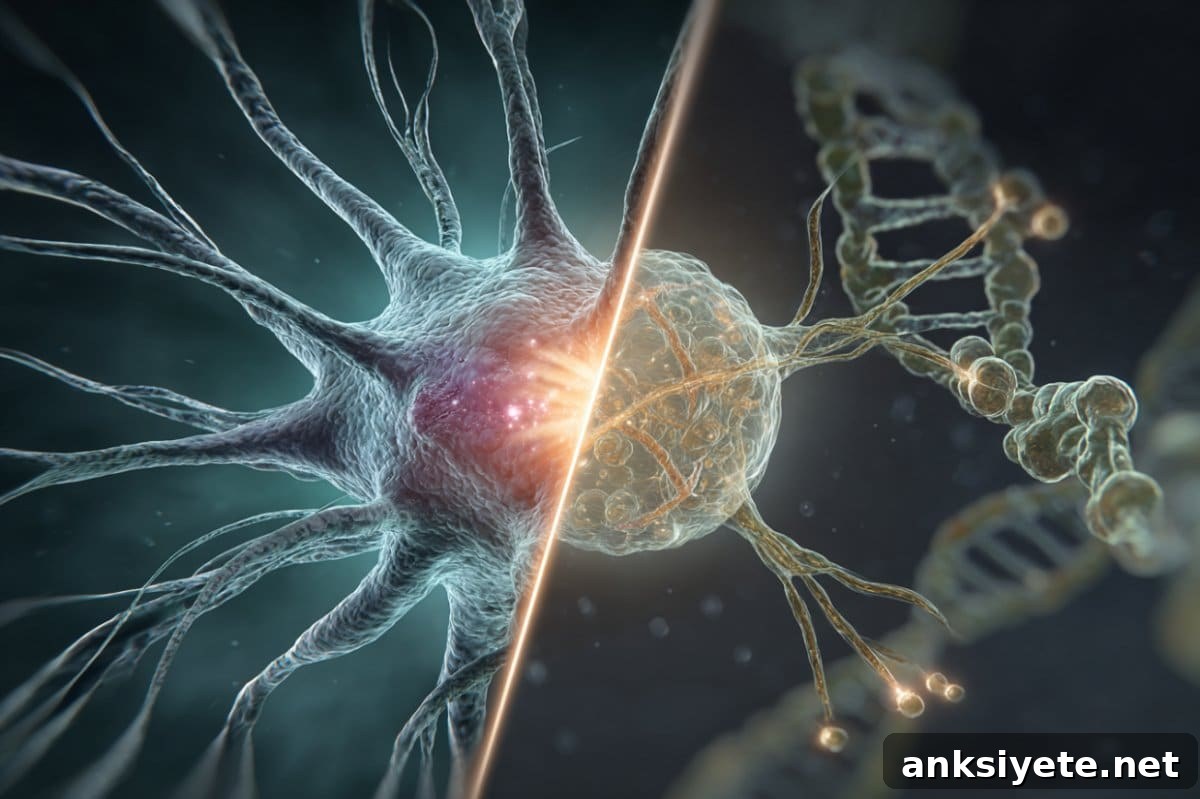
A research team led by Dr. Helen Willsey at the University of California, San Francisco, investigated why brain and heart development can be disrupted by overlapping genetic risks. Their study points to cilia—microscopic, hair-like projections present on most cell surfaces—as a central element linking ASD and CHD biology.
Published in the journal Development on 24 June 2025, the study addresses the technical challenge of intersecting hundreds of risk genes across two organ systems. Previous analyses had flagged 361 genes that increase risk for ASD, CHD, or both. The team hypothesized that CHD genes impairing neural progenitor cell (NPC) biology would be more likely to raise ASD risk.
In the laboratory, researcher Nia Teerikorpi engineered immature human neurons with targeted disruptions of each of the 361 genes and tracked neuronal growth. From this screen, 45 genes emerged as having measurable effects on neuron development. Follow-up experiments showed that these 45 genes are involved in ciliary structure or function.
One gene that stood out was TAOK1. Patients with TAOK1 mutations have been observed to carry higher ASD risk, and TAOK1 was previously predicted as a CHD-associated gene. To test its role directly, the team modified taok1 in Xenopus tropicalis (frog) embryos and observed impaired cilia formation as well as defects in brain and heart development. Those findings suggest TAOK1 and the other identified genes could contribute to both ASD and CHD through disrupted ciliary biology.
Dr. Willsey notes that this work represents an initial but important step: “Understanding how autism and congenital heart disease intersect biologically has been technically challenging due to the sheer number of risk genes involved in both disorders.” The current results offer a way to prioritize individuals who carry variants in genes linked to both conditions for early monitoring and intervention.
The team is continuing to map the overlap between cilia-related genes and genes associated with ASD and CHD. Their goal is to refine which genetic variants detectable at birth might warrant early developmental screening and follow-up. If validated in clinical settings, such approaches could enable clinicians to identify babies at higher risk for autism based on a CHD diagnosis and genetic testing, opening a window for early supportive therapies.
About this genetics, ASD, and heart disease research news
Author: Joyce Yu
Source: Development
Contact: Joyce Yu – Development
Image: The image is credited to Neuroscience News
Original Research: Open access. Title: “Ciliary biology intersects autism and congenital heart disease” by Helen Rankin Willsey et al. Published in Development.
Abstract
Ciliary biology intersects autism and congenital heart disease
Autism spectrum disorder (ASD) and congenital heart disease (CHD) frequently co-occur, yet the molecular mechanisms behind this comorbidity remain unclear. Because CHD is typically identified in newborns, understanding which CHD-associated variants also raise ASD risk could inform early intervention strategies.
Autism-associated gene perturbations often disrupt neural progenitor cell biology, leading the researchers to test whether CHD genes that interfere with neurogenesis also increase ASD risk. Using an in vitro pooled CRISPR interference screen in neural progenitor cells, the team identified 45 CHD genes that perturb NPC biology.
A subset of ASD and CHD genes are enriched for ciliary biology. Perturbation of several such genes—including CEP290, CHD4, KMT2E, NSD1, OFD1, RFX3, and TAOK1—impairs primary cilia formation in vitro. In vivo investigation of TAOK1 in Xenopus tropicalis demonstrates a role in motile cilia formation and heart development, supporting its status as a CHD risk gene.
Collectively, these findings identify a set of CHD genes that may carry ASD risk and underscore the importance of cilia in the shared biology of autism and congenital heart disease.