
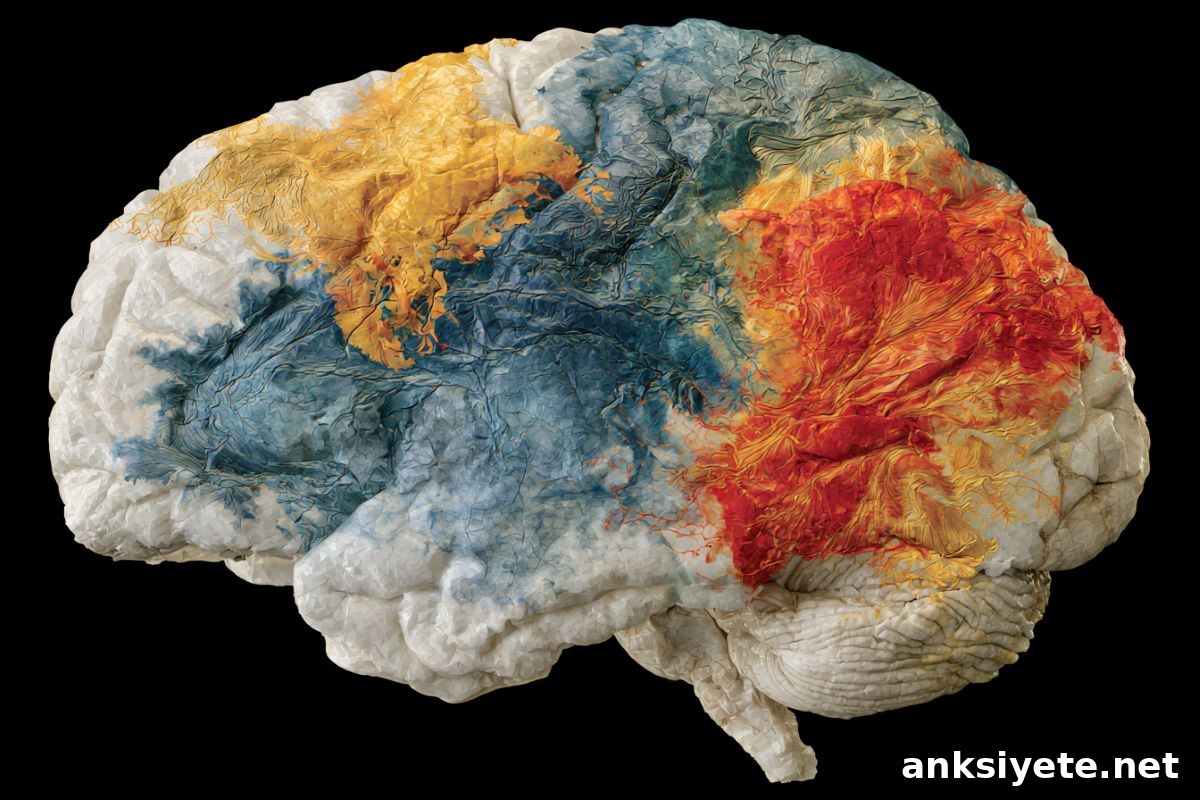
Summary: Researchers analyzed structural MRI scans from 45,900 healthy controls and 2,698 individuals across nine neurological and psychiatric conditions to chart patterns of brain aging. Using the Predictive Age Difference (PAD) metric — the difference between an individual’s chronological age and the age predicted by brain structure — the team identified the strongest accelerated brain aging in Alzheimer’s disease and mild cognitive impairment, followed by psychiatric disorders and substance addictions.
Neurodevelopmental conditions such as ADHD and autism did not show elevated PAD. The study also mapped distinct regional aging signatures: addiction-related changes concentrated in networks like the default mode and salience systems, while psychiatric disorders showed frontal–temporal acceleration. These regional patterns and their links to gene expression suggest new structural biomarkers for clinical neuroscience.
Key Facts
- Accelerated aging hierarchy: Neurodegenerative conditions (Alzheimer’s disease and mild cognitive impairment) were associated with the largest increases in PAD, followed by substance addictions and psychiatric disorders.
- Neurodevelopmental conditions spared: Attention-deficit/hyperactivity disorder (ADHD) and autism spectrum disorder (ASD) showed PAD values comparable to healthy controls, indicating that neurodivergence in these conditions does not reflect the same accelerated structural brain aging seen in other disorders.
- Regional aging signatures:
- Prefrontal cortex: Elevated PAD was observed broadly across multiple disorders.
- Frontal and temporal lobes: Showed stronger PAD effects linked to psychiatric disorders.
- Frontal and occipital cortex: Displayed accelerated aging patterns characteristic of dementia.
- Default mode and salience networks: Showed selective PAD elevation in alcohol and tobacco addiction, alongside structural changes in the putamen and thalamus.
- Transcriptomic associations: Regional PAD maps correlated with condition-specific patterns of gene transcription, offering biological insight into the pathways involved in accelerated structural decline.
Source: PLOS
Overview: A study published July 21 in the open-access journal PLOS Medicine, led by Shile Qi (Nanjing University of Aeronautics and Astronautics) and collaborators, examined how a range of brain conditions relate to structural brain aging. The investigators used large-scale structural MRI data to estimate each participant’s brain age and compared it with chronological age to derive PAD. Positive PAD indicates a brain that appears structurally older than expected for the person’s chronological age.
To evaluate deviations in brain aging across disorders, the researchers assembled structural MRI from 45,900 healthy control participants pooled from multiple imaging repositories and compared them with scans from 2,698 individuals diagnosed with one of nine conditions: ADHD, ASD, alcohol use disorder (AUD), tobacco use disorder (TUD), Alzheimer’s disease (AD), mild cognitive impairment (MCI), schizophrenia (SZ), bipolar disorder (BP), and major depressive disorder (MDD).
Overall, neurodegenerative diagnoses (AD and MCI) produced the largest PAD increases. Addiction and psychiatric conditions also showed higher PAD values versus controls, while ADHD and ASD did not differ significantly from healthy participants. These results were quantified using Cohen’s d effect sizes, adjusted for age, age-squared, sex, and site.
Beyond global PAD differences, the team examined spatial PAD patterns across the brain and related these to gene expression. The prefrontal cortex emerged as a common site of elevated PAD across disorders. Psychiatric disorders were linked to stronger PAD in frontal and temporal regions, whereas dementia showed greater PAD in frontal and occipital regions. Addiction-related PAD concentrated in the default mode and salience networks and involved subcortical structures such as the putamen and thalamus.
Transcriptomic enrichment analyses showed that genes whose regional expression patterns correlated with PAD varied by disorder, implying distinct molecular pathways underlying each brain-aging signature. While these associations are correlational and do not establish causality, the findings point to measurable structural signatures that track with specific conditions.
The authors note limitations, including comorbidity between psychiatric disorders and addiction that could confound results; these confounders were not fully accounted for in the analyses. Despite this, the study highlights the potential utility of disorder-specific brain aging maps as neuroimaging biomarkers to improve understanding of neural and biological mechanisms and, possibly, to inform clinical decision-making in the future.
Funding: This research was supported by the Key Research and Development Plan of Jiangsu Province (BE2023668) and the National Natural Science Foundation of China (62376124). Funders did not influence study design, data collection and analysis, publication decisions, or manuscript preparation.
Key Questions Answered:
A: PAD is the difference between an individual’s chronological age and the age predicted from brain structure using machine learning models applied to MRI scans. A positive PAD means the brain’s structure resembles that of an older person, indicating accelerated structural aging.
A: No. In this study, neurodegenerative disorders, several psychiatric disorders, and substance addictions showed increased PAD, whereas neurodevelopmental conditions (ADHD and ASD) did not differ from healthy controls in PAD.
A: Global brain-age metrics can hide important differences. Mapping accelerated aging to specific networks and regions—such as the default mode network in addiction or frontotemporal circuits in psychiatric disorders—helps identify distinct biological pathways, potential biomarkers for diagnosis, and targets for interventions.
Editorial Notes:
- This article was edited by a Neuroscience News editor.
- The journal paper was reviewed in full by editorial staff.
- Additional context was added by the editorial team.
About this neurology and brain aging research news
Author: Claire Turner (PLOS)
Source: PLOS
Contact: Claire Turner – PLOS
Image: Image credit: Neuroscience News
Original research: Open access. “Brain aging patterns among nine neurological disorders: A case-control study” by Chuang Liang et al., published in PLOS Medicine. DOI: 10.1371/journal.pmed.1004860
Abstract
Brain aging patterns among nine neurological disorders: A case-control study
Background
Predicted age difference (PAD) — the gap between neuroimaging-predicted brain age and chronological age — is studied as a potential biomarker of brain health. While previous large-scale studies indicate brain-age deviations across disorders, comprehensive cross-disorder comparisons within a unified framework, including the neuroimaging features and gene expression profiles that accompany PAD differences, have been limited. This study systematically compares brain aging across common brain disorders and explores associated spatial patterns and biological processes.
Methods and findings
Structural MRI from 45,900 healthy controls and 2,698 patients with developmental disorders (ADHD, ASD), addictions (AUD, TUD), dementia (AD, MCI), and psychiatric disorders (SZ, BP, MDD) were analyzed to generate PAD scores. Group differences were expressed as Cohen’s d and adjusted for age, age², sex, and scanning site. Enrichment analyses linked disorder-specific spatial PAD patterns to gene-expression signatures.
Results indicated consistent PAD increases across disorders, with the largest effects in dementia (AD: d = 0.97; MCI: d = 0.45), followed by addiction (combined AUD & TUD and individual AUD/TUD effect sizes) and psychiatric disorders (SZ, BP, MDD). ASD and ADHD showed no significant PAD increases. Spatial patterns included frontotemporal involvement in psychiatric disorders, default mode–salience–putamen–thalamus networks in addiction, and fronto-occipital networks in dementia. Genes associated with these patterns were enriched in distinct biological processes. A key limitation is potential confounding from comorbidity between psychiatric disorders and addiction.
Conclusions
Distinct brain aging patterns center on specific neural circuits and may serve as neuroimaging biomarkers to advance understanding of neural aging mechanisms across common brain disorders. Future research should evaluate whether these disorder-specific PAD signatures can guide clinical decision-making and improve diagnosis or treatment strategies.