
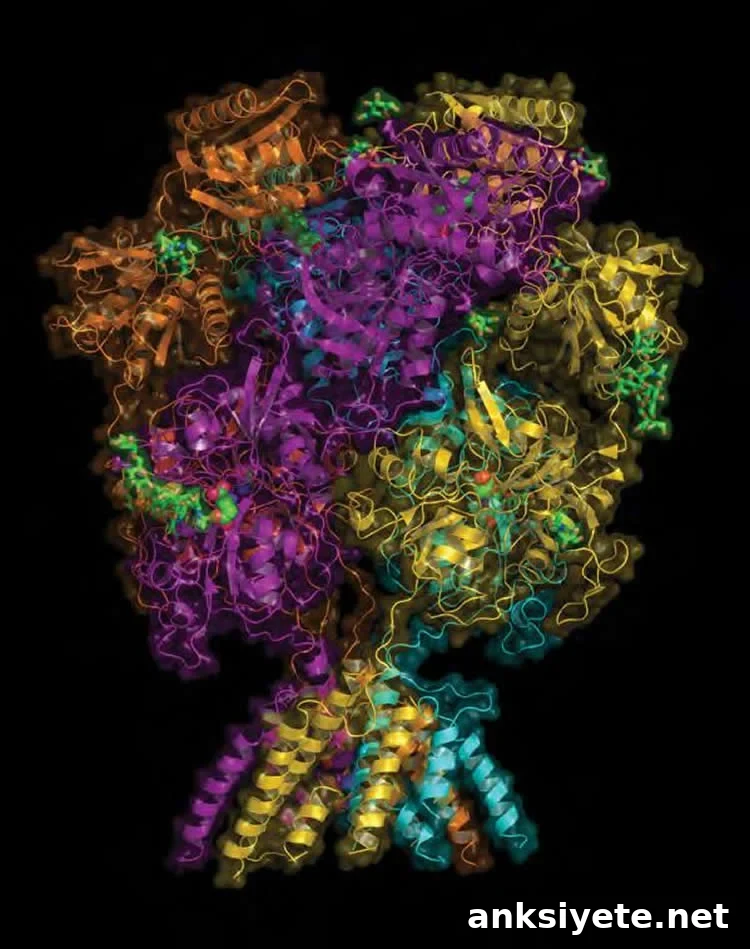
Summary: Researchers reveal the structure of a critical portion of the NMDA receptor and explain how zinc and a drug affect its function.
Source: Cold Spring Harbor Laboratory
High-resolution structures of the NMDA receptor’s amino-terminal domain clarify how zinc and subtype-selective drugs influence receptor activity — knowledge that could guide more precise treatments for Alzheimer’s disease, depression, schizophrenia and other brain disorders.
The molecular events that determine healthy brain function or contribute to mental illness happen at an incredibly small scale. X-ray crystallography enables researchers to visualize brain proteins at atomic resolution, revealing how tiny structural differences determine how receptors respond to neurotransmitters, metals and drugs.
In a new study published in Neuron, a team led by Hiro Furukawa at Cold Spring Harbor Laboratory (CSHL) reports the first detailed structures of the amino-terminal domain (ATD) of the GluN2A-containing NMDA receptor subtype. This extracellular region of the NMDA receptor controls binding of zinc — an abundant brain element that potently inhibits some NMDA receptor subtypes — and helps explain why zinc and certain drugs act very differently on closely related receptor variants.
NMDA receptors are large, multi-domain proteins that extend through the neuronal membrane and mediate excitatory signaling in response to glutamate, the brain’s primary excitatory neurotransmitter. These receptors are organized as heterotetramers built from GluN1 and different GluN2 subunits (A, B, C, D). Each subtype shows distinct physiology, developmental patterns and brain-region distributions. Drugs that can selectively target one subtype over another promise greater therapeutic benefit with fewer side effects.
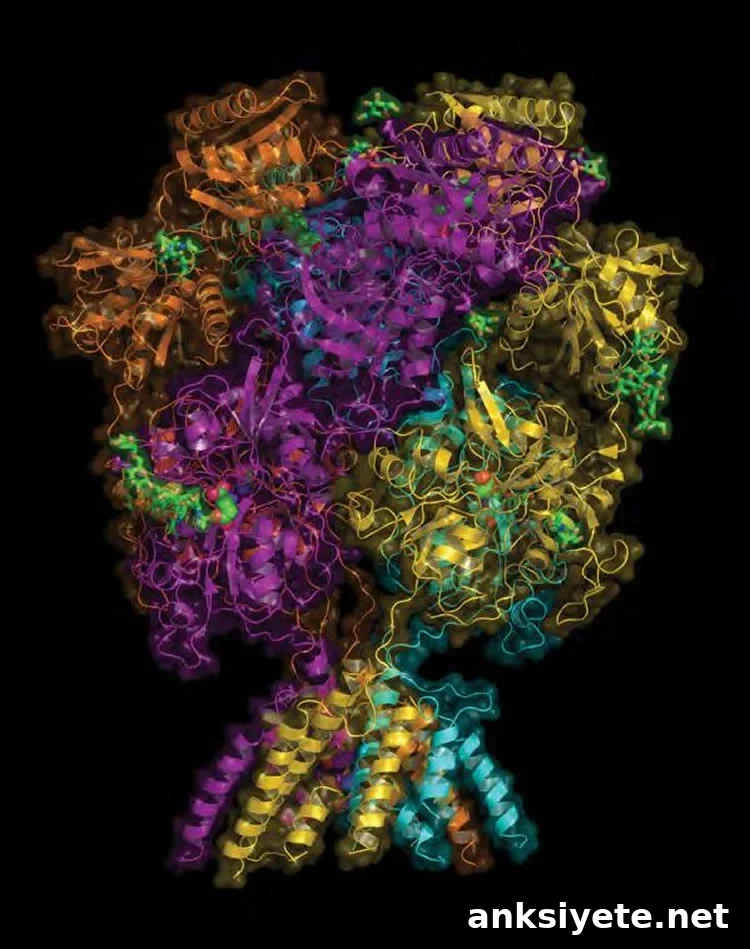
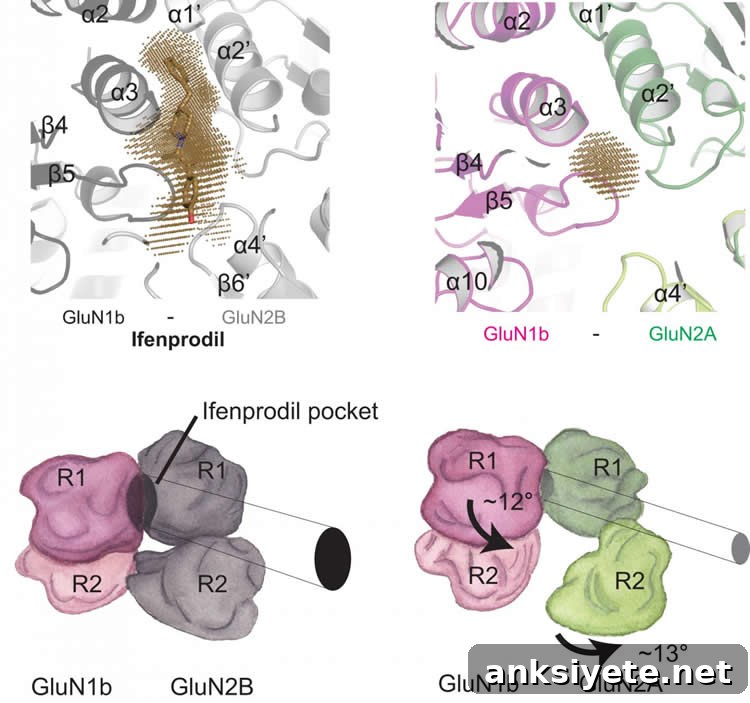
The Furukawa lab focused on the GluN1–GluN2A ATD heterodimer and solved its crystal structure at high resolution. Graduate student Annabel Romero-Hernandez led the structural work. Her data address two longstanding questions raised by earlier structures of the GluN1–GluN2B ATD: why does zinc bind with much higher affinity to the GluN2A-containing receptors than to GluN2B-containing receptors, and why does the candidate drug ifenprodil bind to the GluN1–GluN2B ATD but not to GluN1–GluN2A?
How the GluN2A ATD binds zinc with high affinity
Zinc is co-released with glutamate at many synapses and can act as an allosteric regulator of NMDA receptors. Prior structures of the GluN2B ATD showed only weak, low-affinity zinc binding that required relatively high zinc concentrations. The new GluN2A ATD structures reveal why GluN2A-containing receptors are much more sensitive to zinc.
At atomic resolution, the GluN2A ATD presents a clamshell-like hinge whose pivot forms the high-affinity zinc-binding pocket. In GluN2A, zinc is coordinated by four amino-acid side chains that surround the metal, creating a tight, multidentate interaction. By contrast, the corresponding region in GluN2B provides only two coordinating residues, producing a weaker interaction. As Furukawa describes, the difference in affinity is analogous to “two hands holding up an object versus four hands.”
Zinc binding at the ATD modulates the receptor’s ion channel: when zinc engages the GluN2A ATD, it favors channel closure and thereby inhibits ion flux much more strongly than when it binds to GluN2B. This subtype-specific inhibition helps neurons self-regulate excitatory signaling and prevents overactivation that can cause neurodegeneration.
Why ifenprodil does not bind GluN2A
The GluN1–GluN2B ATD contains an inter-subdomain pocket that accommodates phenylethanolamine-class compounds such as ifenprodil. The newly determined GluN1–GluN2A ATD structures show that this pocket is absent: local shifts in the GluN2A subdomain bring the lobes closer together and collapse the cavity, physically preventing ifenprodil from binding. This structural explanation clarifies why some drugs show subtype selectivity and underscores how very small conformational differences can determine whether a compound will engage a receptor.
Subtype-specific binding is a major goal for drug development because selective compounds are less likely to affect off-target receptors and cause side effects. The GluN2A structures therefore offer a valuable blueprint for designing molecules that target or avoid particular NMDA receptor subtypes.
Implications for brain disorders and drug discovery
NMDA receptor dysfunction is implicated across a range of neurological and psychiatric disorders: overactivation can contribute to neurodegenerative conditions like Alzheimer’s disease, while hypofunction has been linked to schizophrenia. Recent clinical interest in NMDA modulation has surged because of rapid antidepressant effects observed with the NMDA antagonist ketamine. These findings have motivated efforts to explore glutamate- and NMDA-centered hypotheses of depression and to search for safer, more selective modulators.
By mapping the GluN1–GluN2A ATD and identifying the precise high-affinity zinc-binding site and the structural basis for subtype-specific ligand recognition, Furukawa’s team provides actionable structural data for medicinal chemists and neuroscientists. Their work combines crystallography with functional insights showing how inter-lobe movements in the ATD regulate channel open probability and zinc sensitivity.
Funding: Research in the Furukawa laboratory is supported by the National Institutes of Health and the Stanley Institute of Cognitive Genomics. Annabel Romero-Hernandez is supported by the Genentech Foundation Fellowship and the Starr Foundation as a Ph.D. student at the Watson School of Biological Sciences, CSHL.
Source: Peter Tarr, Cold Spring Harbor Laboratory. Image credits: Furukawa Lab, Cold Spring Harbor Laboratory.
Abstract
Molecular basis for subtype-specificity and high-affinity zinc inhibition in the GluN1–GluN2A NMDA receptor amino-terminal domain
Highlights
• Crystal structure of the GluN1–GluN2A ATD heterodimer obtained for the first time
• Complete mapping of the high-affinity zinc-binding site in GluN2A
• Identification of elements that confer subtype-specific binding of zinc and phenylethanolamines
• Demonstration that the ATD inter-lobe interface controls zinc inhibition and channel open probability
Summary
Zinc is abundant in the mammalian brain and regulates the function of many cell-surface receptors, thereby shaping neurotransmission. NMDA receptors containing GluN2A are uniquely inhibited by nanomolar concentrations of zinc that bind to the extracellular amino-terminal domain (ATD). Structural and functional characterization of the GluN1–GluN2A ATD reveals the complete high-affinity zinc-binding site and distinctive features that differ from the GluN1–GluN2B subtype. Perturbations of hydrogen-bond networks at the ATD hinge alter both zinc inhibition and channel open probability, supporting a model in which bi-lobe motion of the ATD controls NMDA receptor activity.
Original research: “Molecular basis for subtype-specificity and high-affinity zinc inhibition in the GluN1–GluN2A NMDA receptor amino terminal domain” by Annabel Romero-Hernandez, Noriko Simorowski, Erkan Karakas and Hiro Furukawa, Neuron (December 2016).