Summary: A new study shows that older adults can generate as many new hippocampal neurons from progenitor cells as younger people, providing strong evidence that hippocampal neurogenesis continues into older age.
Source: Cell Press.
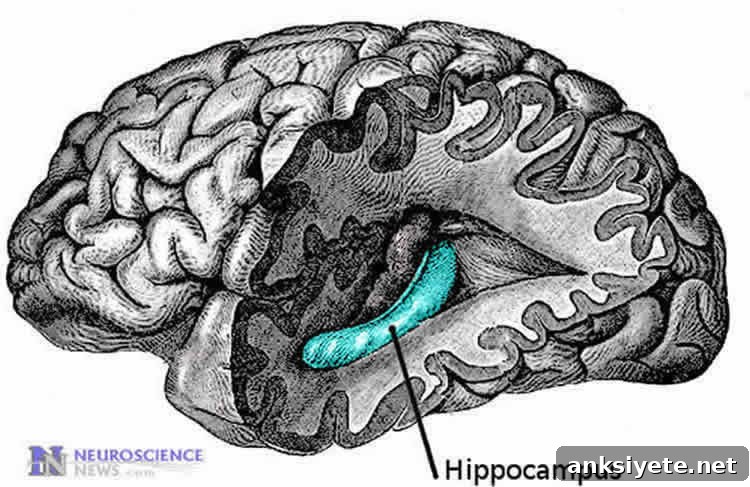
Researchers have debated whether adult humans produce new neurons, and some earlier work suggested the adult brain was largely fixed and did not generate new neurons. A new study, published in Cell Stem Cell, challenges that view. Lead author Maura Boldrini, associate professor of neurobiology at Columbia University, reports that many older adults retain substantial capacity to produce new neurons in the hippocampus, a region important for memory and emotion.
“We found that older people have a similar capacity to produce thousands of new hippocampal neurons from progenitor cells as younger people do,” Boldrini explains. “Hippocampal volume was comparable across ages, yet the brains of older adults showed reduced vascularization and possibly reduced capacity for newly formed neurons to establish connections.”
The team examined whole hippocampi obtained at autopsy from 28 individuals, aged 14 to 79, who had died suddenly and were previously healthy. This study is the first to assess both newly formed neurons and vascular status across the entire human hippocampus shortly after death. Subjects had been screened to exclude cognitive impairment, major psychiatric illness, or antidepressant treatment, factors known to influence neurogenesis.
In animal studies, hippocampal neurogenesis typically declines with age, and previous assumptions held that humans showed a similar drop in new neuron production and dentate gyrus shrinkage. However, this analysis revealed that even the oldest brains produced newly formed neurons. The researchers found similar numbers of intermediate neural progenitor cells and thousands of immature neurons across ages. Mature granule neurons, glial cell counts, and overall dentate gyrus volume were also comparable between younger and older subjects.
Despite preserved neurogenesis markers, older individuals displayed two notable declines: reduced angiogenesis (formation of new blood vessels) within hippocampal structures and a smaller pool of quiescent stem cells in certain hippocampal subregions. These changes may limit the capacity for new neurons to survive, mature, and integrate into existing neural circuits.
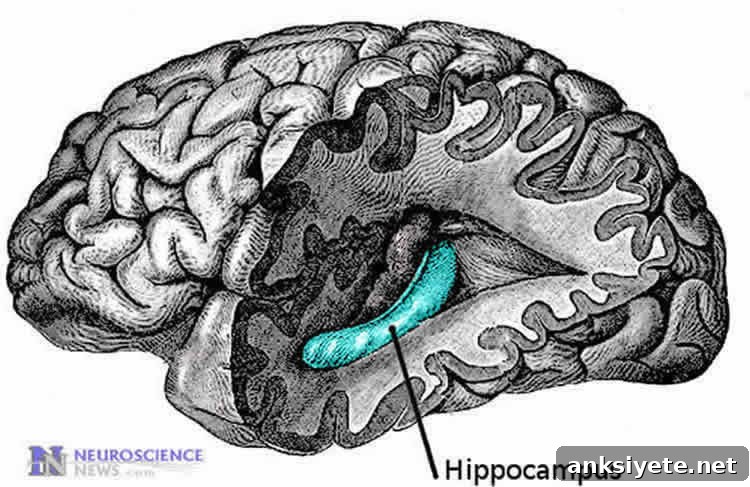
Boldrini proposes that reduced cognitive and emotional resilience in old age may stem from a smaller reservoir of quiescent neural stem cells, diminished vascular support, and decreased connectivity between neurons in the hippocampus. “Ongoing hippocampal neurogenesis may help sustain human-specific cognitive function throughout life,” she suggests, “and declines in supporting systems could contribute to reduced cognitive-emotional resilience with age.”
The authors emphasize that their findings do not suggest neurogenesis alone determines cognitive outcome. Instead, the balance among stem cell availability, vascular health, neuronal maturation, and synaptic integration likely determines how well new neurons contribute to memory, mood regulation, and overall brain plasticity in aging humans.
Future research will investigate the molecular and cellular mechanisms that regulate neural cell proliferation, maturation, and survival in the aging hippocampus. Specific areas of interest include the roles of hormones, transcription factors, signaling pathways that mediate neuroplasticity, and how vascular changes affect the survival and functional integration of new neurons.
Funding: Support for this work came from the Stroud Center for Aging Studies at Columbia University, the National Institutes of Health, the American Foundation for Suicide Prevention, the New York Stem Cell Initiative, and the Diane Goldberg Foundation.
Source: Joseph Caputo – Cell Press
Publisher: Organized by NeuroscienceNews.com
Image Source: NeuroscienceNews.com image is in the public domain.
Original Research: “Human Hippocampal Neurogenesis Persists throughout Aging” by Maura Boldrini, Camille A. Fulmore, Alexandria N. Tartt, Laika R. Simeon, Ina Pavlova, Verica Poposka, Gorazd B. Rosoklija, Aleksandar Stankov, Victoria Arango, Andrew J. Dwork, René Hen, and J. John Mann in Cell Stem Cell. Published April 5, 2018.
doi: 10.1016/j.stem.2018.03.015
MLA: Cell Press. “Older Adults Grow Just As Many New Brain Cells As Young People.” NeuroscienceNews, 6 April 2018.
APA: Cell Press (2018, April 6). Older Adults Grow Just As Many New Brain Cells As Young People. NeuroscienceNews.
Chicago: Cell Press. “Older Adults Grow Just As Many New Brain Cells As Young People.” NeuroscienceNews. (accessed April 6, 2018).
Abstract
Human Hippocampal Neurogenesis Persists throughout Aging
Highlights
- Pools of quiescent stem cells are smaller in aged human hippocampal dentate gyri.
- Proliferating progenitor and immature neuron pools remain stable with aging.
- Angiogenesis and markers of neuroplasticity decline in older humans.
- Granule neuron and glial counts, and dentate gyrus volume, are unchanged with aging.
Summary
Although hippocampal neurogenesis declines with age in rodents and primates, this study assessed whole autopsy hippocampi from healthy humans aged 14 to 79 and found preserved markers of neurogenesis in older subjects. Intermediate neural progenitors and thousands of immature neurons were present across ages, and overall dentate gyrus volume, mature granule neuron numbers, and glial counts were comparable. However, older individuals showed decreased angiogenesis, reduced neuroplasticity markers, and a smaller pool of quiescent progenitors in anterior-mid dentate gyrus regions. These results indicate that healthy aging does not eliminate hippocampal neurogenesis, although age-related changes in vascular support and stem cell reservoirs may influence the functional impact of new neurons on cognition and emotional resilience.