
Summary: A UCLA-led study reveals critical species differences between human and mouse astrocytes in how oxidative stress, hypoxia, and inflammation activate immune and repair programs. The authors recommend adapting mouse neurodegeneration models to better mimic human vulnerability to oxidative damage.
Source: UCLA
Researchers comparing astrocytes—the star-shaped support cells of the brain—in humans and mice report that mouse astrocytes tolerate oxidative stress far better than human astrocytes. In mouse cells, low-oxygen conditions trigger molecular repair programs that are not activated in human astrocytes. Conversely, inflammatory signals more readily induce immune-response and antigen-presentation genes in human astrocytes than in mouse astrocytes.
Mice are the most commonly used laboratory model for studying neurological disease, but many therapies that succeed in mice fail in human clinical trials. The study helps explain part of this translational gap by describing distinct cellular and molecular behaviors of astrocytes across species—differences that are relevant to disorders such as Alzheimer’s disease, Parkinson’s disease, stroke and amyotrophic lateral sclerosis (ALS).
Astrocytes are essential for brain development and function and play a central role in the response to injury and disease. When injured or infected, astrocytes can switch from a resting state into a reactive state: this can support tissue repair but also contribute to harmful inflammation. Understanding how astrocytes respond to different stressors is therefore vital to both basic neuroscience and the design of preclinical models.
To compare species-specific responses, the investigators examined developing astrocytes purified from human and mouse brain tissue and also studied serum-free primary astrocyte cultures. The team used an antibody-based purification method developed by the study’s corresponding author to isolate healthy astrocytes without triggering reactive states that commonly occur when cells are cultured in serum.
Standard methods that grow astrocytes in serum tend to push them into an artificially reactive state, which can obscure differences between species and confound experiments. By avoiding serum and using careful purification, the researchers could test astrocyte behavior in controlled conditions: oxidative stress, hypoxia (low oxygen), and inflammatory stimulation.
Key findings emphasize both conservation and divergence in astrocyte biology. Many core astrocytic genes are conserved between humans and mice, but genes associated with defense responses and cellular metabolism differ by species. The study shows human astrocytes are more vulnerable to oxidative stress than their mouse counterparts, a difference linked to variations in mitochondrial function and detoxification pathways.
Under hypoxic conditions, mouse astrocytes activate a gene program associated with neural repair that human astrocytes do not engage. By contrast, inflammatory challenges trigger antigen-presentation and immune-response pathways in human astrocytes but not in mouse astrocytes. These species-specific responses have direct implications for modeling disease mechanisms and for interpreting results from rodent studies.
Because mouse astrocytes better resist oxidative damage, the authors propose that engineered mouse models with reduced oxidative defense could provide more human-like responses in studies of neurodegeneration. Such tailored models may improve the predictive value of preclinical work and help bridge the high failure rate of neurological drug candidates when they advance to human trials. The observation that mouse astrocytes mount repair responses to hypoxia also points to new directions in stroke research focused on mechanisms of cellular recovery.
The study further recommends that neuroscientists explicitly account for differences in inflammation response and metabolism between mouse and human astrocytes when designing preclinical experiments. Recognizing these species-dependent properties can guide better experimental design, improve interpretation of results, and inform the development of therapies that are more likely to translate to patients.
Funding: This research received support from the ARCS Foundation, the National Institutes of Health, the Dr. Miriam and Sheldon G. Adelson Medical Research Foundation, the W. M. Keck Foundation, the Wendy Ablon Trust, a UCLA Broad Stem Cell Research Center Innovation Award, and the Friends of the Semel Institute for Neuroscience and Human Behavior at UCLA.
About this neuroscience research news
Source: UCLA
Contact: Tiare Dunlap – UCLA
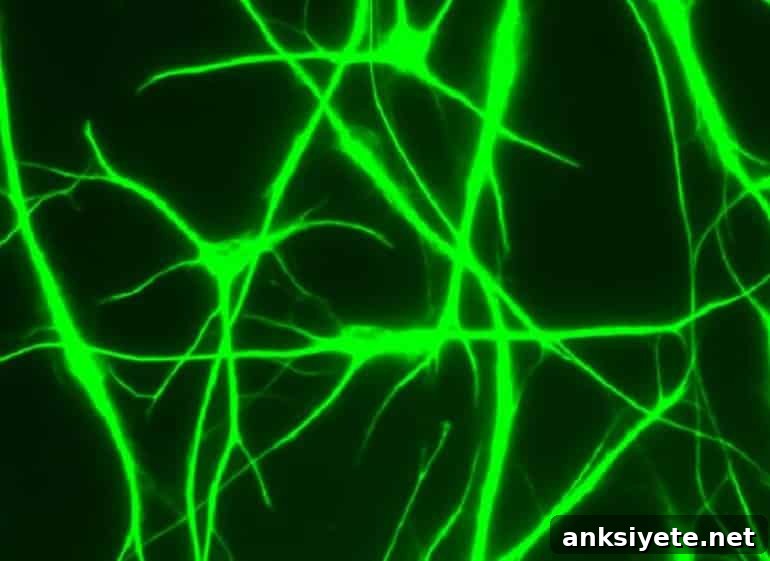
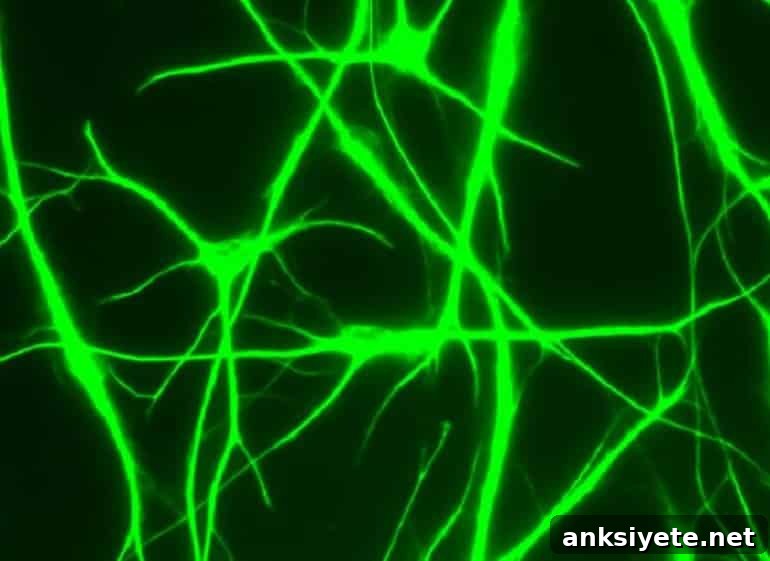
Image: The image is credited to UCLA Broad Stem Cell Research Center/Nature Communications
Original Research: Open access. “Conservation and divergence of vulnerability and responses to stressors between human and mouse astrocytes” by Jiwen Li, Lin Pan, William G. Pembroke, Jessica E. Rexach, Marlesa I. Godoy, Michael C. Condro, Alvaro G. Alvarado, Mineli Harteni, Yen-Wei Chen, Linsey Stiles, Angela Y. Chen, Ina B. Wanner, Xia Yang, Steven A. Goldman, Daniel H. Geschwind, Harley I. Kornblum & Ye Zhang. Nature Communications.
Abstract
Conservation and divergence of vulnerability and responses to stressors between human and mouse astrocytes
Astrocytes contribute critically to outcomes in neurological conditions including stroke, traumatic injury, and neurodegenerative disease. Much of what is known about astrocyte biology derives from mouse models, but insufficient characterization of human–mouse differences limits translation to clinical applications.
Using acutely purified astrocytes, serum-free primary cultures, and xenografted chimeric mice, the study identifies extensive conservation in core astrocytic gene expression alongside clear species-specific differences in genes tied to defense responses and metabolism.
Human astrocytes show greater susceptibility to oxidative stress than mouse astrocytes, reflecting differences in mitochondrial physiology and detoxification. Mouse astrocytes, but not human astrocytes, induce a neural repair program in response to hypoxia. Conversely, human astrocytes activate antigen-presentation pathways under inflammatory conditions, a response not seen in mouse cells. These species-dependent properties of astrocytes can inform strategies to improve translation from mouse research to human therapies.