
Potential target for treating autism, schizophrenia, and other brain disorders
Researchers at Columbia University Medical Center (CUMC) have identified the small hippocampal subregion CA2 as essential for social memory—the ability of an animal to recognize and remember another of its species. Understanding CA2’s role may help explain altered social behaviors seen in conditions such as autism, schizophrenia, and bipolar disorder, and could point toward new therapeutic approaches. The mouse-based findings were published online on February 23, 2014, in Nature.
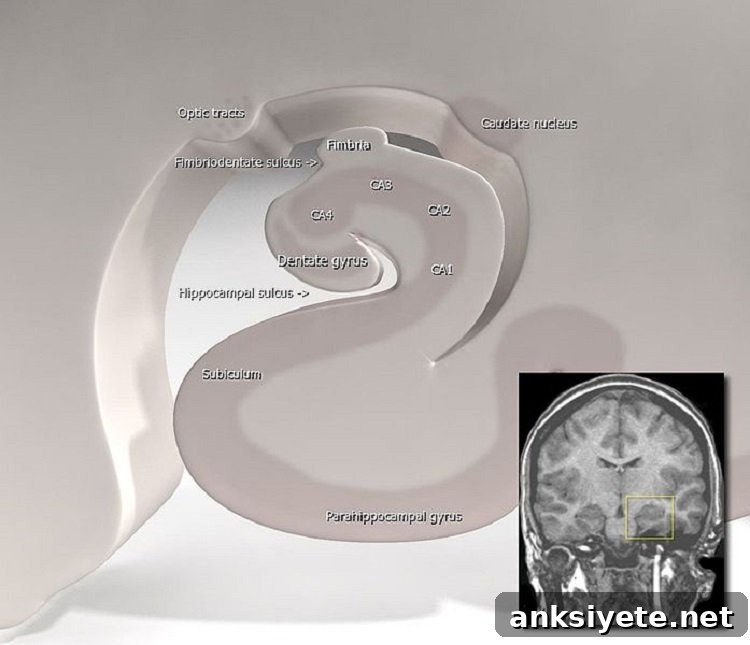
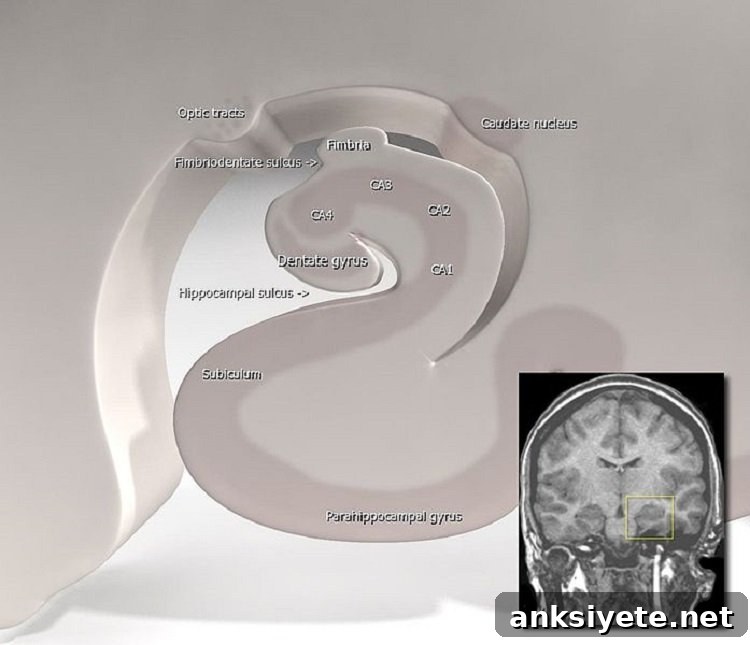
The hippocampus, a seahorse-shaped structure in the brain’s temporal lobes, is well known for its central role in memory. Different hippocampal subregions perform distinct functions: the dentate gyrus helps distinguish similar environments, CA3 supports retrieving a memory from partial cues, and CA1 is critical across multiple memory forms. Until now, the role of CA2, a small region situated between CA3 and CA1, was largely unknown.
“The role of CA2 has been unclear,” said senior author Steven A. Siegelbaum, PhD, professor of neuroscience and pharmacology and chair of Columbia’s Department of Neuroscience. Earlier studies hinted at a link between CA2 and social behaviors because CA2 neurons express high levels of the vasopressin receptor, and vasopressin is a hormone involved in social bonding and related behaviors.
To investigate CA2’s function directly, the research team generated a transgenic mouse model that allowed selective, reversible inhibition of CA2 neurons in adult animals. When CA2 activity was suppressed, the mice behaved normally in most respects but showed a striking deficit in social memory. In typical tests, mice normally spend more time investigating an unfamiliar mouse than a familiar one; mice with an inactivated CA2 failed to show this preference, indicating they could not distinguish a novel conspecific from one they had already met.
The CA2-inhibited mice did not show a broad impairment in novelty recognition: in two different novel-object recognition tasks, they preferred new objects over familiar ones just like control animals. Nor did the social-memory deficit stem from an inability to smell: the mice retained normal discrimination of social and non-social odors, indicating intact olfaction. Together, these results point to a specific and essential role for CA2 in social memory, rather than a general deficit in curiosity, recognition, or sensory detection.
The significance of hippocampal damage for social memory has long been recognized in humans. The classic case of Henry Molaison (often cited as HM) illustrated how removal of much of the hippocampus produced profound anterograde amnesia, including a lifelong inability to form new memories of people. Lesions confined to the hippocampus in both humans and rodents have also been shown to impair social memory.
“Because altered social behavior is a core feature of several neuropsychiatric disorders, our findings suggest that CA2 dysfunction could contribute to those symptoms,” Dr. Siegelbaum said. This idea is supported by prior observations of reduced numbers of CA2 inhibitory neurons in postmortem brains from individuals with schizophrenia and bipolar disorder, as well as altered vasopressin signaling reported in autism. While further research is needed, CA2 represents a promising target for developing treatments aimed at social deficits across multiple disorders.
Notes about this neuroscience and memory research
The study is titled, “The hippocampal CA2 region is essential for social memory.”
Funding for the work included a Ruth L. Kirschstein F30 National Research Service Award from the National Institute of Mental Health and support from the Howard Hughes Medical Institute.
The authors declare no financial or other conflicts of interest.
Contact: Joannie Danielides – Columbia University Medical Center
Source: Columbia University Medical Center press release
Image source: Image credited to Frank Gaillard (Creative Commons Attribution-ShareAlike 3.0)
Original research: Hitti FL, Siegelbaum SA. “The hippocampal CA2 region is essential for social memory.” Nature. Published online February 23, 2014. DOI: 10.1038/nature13028.
Keywords: hippocampus, CA2, social memory, memory research, autism, schizophrenia, bipolar disorder, Columbia University, vasopressin, transgenic mouse model.