
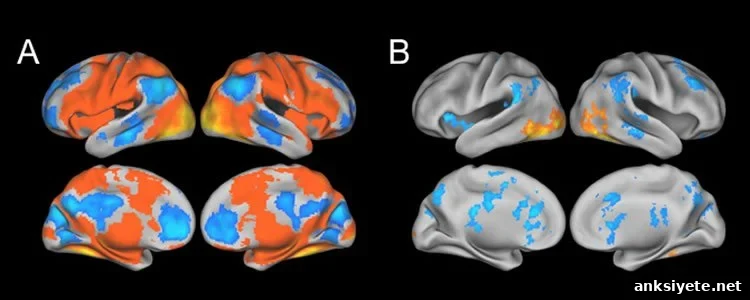
New research from UC Berkeley shows the human brain can develop a neural workaround that offsets the presence of beta-amyloid, a protein linked to Alzheimer’s disease.
Published Sept. 14 in the journal Nature Neuroscience, the study offers insight into why some older adults maintain normal cognition despite having beta-amyloid deposits in their brains, while others progress to dementia. The findings point to adaptive brain mechanisms — sometimes described as neural compensation or plasticity — that help preserve memory function even when Alzheimer’s‑related proteins are present.
“This study provides evidence that there is plasticity or compensation ability in the aging brain that appears to be beneficial, even in the face of beta-amyloid accumulation,” said study principal investigator Dr. William Jagust, who holds appointments at UC Berkeley’s Helen Wills Neuroscience Institute, the School of Public Health and Lawrence Berkeley National Laboratory. The research emphasizes that increased neural activity in specific brain regions can correlate with preserved memory performance in older adults who carry beta-amyloid deposits.
Earlier work had already associated elevated brain activation with beta-amyloid, but it remained unclear whether that heightened activation was a helpful response or simply a sign of dysfunction. This study used functional magnetic resonance imaging (fMRI) to examine brain activity directly while participants formed memories, comparing activation patterns with subsequent memory performance to determine whether activity reflected compensation that supported cognition.
The experimental group included 22 healthy young adults and 49 older adults who showed no clinical signs of cognitive decline. Brain imaging revealed that 16 of the older adults had measurable beta-amyloid deposits; the remaining 55 participants — including the younger adults and the older adults without amyloid — did not have these deposits. Across all participants, researchers recorded brain activity while subjects studied and memorized a series of pictures depicting everyday scenes.
During scanning, participants viewed images and encoded them into memory. The investigators later assessed two types of memory: a general “gist” memory and a more specific, detailed memory. For gist memory, subjects were shown written descriptions of scenes (for example, “a boy doing a handstand”) and asked whether the description matched a previously viewed picture. For detailed memory, subjects had to verify specific attributes of the scene, such as the exact color of a shirt or other precise elements.
Overall task performance was similar across groups, but the fMRI data revealed an important difference for older adults with beta-amyloid: those individuals showed increased activation in particular brain regions when producing detailed, complex memories. In other words, the more detailed their memory performance, the greater the brain activity observed in those regions. “It seems that their brain has found a way to compensate for the presence of the proteins associated with Alzheimer’s,” Jagust said, underscoring that heightened neural recruitment may support preserved memory function in the presence of amyloid burden.
The study does not resolve why some people with beta-amyloid deposits are better at engaging alternative brain networks than others. Jagust noted that prior research points to the potential role of lifelong cognitive stimulation: people who engage in education, mentally challenging work, or regular intellectual activities often show better cognitive outcomes and may accumulate lower amyloid levels. This concept, sometimes referred to as cognitive reserve, suggests that sustained mental engagement across the lifespan could strengthen the brain’s ability to adapt to pathology.
“I think it’s very possible that people who spend a lifetime involved in cognitively stimulating activity have brains that are better able to adapt to potential damage,” Jagust said, highlighting the distinction between biomarker presence and clinical symptoms. The current findings support the idea that brain plasticity and compensatory activation can help maintain performance, at least for certain tasks and among some individuals with amyloid accumulation.
Co-lead authors on the paper are Jeremy Elman and Hwamee Oh, who conducted the research as postdoctoral fellows in Jagust’s laboratory. The study received funding support from the National Institute on Aging and the McKnight Foundation.
Contact: Sarah Yang – UC Berkeley
Source: UC Berkeley press release
Image Source: The image is credited to Jagust Lab and is adapted from the UC Berkeley press release
Original Research: Abstract for “Neural compensation in older people with brain amyloid-β deposition” by Jeremy A Elman, Hwamee Oh, Cindee M Madison, Suzanne L Baker, Jacob W Vogel, Shawn M Marks, Sam Crowley, James P O’Neil and William J Jagust in Nature Neuroscience. Published online September 14, 2014; doi:10.1038/nn.3806.