
Summary: A new study clarifies how stress alters the brain’s reward circuitry, leading to increased alcohol consumption by changing the dopamine response to ethanol.
Source: University of Pennsylvania
Penn animal study links stress-induced changes in the brain’s reward center to higher alcohol intake; findings have implications for understanding mechanisms behind PTSD-related substance use.
Stress is a well-established risk factor for later alcohol misuse, but the precise brain mechanisms that connect stress and elevated alcohol consumption are not fully understood. Both stress signaling and the reinforcement of addictive substances engage overlapping neural circuits, particularly the mesolimbic dopamine system—the brain’s reward center. Gaining a clearer picture of how stress alters this circuitry can help explain why some individuals develop problematic drinking following traumatic experiences and could inform therapeutic approaches for conditions such as post-traumatic stress disorder (PTSD).
Researchers led by John A. Dani, PhD, Chair of the Department of Neuroscience at the Perelman School of Medicine, University of Pennsylvania, used a rodent model to investigate how acute stress changes the brain’s response to alcohol. They found that animals exposed to a single episode of stress showed a reduced dopamine response to ethanol and voluntarily drank more alcohol than unstressed controls. These behavioral and neurochemical changes were linked to altered signaling within the ventral tegmental area (VTA), a core node in the reward network. Their results were published in the journal Neuron.
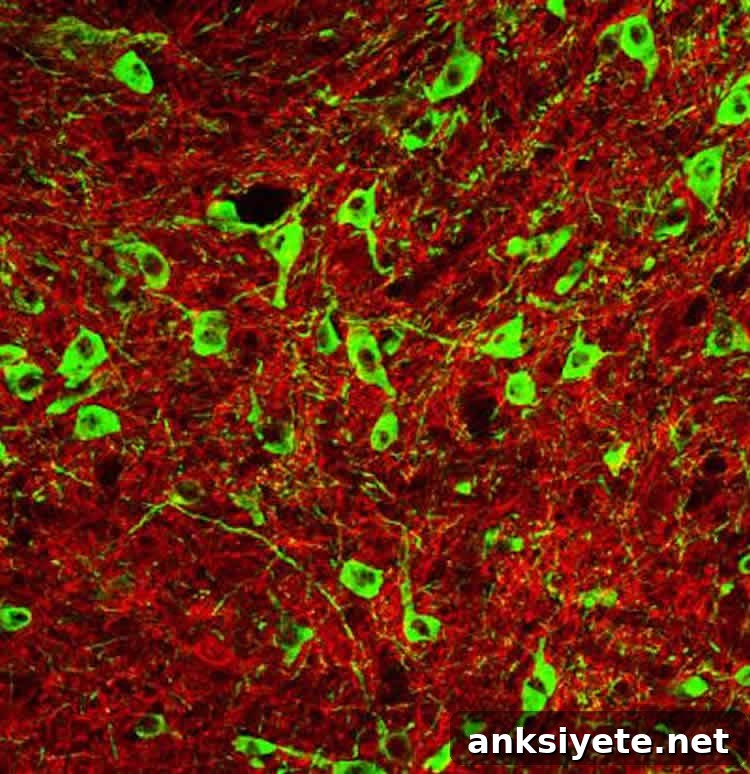
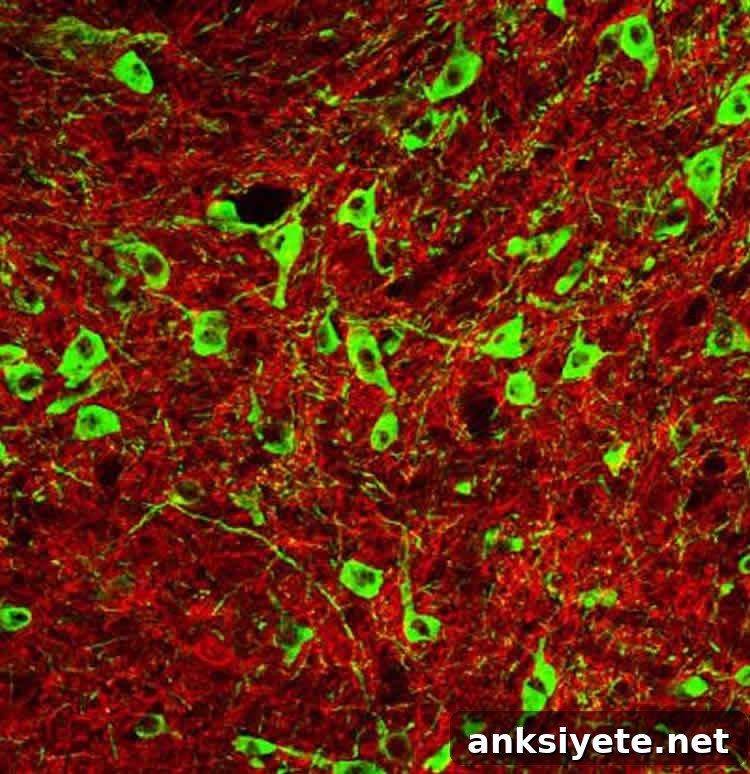
At the cellular level, stress modifies the delicate balance of neuronal excitation and inhibition. “These effects happen at the level of ions—potassium, chloride, and others—moving across neuron membranes through channels and transporters,” Dani explained. The study showed that stress exposure impaired the function of the potassium-chloride cotransporter KCC2, a protein crucial for maintaining inhibitory GABA signaling. As a result, some GABAergic neurons in the VTA, which normally suppress activity, shifted toward an excitatory state after ethanol exposure.
In the experiment, rats were subjected to one hour of acute stress and then tested 15 hours later for voluntary consumption of a sugar solution containing ethanol. Stressed animals consumed significantly more ethanol than controls, and this elevated intake persisted for several weeks. When researchers examined VTA circuitry, the network appeared superficially normal. However, when the circuits were strongly activated—by ethanol exposure—previously inhibitory neurons became paradoxically excitatory, and the normal ethanol-triggered dopamine response was blunted. This aberrant shift reduced reward signaling and drove greater alcohol consumption.
To test whether restoring normal inhibitory signaling could reverse the stress-induced effects, the team used pharmacological tools to prevent the excitatory switch. Administration of a compound known to enhance KCC2 function (CLP290) restored the transporter’s activity, normalized firing patterns in VTA dopamine neurons, and prevented the blunted dopamine response to ethanol. Treated, previously stressed rats consumed less alcohol than untreated stressed animals. Similarly, blocking stress hormone receptors or otherwise preventing excitatory GABA signaling also stopped the increase in alcohol self-administration.
These findings show that a neuroendocrine signal triggered by stress can shift inhibitory GABA transmission toward excitation in the ventral tegmental area, altering how the brain responds to alcohol and increasing the drive to drink. The work supplies a mechanistic link between stress exposure and increased alcohol intake and provides a tractable model for studying how stress reshapes reward circuitry.
The study’s authors point out that this line of research could have relevance for people with PTSD, who face higher rates of alcohol and drug overuse. By identifying cellular and molecular steps—such as KCC2 downregulation and stress hormone receptor activation—that mediate the shift from inhibitory to excitatory signaling, researchers have potential targets to test compounds that normalize VTA function and reduce stress-related overconsumption.
Lead co-authors: Alexey Ostroumov and Alyse Thomas (Perelman School of Medicine, University of Pennsylvania).
Funding: Supported by the National Institutes of Health (NS21229, DA09411).
Original research: “Stress Increases Ethanol Self-Administration via a Shift toward Excitatory GABA Signaling in the Ventral Tegmental Area” by Alexey Ostroumov, Alyse M. Thomas, Blake A. Kimmey, Jordan S. Karsch, William M. Doyon, and John A. Dani. Published in Neuron, October 2016; DOI: 10.1016/j.neuron.2016.09.029.
• Stress increases voluntary alcohol self-administration in rodents.
• Prior stress attenuates alcohol-induced dopamine responses in the VTA.
• Stress shifts GABAergic signaling in the mesolimbic circuit from inhibitory to excitatory.
• Stress hormones impair KCC2 chloride-extrusion capacity, contributing to excitatory GABA signaling.
• Interventions that block stress hormone receptors or restore KCC2 function prevent both the blunted dopamine response and the rise in alcohol consumption.
Abstract
Stress is a known risk factor for subsequent alcohol abuse, yet the neural mechanisms linking stress and alcohol remain poorly understood. Addictive reinforcement and stress signaling converge on common circuitry, including the mesolimbic dopamine system. In rodents, pre-exposure to acute stress attenuates alcohol-induced dopamine responses and increases alcohol self-administration. The blunted dopamine signal arises because ethanol induces excitation of GABA neurons in the ventral tegmental area; this excitation depends on GABAA receptor activation and stress-induced downregulation of the K+, Cl− cotransporter KCC2. Blocking stress hormone receptors, enhancing KCC2 function, or otherwise preventing excitatory GABA signaling restores normal dopamine responses to ethanol and prevents increased alcohol intake. These results demonstrate that stress alters neural and behavioral responses to alcohol by shifting inhibitory GABA transmission toward excitation.