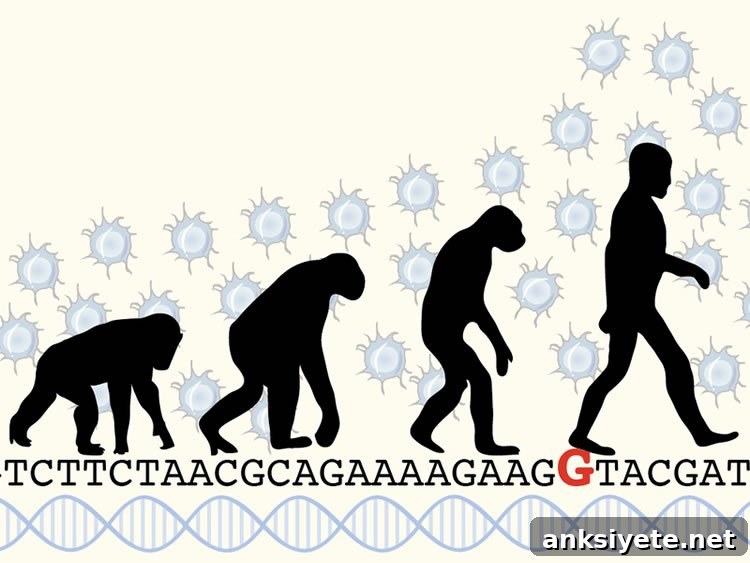
Summary: New research from the Max Planck Institute indicates that a single nucleotide change in the human-specific gene ARHGAP11B likely played a critical role in the expansion of the human neocortex.
Source: Max Planck Institute.
A single nucleotide substitution likely contributed to the evolutionary expansion of the human neocortex
What helped make the human brain distinct from that of other primates? Evidence points to ARHGAP11B, a human-specific gene that promotes amplification of particular brain stem cells. Scientists at the Max Planck Institute of Molecular Cell Biology and Genetics in Dresden have identified a surprisingly small genetic alteration—a single base pair substitution—that changes how ARHGAP11B’s messenger RNA is processed and ultimately enables the ARHGAP11B protein to increase the number of basal progenitors. This amplification of basal progenitors is believed to have contributed to the evolutionary enlargement and increased complexity of the human neocortex.
Human-specific origins and role of ARHGAP11B
ARHGAP11B arose by partial duplication of the widespread ARHGAP11A gene along the lineage leading to modern humans, Neanderthals, and Denisovans roughly five million years ago. It is absent from the chimpanzee genome. Researchers, including collaborators from the Max Planck Institute for Evolutionary Anthropology, have shown that ARHGAP11B promotes expansion of a distinct class of neural stem cells known as basal progenitors—cells that are strongly implicated in the evolutionary growth and folding of the neocortex, the brain region responsible for higher cognitive functions such as language and abstract thought. In experimental models, expression of ARHGAP11B can induce increased basal progenitor abundance and even promote cortical folding in animals with normally smooth brains.
The tiny C-to-G change with major impact
Although ARHGAP11B appeared early in the human lineage, the specific molecular change that endowed the gene with its distinctive function appears to have occurred later. The ARHGAP11B protein contains a unique 47–amino-acid carboxy-terminal sequence not present in ARHGAP11A, resulting from a frameshift caused by the absence of 55 nucleotides in ARHGAP11B mRNA. Initially, researchers assumed those 55 nucleotides were missing at the DNA level when the duplication occurred. However, careful analysis revealed that those nucleotides are present in the ARHGAP11B genomic DNA but are removed during mRNA splicing.
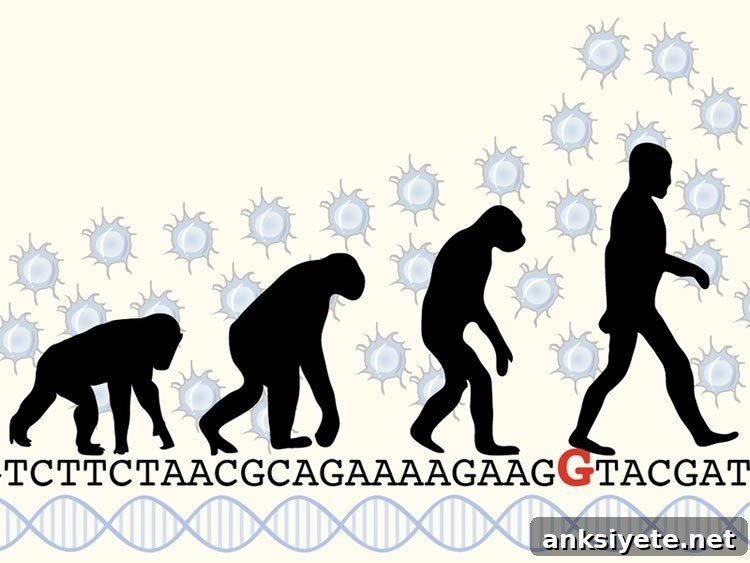
This unusual splicing event is produced by a single nucleotide substitution—a C-to-G change—that creates a novel splice donor site. Though minute in genomic terms, this single nucleotide substitution alters ARHGAP11B mRNA processing so that the 55-nucleotide segment is excised, producing the human-specific 47–amino-acid extension of the protein. Functionally, this modification converts ARHGAP11B into a version that loses the original RhoGAP domain activity and gains the capacity to drive basal progenitor amplification, a trait that likely contributed to the evolutionary increase in neocortex size in humans.
Reconstructing the ancestral gene to test function
To determine whether the C-to-G substitution is responsible for ARHGAP11B’s unique effect on basal progenitors, the Dresden team reconstructed an ancestral form of ARHGAP11B reflecting the state of the gene before the substitution occurred. When this ancestral version was expressed in mice, it retained RhoGAP enzymatic activity but did not increase basal progenitor abundance during cortical development. This contrast supports the conclusion that the single splice-site mutation is both necessary and sufficient to confer ARHGAP11B’s neural progenitor–amplifying function.
Evolutionary timing and significance
Analysis suggests the C-to-G splice-site substitution likely occurred well after the initial duplication event that produced ARHGAP11B, sometime between roughly 1.5 million and 500,000 years ago. While point mutations occur frequently across genomes, this example shows how one single-nucleotide change can have immediate and significant developmental and evolutionary consequences. By changing RNA splicing and the resulting protein sequence, the substitution appears to have shifted ARHGAP11B from a duplicated gene fragment into a human-specific driver of basal progenitor amplification and neocortex expansion.
Source: Max Planck Institute
Image credit: MPI for Molecular Cell Biology and Genetics
Original research: The findings reported here summarize the study “A single splice site mutation in human-specific ARHGAP11B causes basal progenitor amplification” by Marta Florio, Takashi Namba, Svante Pääbo, Michael Hiller and Wieland B. Huttner, published in Science Advances, December 2016.
Abstract (summary)
ARHGAP11B is a human-specific gene implicated in neocortex expansion because it promotes amplification of basal progenitors. The gene originated by partial duplication of ARHGAP11A and lacks 55 nucleotides in its mRNA, which truncates the RhoGAP domain and creates a human-specific carboxy-terminal sequence. These 55 nucleotides are removed by mRNA splicing due to a single C→G substitution that generates a novel splice donor site. A reconstructed ancestral ARHGAP11B lacking the substitution retains RhoGAP activity but does not increase basal progenitors during cortical development. Therefore, a single nucleotide substitution underlies the specific properties of ARHGAP11B that likely contributed to expansion of the human neocortex.