
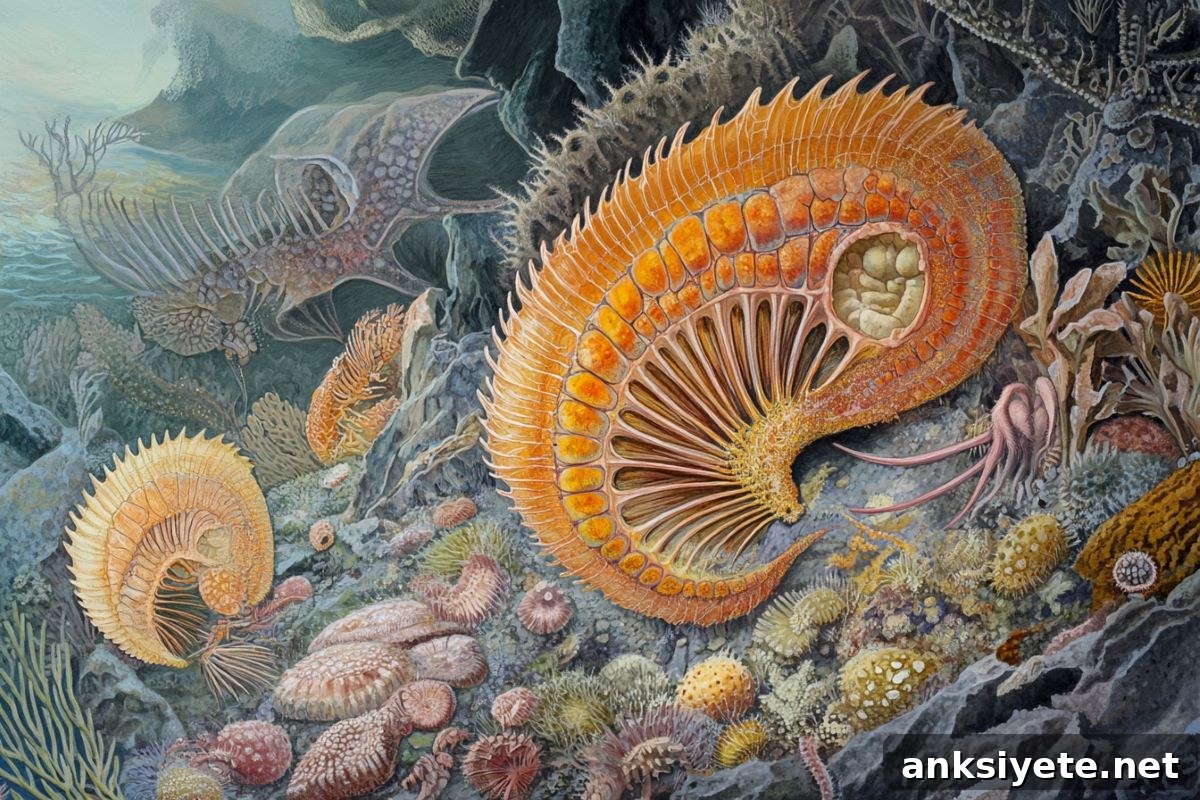
Summary: New analysis of exceptionally preserved Cambrian fossils indicates that the ancestral ecdysozoan most likely had a single ventral nerve cord. Fossil impressions from early scalidophoran species match the single midline nerve cord seen in modern priapulids, supporting the view that paired nerve cords in some groups evolved later and independently.
The study suggests that paired ventral nerve cords found in arthropods, kinorhynchs, and loriciferans represent convergent adaptations associated with body segmentation and more complex locomotion. These nervous system innovations likely improved bilateral coordination and contributed to the movement capabilities that emerged during the Precambrian–Cambrian transition.
Key Facts
- Ancestral condition: Fossil evidence supports a single ventral nerve cord in early ecdysozoans.
- Convergent evolution: Paired nerve cords in arthropods, kinorhynchs, and loriciferans likely evolved independently.
- Functional link: The evolution of paired cords and ganglia appears connected to segmentation and improved locomotion in segmented lineages.
Source: Queen Mary University of London
Overview
An international team of paleobiologists and evolutionary neuroscientists has traced the early evolution of the ventral nerve cord in ecdysozoans—a large clade that includes insects, crustaceans, nematodes, priapulids, kinorhynchs, loriciferans, tardigrades, and onychophorans. Their analysis of Cambrian fossil material provides new evidence that the common ancestor of these animals may have borne a single, unpaired ventral nerve cord running along the trunk.
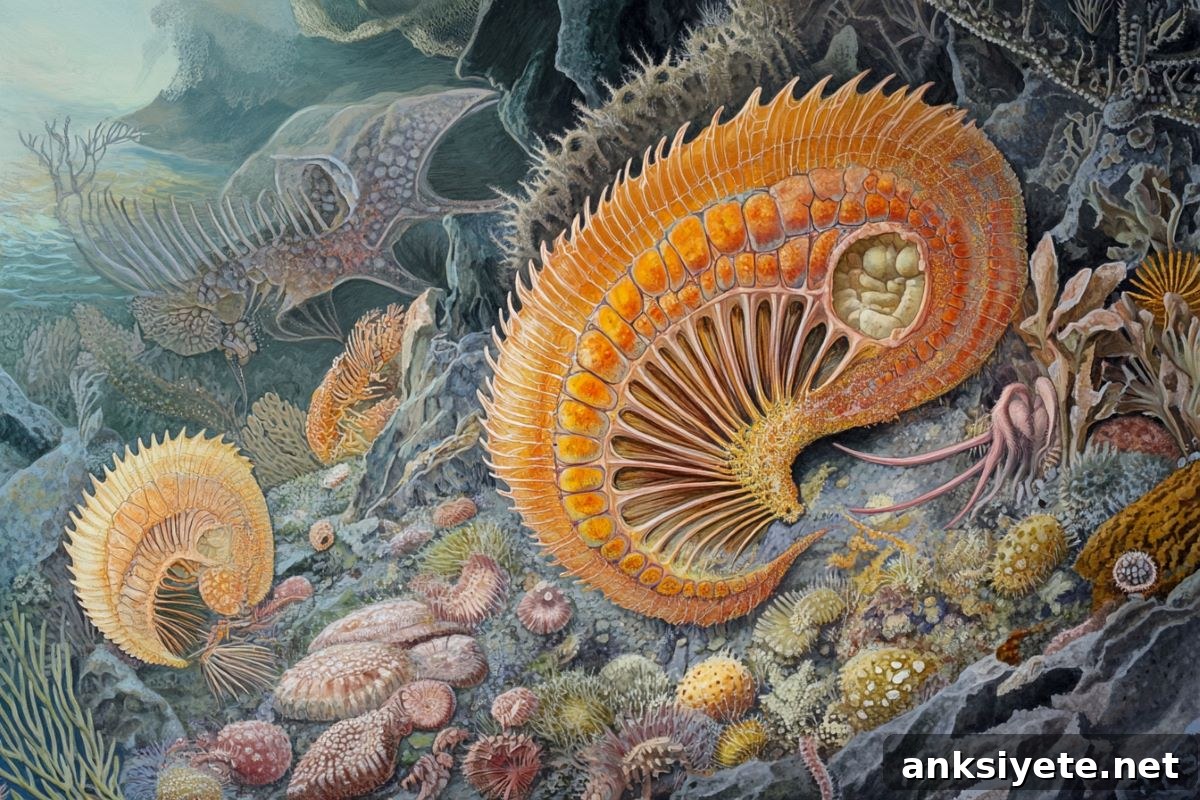
The research team—led by Dr Deng Wang (Northwest University), Dr Jean Vannier (Université de Lyon), Dr Chema Martin-Durán (Queen Mary University of London), and Dr María Herranz (Rey Juan Carlos University)—studied exceptionally preserved fossils from several key Cambrian deposits. These include specimens from the Fortunian Kuanchuanpu Formation, the Chengjiang biota, and Wuliuan deposits, which together capture early stages in scalidophoran and broader ecdysozoan evolution.
Scalidophorans, a group that comprises priapulids, loriciferans, and kinorhynchs, are among the earliest-branching ecdysozoans in the fossil record. The team examined fossils such as Eopriapulites, Eokinorhynchus, Xiaoheiqingella, Mafangscolex, and Ottoia prolifica, identifying elongated ventral impressions interpreted as nervous tissue running along the trunk.
According to the authors, these ventral impressions closely resemble the single ventral nerve cord of modern priapulids and some nematodes. Phylogenetic analyses that incorporate these fossil characters recover an ancestral unpaired ventral nerve cord for scalidophorans. When placed in a broader ecdysozoan framework, the results imply that the common ancestor of nematoids and panarthropods also most likely carried a single midline nerve cord.
Implications for nervous system evolution
The study challenges the assumption that paired ventral nerve cords were ancestral across ecdysozoans. Instead, it presents a scenario in which paired cords and segmentally arranged ganglia evolved multiple times independently—most notably in kinorhynchs, loriciferans, and panarthropods (which include arthropods). These independent origins are best explained as functional responses to increasing body segmentation, the appearance of paired appendages, and the demands of bilaterally coordinated locomotion.
Researchers propose that as ecdysozoan lineages diversified, innovations in the nervous system—such as the duplication and lateralization of the ventral nerve cord—provided improved control over more complex, segmented movements. Such changes would have been advantageous during the rapid ecological and morphological diversification at the Precambrian–Cambrian boundary.
Dr Chema Martin-Durán summarizes the interpretation: the single ventral nerve cord was likely an ancestral trait, while paired nerve cords represent later, derived conditions linked to specific functional needs. Dr María Herranz emphasizes that these nervous system transformations probably co-evolved with muscular and appendage changes that enabled more efficient and coordinated locomotion.
Conclusions
This work deepens our understanding of early ecdysozoan anatomy and highlights the value of exceptionally preserved fossils in reconstructing soft-tissue anatomy long lost in most of the fossil record. By integrating fossil data with phylogenetic analysis, the study clarifies how central nervous system architectures evolved across major animal lineages and underscores the role of convergent evolution in producing similar nervous system solutions in different clades.
About this evolutionary neuroscience research news
Author: Lucia Graves
Source: Queen Mary University of London
Contact: Lucia Graves – Queen Mary University of London
Image credit: Neuroscience News
Original research: Closed access. “Preservation and early evolution of scalidophoran ventral nerve cord” by Deng Wang et al., published in Science Advances.
Abstract (summary)
Ecdysozoan worms (Nematoida + Scalidophora) show diverse neural architectures that reflect a complex evolutionary history. Exceptional fossil preservation in early and mid-Cambrian deposits offers direct evidence to reconstruct early nervous system characters. The fossils examined preserve an unpaired ventral nerve cord, positioned eccentrically along the trunk much like that of modern priapulids and some nematodes. Phylogenetic analyses integrating these data suggest ancestral scalidophorans possessed an unpaired ventral nerve cord, and that paired nervous systems likely arose independently in Kinorhyncha, Loricifera, and panarthropods, potentially in association with the evolution of paired appendages and bilaterally coordinated movement.