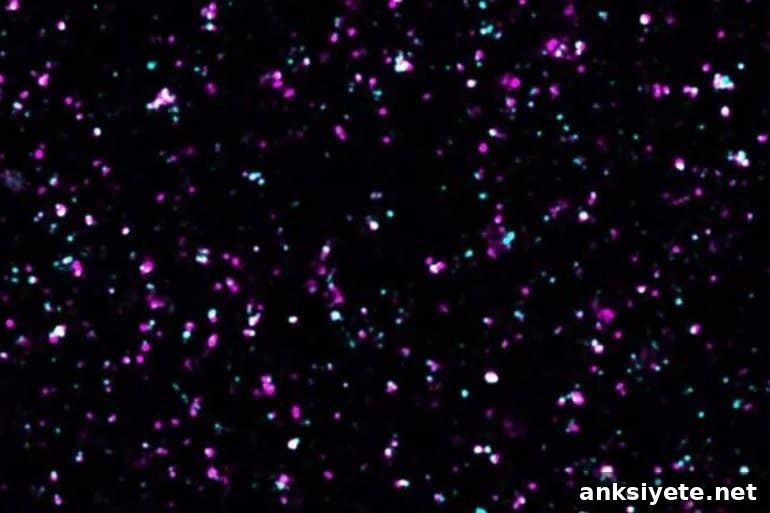
Summary: New study uncovers a signaling pathway that controls local protein synthesis to shape synapse formation between excitatory pyramidal neurons and parvalbumin-expressing inhibitory interneurons.
Source: King’s College London
Researchers at the Institute of Psychiatry, Psychology & Neuroscience (IoPPN) at King’s College London report that precise control of protein synthesis at individual synapse types is essential for proper cortical wiring.
Published in Science, this collaborative study from the Rico and Marín laboratories demonstrates that regulation of local protein synthesis is not only spatially restricted within neurons, but also synapse-type specific. The team identified a signaling cascade that governs the formation of excitatory synapses onto inhibitory interneurons that express parvalbumin (PV).
The findings reveal that one of the brain’s most fundamental connection types—pyramidal cell inputs onto PV+ interneurons—is assembled through a targeted control of messenger RNA translation at the synapse. This level of specificity in local protein synthesis during cortical development had not previously been shown.
The cerebral cortex, the outer layer of the cerebrum, underlies complex cognitive functions, sensorimotor processing, and behavior. Its development depends on the accurate assembly of neuronal circuits formed by two principal cell classes: excitatory pyramidal neurons and a diverse set of inhibitory interneurons. Interneurons, particularly PV-expressing cells, synchronize and pace excitatory activity, shaping network dynamics and information processing.
Synapses, the specialized contacts that connect neurons, comprise presynaptic and postsynaptic compartments. In mature neurons, protein production can occur locally in both compartments to support synaptic structure and function. Chemical signaling pathways regulate which proteins are synthesized at which sites, allowing the brain to fine-tune individual synapses. Until now, it was unclear how such regulation differs across distinct types of synapses during cortical wiring.
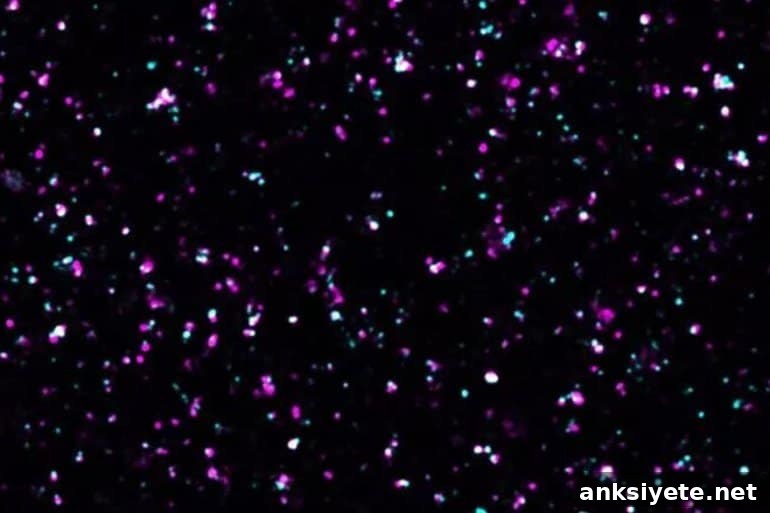
“Uncovering molecular programs that regulate cortical connectivity is exciting, especially when they act with synapse-type precision,” says Dr. Clémence Bernard, first author from King’s IoPPN. “We discovered a pathway that specifically controls protein synthesis at the synapses formed by pyramidal neurons onto PV interneurons.”
The study describes how the ErbB4 receptor tyrosine kinase modulates the TSC subunit Tsc2 to enable localized control of mRNA translation. This ErbB4–Tsc2 signaling axis operates in a cell type– and synapse type–specific manner to drive the production of synaptic proteins required for excitatory inputs onto PV+ interneurons.
Using ribosome-associated mRNA profiling, the researchers identified a downstream program of synaptic protein transcripts regulated by ErbB4 signaling. These locally translated proteins are necessary for the formation and maturation of the excitatory contacts on PV interneurons, demonstrating that targeted local protein synthesis directly sculpts circuit connectivity.
Altered synaptic protein synthesis has been implicated in neurodevelopmental conditions such as autism spectrum disorder (ASD). The newly defined pathway links several proteins associated with neurodevelopmental risk, suggesting that excitatory inputs onto PV-expressing interneurons could be particularly vulnerable to dysregulation in developmental disorders.
“Many genes associated with ASD appear to intersect this signaling pathway,” comments Professor Marín, co-senior author. “This points to pyramidal-to-PV interneuron connections as potential hotspots where diverse genetic risk factors converge.”
Professor Rico, the other co-senior author, adds: “Understanding synapse-type specific regulation of local translation gives us a clearer picture of how precise cortical circuits are built, and why certain connections may be predisposed to dysfunction in disease.”
About this neuroscience research news
Author: Press Office
Source: King’s College London
Contact: Press Office – King’s College London
Image: Image credit: King’s College London
Original Research: Closed access. “Cortical wiring by synapse type–specific control of local protein synthesis” by Clémence Bernard et al. Published in Science.
Abstract
Cortical wiring by synapse type–specific control of local protein synthesis
Neurons rely on local protein synthesis to sustain complex morphology and to allow independent regulation across many subcellular compartments, extending down to the level of individual synapses.
This study identifies a signaling pathway that controls the localized synthesis of proteins required to assemble excitatory synapses onto parvalbumin-expressing (PV+) interneurons in the mouse cerebral cortex.
Specifically, ErbB4 signaling regulates the TSC subunit Tsc2 to permit cell type– and synapse type–specific control of mRNA translation at those synapses.
Ribosome-associated mRNA profiling reveals a coordinated program of synaptic protein transcripts downstream of ErbB4 that are necessary for establishing excitatory inputs on PV+ interneurons.
These results demonstrate that local protein synthesis provides a synapse-specific mechanism to control synapse formation and, consequently, the wiring of neural circuits in the cerebral cortex.