
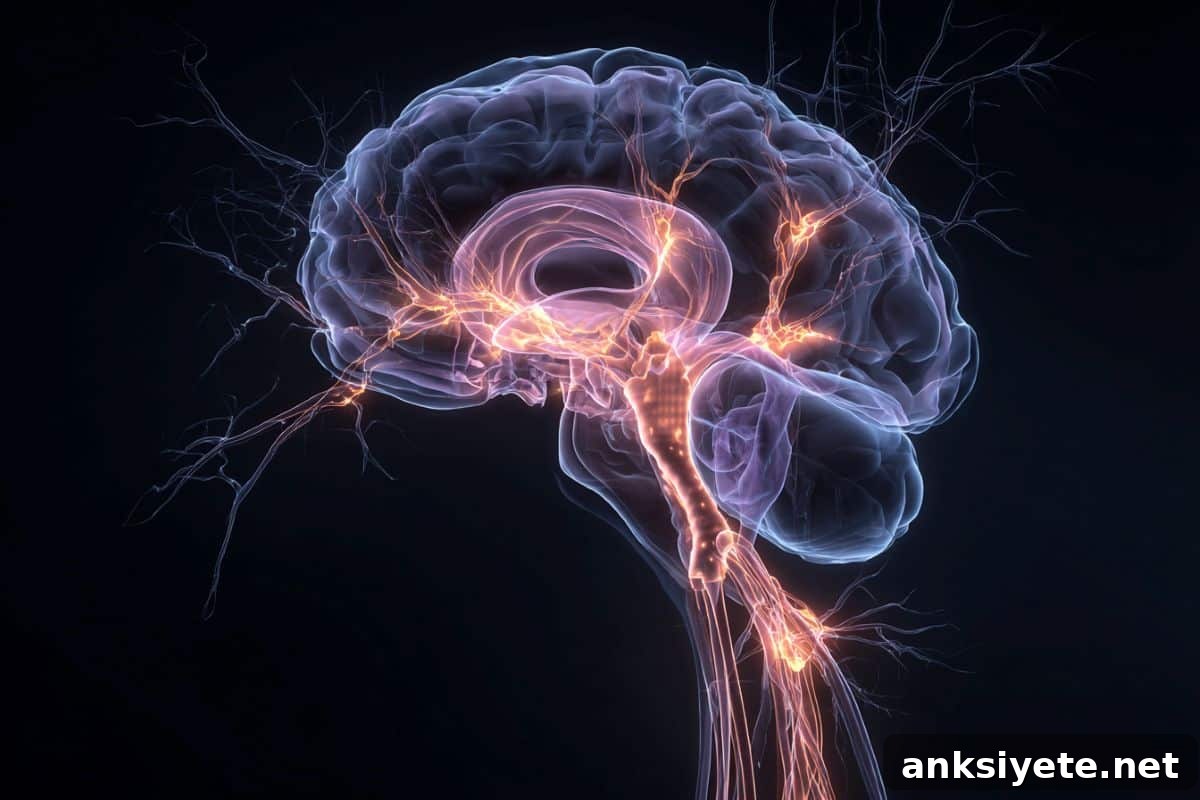
Summary: Researchers have traced a precise brain pathway that drives the nocebo effect—the biological process by which negative expectations actively amplify physical pain. The study shows that anticipation, fear, or observing another’s suffering triggers release of the neurochemical cholecystokinin (CCK), which then travels along a distinct neural route to increase pain sensitivity.
This work provides direct physiological evidence that nocebo-induced pain is a genuine biological response rather than imaginary. Mapping this circuit opens new possibilities for reducing anxiety-driven pain amplification and improving outcomes for people with chronic pain.
Key Facts
- The Nocebo Shift: Unlike the placebo effect—where positive expectations produce real relief—the nocebo effect arises when negative expectations created by suggestion, past injury, or social observation raise anxiety and intensify pain.
- Independent, Confirming Studies: Two independent labs, at the University of Toronto Mississauga and McGill University, converged on the same mechanism without prior coordination, identifying cholecystokinin (CCK) as a central mediator of nocebo pain.
- Mapped ACC-to-lPAG Pathway: The research traces a pathway from the anterior cingulate cortex (ACC), a brain region that encodes the emotional aspects of pain, to the lateral periaqueductal gray (lPAG), a midbrain hub that adjusts pain sensitivity. CCK released along this route functions like a biological volume control for pain.
- Behavioral Models of Negative Expectation: In mice, nocebo states were induced either by returning animals to locations where they had previously experienced pain (without new injury) or by letting them observe another mouse in pain—both social and contextual cues that produce expectation-driven hyperalgesia.
- Control with Optogenetics and Pharmacology: Using behavioral testing, pharmacological blockers, and light-driven optogenetic manipulation, researchers were able to turn the nocebo response on and off. Activating the ACC-to-lPAG circuit raised pain sensitivity; blocking CCK signaling or the pathway prevented the effect.
- Implications for Chronic Pain Stigma: By demonstrating a specific neural circuit that produces amplified pain, the findings validate patients’ experiences. Nocebo amplification is an actively generated biological response, not merely imagined or exaggerated.
Source: University of Toronto
A collaborative pair of studies published in Nature Communications from teams at the University of Toronto Mississauga and McGill University identify how negative expectations translate into heightened pain. Both groups independently found that CCK plays a causal role in nocebo hyperalgesia in mouse models, supporting earlier human data that linked CCK signaling to expectation-driven pain increases.
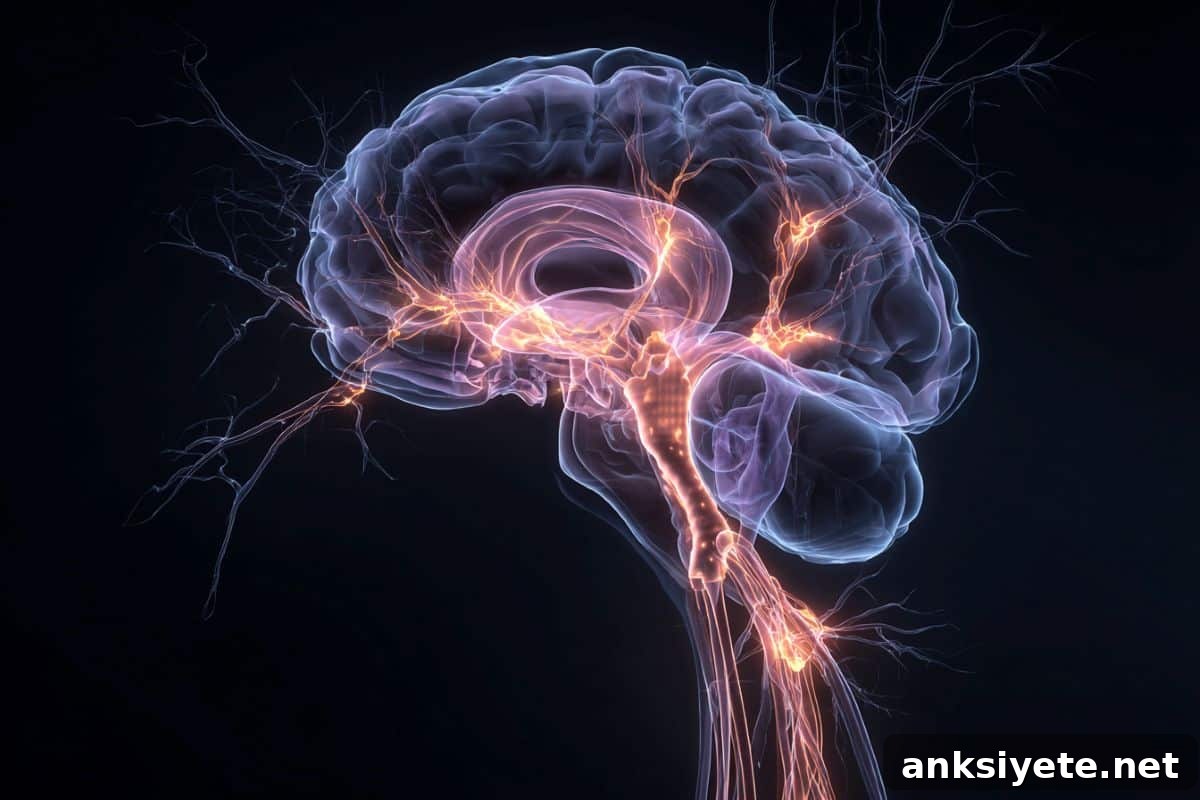
Both teams traced how CCK-producing neurons projecting from the ACC transmit signals to the lPAG, where they increase nociceptive responsiveness. In this model, emotional and anticipatory signals originating in the ACC trigger CCK release that directly modulates midbrain circuits responsible for pain sensitivity.
In experimental paradigms, mice returned to contexts previously associated with pain showed stronger pain responses even without new injury. Similarly, animals that observed conspecifics in pain developed increased sensitivity through social learning. Combining behavioral assays with targeted pharmacology and optogenetic stimulation allowed direct manipulation of the identified circuit: activating ACC-to-lPAG projections or enhancing CCK signaling produced nocebo-like hyperalgesia, while blocking CCK receptors or interrupting the pathway abolished it.
“CCK has been implicated in human nocebo responses for some time,” said Dr. Loren Martin, professor in the Department of Psychological and Brain Sciences at the University of Toronto Mississauga and one of the study’s senior authors. “Our work identifies the precise neural route by which this system amplifies pain, offering a concrete target for future therapies.”
Clinicians have long observed that fear, negative expectation, and prior painful experiences worsen patient outcomes. By revealing the circuitry underlying this effect, the research provides a roadmap for interventions that could reduce maladaptive pain amplification in conditions where anxiety and anticipation contribute to symptoms.
Beyond therapeutic potential, these findings carry important implications for how chronic pain is understood and treated. Demonstrating a specific, reproducible biological mechanism helps destigmatize patients’ pain, confirming it is generated by identifiable neural processes rather than being purely psychological.
Key Questions Answered:
A: Anticipation and anxiety engage the anterior cingulate cortex, which releases the neurochemical CCK. CCK travels to the lateral periaqueductal gray, a midbrain center that adjusts nociceptive sensitivity. This circuit functions as a biological amplifier: negative expectation triggers CCK-mediated signaling that raises the perceived intensity of pain.
A: Teams at the University of Toronto Mississauga and McGill University each identified the same ACC-to-lPAG CCK pathway using separate experiments. With optogenetic tools and pharmacological blockers in mice, they activated or suppressed the circuit and thereby switched nocebo-like pain on and off—providing objective, reproducible evidence of a real neural mechanism.
A: Isolating a specific chemical and pathway that links anxiety to pain opens the door to targeted therapies. Drugs or neuromodulation approaches that block CCK signaling or disrupt the ACC-to-lPAG circuit could reduce harmful pain amplification driven by fear and expectation, improving outcomes for patients whose symptoms are worsened by anticipatory anxiety.
Editorial Notes:
- This article was edited by a Neuroscience News editor.
- The full journal paper was reviewed for this summary.
- Additional context was provided by editorial staff.
About this pain and neurology research news
Author: Julia Le
Source: University of Toronto
Contact: Julia Le – University of Toronto
Image: Image credit to Neuroscience News
Original Research: Open access.
Title: Cholecystokinin input from the anterior cingulate cortex to the lateral periaqueductal gray mediates nocebo pain behavior in mice
Journal: Nature Communications
DOI: 10.1038/s41467-026-73266-y
Abstract
Cholecystokinin input from the anterior cingulate cortex to the lateral periaqueductal gray mediates nocebo pain behavior in mice
The nocebo effect—where anticipation of harm intensifies pain and other symptoms—is increasingly recognized as a factor in poor clinical outcomes. In humans, nocebo-induced hyperalgesia can be blocked by proglumide, a CCK receptor antagonist, suggesting a CCK-dependent mechanism. However, the neural circuitry responsible for nocebo hyperalgesia remained unclear, in part because appropriate animal models were lacking.
This study developed distinct, reproducible mouse models in which expectation-driven pain was elicited by contextual or social cues and found that both paradigms rely on a shared circuit. CCK release from ACC neurons projecting to the lPAG mediates the amplified pain response, identifying a candidate pathway for targeted therapeutic intervention in pain-related disorders.