Sex Differences in Mood Disorders: Personalizing Treatment

featured 96035

Summary: Researchers review progress since the 2016 National Institutes of Health (NIH) policy requiring basic research to include sex as a biological variable. Their analysis highlights important advances in understanding sex differences in mood disorders and points toward priorities for future, more inclusive research that can inform personalized treatment approaches. The review emphasizes several consistent … Read more


How Your Brain Filters Distractions to Stay Focused

featured 111231

Summary: A new model of attention explains how the human brain allocates limited perceptual resources to prioritize goal-relevant information in changing environments. Called “adaptive computation,” the model predicts which visual details people emphasize—such as a walk signal at an intersection rather than an eye-catching car—based on task demands. In controlled experiments that tracked attention to … Read more

AI-Generated Voices Fool People While Brain Activity Differs

featured 103334

Summary: People struggle to reliably tell human voices from AI-generated voices, correctly identifying them roughly half the time. Yet brain scans show distinct neural patterns: human voices engage regions tied to memory and empathy, while AI voices activate areas involved in error detection and focused attention. These results underscore both the sophistication of modern AI … Read more

How Human Time Neurons Encode Specific Moments in Time

featured 75235

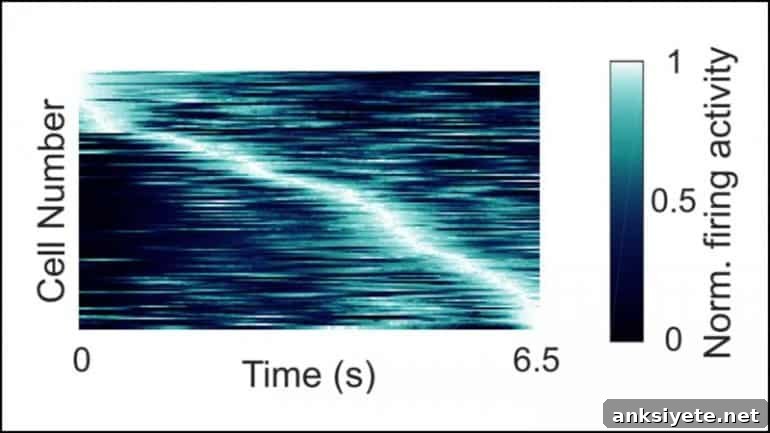
Summary: Specialized neurons in the human hippocampus appear to encode moments in time, providing a neural basis for the “when” component of episodic memory. New findings show the human brain contains neurons that track temporal moments within an experience. Source: SfN Neurons in the hippocampus become active at particular moments during a task, according to … Read more

Mindfulness vs Relaxation Response: How Each Shapes the Brain

featured 49641

Summary: A new study finds that relaxation-based training strengthens connections between brain areas involved in deliberate control, while mindfulness training boosts connections between regions linked to sensory awareness and perception. Source: Massachusetts General Hospital Researchers at Massachusetts General Hospital (MGH) have published a study in Psychosomatic Medicine comparing the neural effects of two widely used … Read more

Why People Worldwide Prefer the Same Scents

featured 81607

Summary: The molecular structure of an odor largely determines whether it is perceived as pleasant or unpleasant. People from diverse cultures tend to agree on which smells they like, indicating universal principles in human olfactory perception. Source: Karolinska Institute New research from an international team led by scientists at Karolinska Institutet and the University of … Read more

How Facial Expressions Build Social Bonds

featured 103179

Summary: New research suggests that more expressive facial behaviour helps people form stronger social bonds. By analyzing hundreds of natural conversations, researchers found that individuals who move their faces more dynamically are judged as more likeable, easier to read, and often better at achieving social goals such as negotiating or managing disagreement. The study measured … Read more

Personality Traits That Reduce Cognitive Decline in Older Adults

featured 81826

Summary: People who scored high for conscientiousness lived about two years longer without cognitive decline than those who scored lower. Lower neuroticism and higher extraversion were associated with a greater chance of returning to normal cognitive function after a diagnosis of mild cognitive impairment (MCI), suggesting these traits may offer some neuroprotective benefit. Source: AP … Read more

Repurposed Cough Medicine May Treat Parkinson’s Disease

featured 89543

Summary: Ambroxol, an established medication for respiratory conditions, is showing promise as a potential therapy to slow the progression of Parkinson’s disease. New research indicates ambroxol raises levels of the enzyme GCase (glucocerebrosidase), which helps cells clear waste proteins such as alpha-synuclein that accumulate in Parkinson’s. Source: UCL Ambroxol is currently prescribed to treat respiratory … Read more

Scientists Uncover New Layer in Human Sense of Smell

featured 89308

Summary: New research identifies a key mechanism in how the brain distinguishes different smells. Source: UC Santa Barbara The delicate fragrance of jasmine is widely enjoyed—in teas, perfumes and potpourri—but when concentrated the same scent can become almost cloying. Part of that aroma comes from skatole, a compound also found in fecal odor, illustrating how … Read more