Tobacco and Cannabis Disrupt Brain Anandamide System
featured 113483

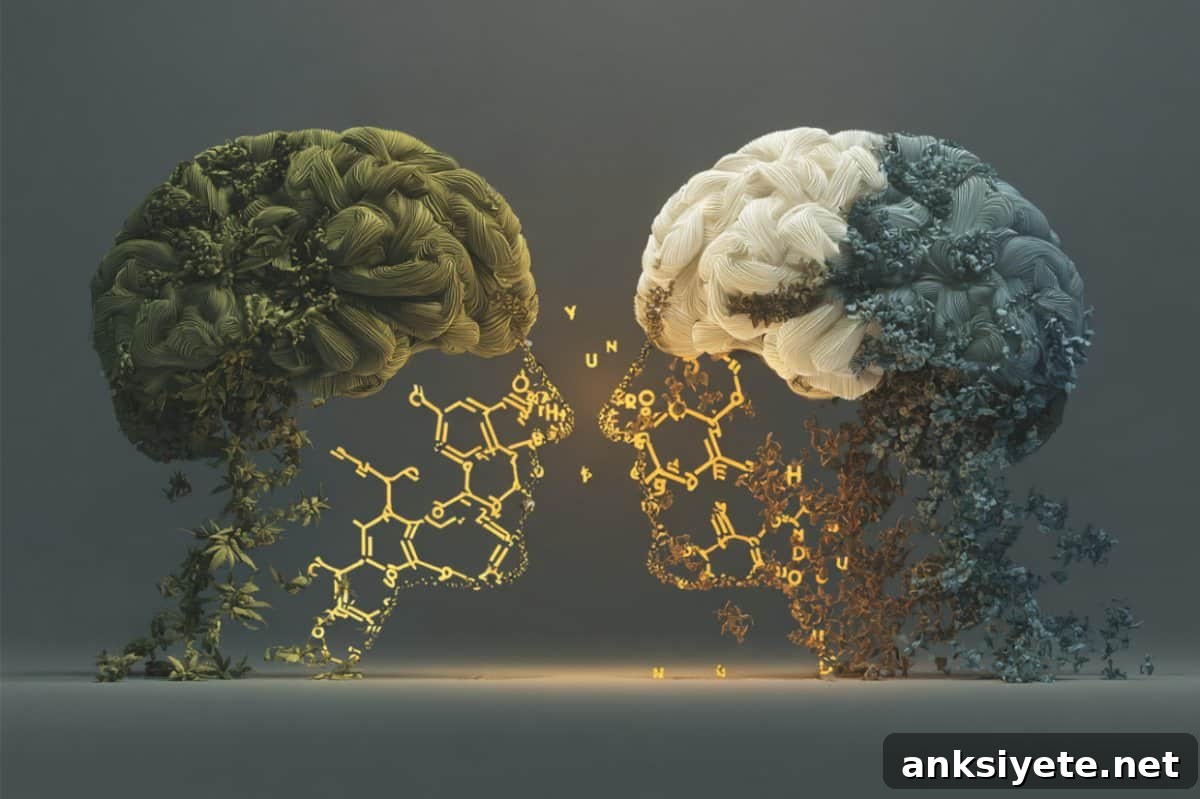
Summary: New brain imaging research finds that people who use both cannabis and tobacco have a distinctive biochemical profile linked to higher anxiety, depression and greater difficulty quitting cannabis. PET scans showed elevated levels of the enzyme FAAH, which breaks down the endocannabinoid anandamide—often called the brain’s “bliss molecule.” Higher FAAH levels imply lower anandamide … Read more
How Your Brain Navigates Mental Maps vs Real Maps

featured 113479

Summary: When people imagine a map, their brains use different circuits than when they actually look at one. In a study of spatial attention, participants recalled a long-term memory map of France and judged which of two cities was closer to Paris. Recordings of brain activity showed that directing attention to perceived locations relied on … Read more

How Your Brain Learns Facts About Fictional Worlds

featured 113475

Summary: Learning new factual information about the world—such as details drawn from a fictional setting—engages brain regions that differ from those used to recall personal life events. In this study, participants learned made-up facts about imaginary civilizations and were tested later to see which facts they retained. Functional brain scans showed that distinct cortical areas … Read more

How Storytelling Style Shapes Memory in the Brain

featured 113470

Summary: The way an event is described—whether through conceptual detail (thoughts, emotions, interpretations) or perceptual detail (sights, sounds, concrete observations)—shapes how the brain encodes and later recalls that event. In a recent Journal of Neuroscience study, participants listened to matched stories that differed only in the type of elaboration added. Neuroimaging revealed that these two … Read more

How Theta Waves Act Like Radar to Improve Visual Working Memory

featured 113466

Summary: New research from the Picower Institute at MIT shows that the brain’s ability to detect subtle changes in the visual scene — for example, spotting an unexpected shift on a bank of security monitors — depends on theta-frequency brain waves (3–6 Hz) that travel across the cortex. These traveling theta waves act like a … Read more

Multiple Sclerosis Warning Signs Detected Years Before Symptoms

featured 113462

Summary: Researchers have traced the earliest stages of multiple sclerosis (MS), finding that the immune system begins to damage the brain years before clinical diagnosis. By profiling more than 5,000 proteins in blood samples, the team detected molecular signs of myelin damage—the insulating sheath that surrounds nerve fibers—well before symptoms appear. Key biomarkers, including IL-3 … Read more

New Electronic Retinal Implant Restores Reading for AMD Patients

featured 113458

Summary: A landmark European clinical trial demonstrates that an electronic retinal implant used with augmented-reality (AR) glasses can restore reading vision in people who lost central sight from geographic atrophy (GA) caused by dry age-related macular degeneration (AMD). The PRIMA System enabled 84% of participants to read letters, numbers and words using prosthetic vision through … Read more

Why Do AI Chatbots Still Sound Fake?

featured 113450

Summary: A recent study comparing human and AI-generated conversations shows that large language models such as ChatGPT and Claude still struggle to reproduce the subtle features of natural spoken dialogue. Although these models can produce grammatically correct and logically coherent responses, they tend to over-imitate their conversation partners, misuse small conversational markers like “well” and … Read more

Can a Disconnected Brain Still Be Conscious?

featured 113442

Summary: A new study reports that sleep-like slow-wave electrical activity can persist for years in surgically disconnected brain tissue of awake epilepsy patients. Using scalp EEG recordings, researchers observed that the isolated hemisphere displays patterns similar to deep non-REM sleep, anesthesia, or vegetative states—patterns that are typically associated with absent or greatly reduced awareness. These … Read more

Hidden Racial Bias in AI Emotion Recognition

featured 113438

Summary: A new study finds that most people do not recognize racial bias embedded in artificial intelligence (AI) training data, even when the bias is directly visible. When emotion-recognition AI is trained on imbalanced datasets—such as disproportionately happy white faces and sad Black faces—the system learns to associate race with emotion, producing biased outcomes that … Read more